6 Best Velvet Blocking Surfaces For Preventing Distortion
Achieve precise results with our top 6 velvet blocking surfaces. Learn how these essential tools prevent distortion and maintain fabric shape during projects.
Achieving a professional finish on your hand-knits depends entirely on the surface you choose for blocking. A velvet-textured mat provides the necessary friction to hold delicate stitches in place while you manipulate the shape. Without this grip, your lace or colorwork is prone to sliding, resulting in uneven tension and distorted motifs. These six options represent the gold standard for stabilizing your work during the crucial final stage of the knitting process.
Knitter’s Pride KnitIQ Velvet Blocking Mats


These mats are a favorite among lace knitters because they feature a grid printed directly onto the velvet surface. The alignment lines allow you to measure your project as you pin, ensuring symmetry for even the most complex geometric shawls.
The velvet top is dense enough to hold pins securely without leaving large, unsightly holes over time. Because the material is slightly plush, it grips the yarn fibers gently, preventing the "skating" effect often seen on smooth foam surfaces.
If you are blocking a large project, the interlocking mechanism is robust and stays connected even when under tension. The bottom line: These are an excellent investment if you frequently work with lace weight yarns that require precise, aggressive blocking.
Cocoknits Knitter’s Block Velvet Surface

Cocoknits has designed a system that prioritizes both aesthetics and functionality. The velvet surface is specifically engineered to be heat-resistant, which is a major advantage if you use a steam iron to set your stitches.
The mat is firm, providing a stable foundation that doesn’t collapse under the weight of heavy wool or cotton garments. This rigidity is essential when blocking sweaters where you need to maintain specific measurements across the shoulders or waist.
While the price point is higher than generic foam tiles, the durability of the velvet finish is unmatched. If you are a serious garment knitter, the structural integrity of this surface makes it worth the premium cost.
Boye Interlocking Foam Blocking Tile Set

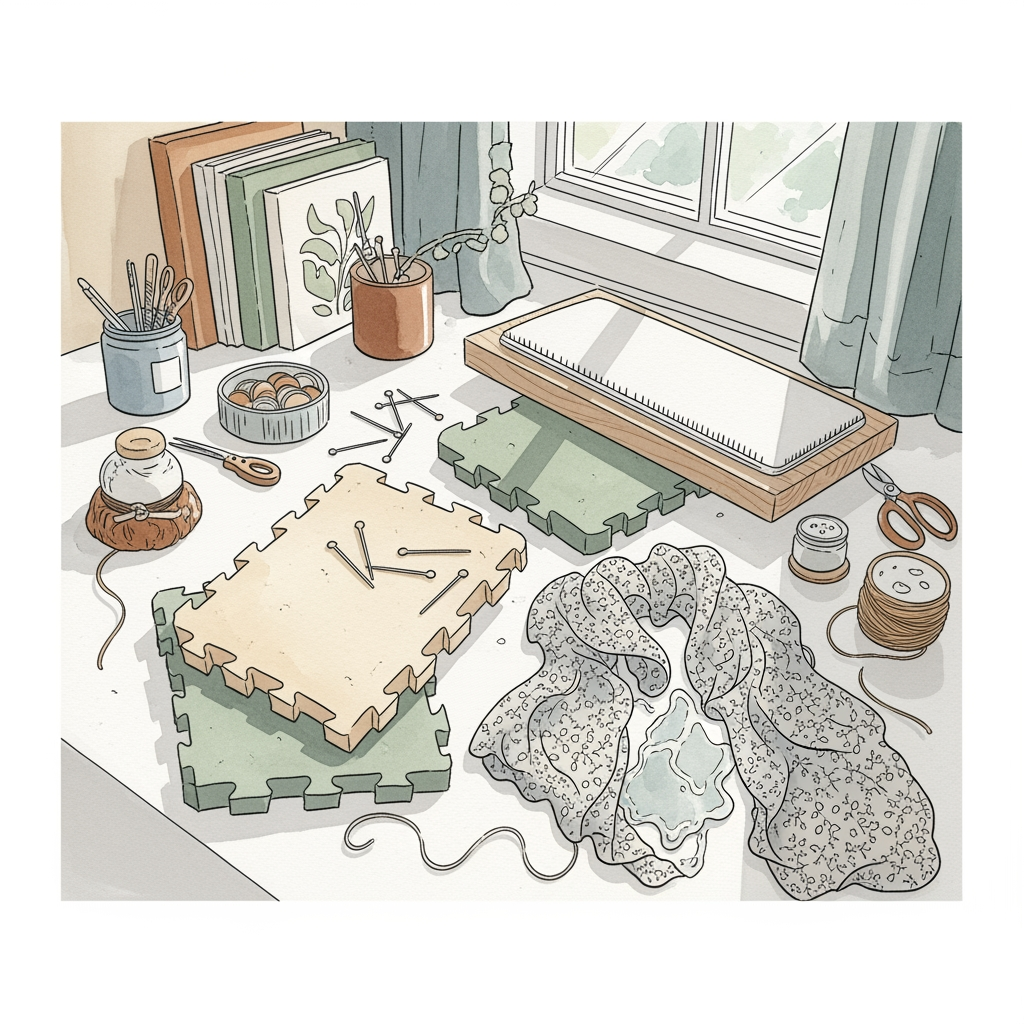
These tiles are the "workhorse" option for knitters who need a large surface area without breaking the bank. The velvet coating is thinner than premium brands, but it still provides sufficient traction for most standard projects.
They are lightweight and easy to store, making them ideal for knitters with limited dedicated craft space. You can assemble only the number of tiles you need for a specific project, which keeps your workspace tidy.
Be aware that the interlocking edges can sometimes catch on delicate mohair or angora fibers if not aligned perfectly. For the budget-conscious knitter, these offer a solid, functional solution that gets the job done reliably.
Clover Soft Touch Blocking Mat System

Clover is known for precision tools, and their blocking mats are no exception to this rule. The velvet surface is remarkably soft, which minimizes the risk of snagging fragile hand-dyed yarns or delicate silk blends.
The mats come with a unique pin-holding capability that prevents pins from tilting while you work. This is a game-changer when you are trying to create crisp points on a lace shawl edge without the pin slipping out of the foam.
Because the surface is so gentle, it is the best choice for fibers that are prone to pilling or abrasion. If you frequently work with luxury fibers like cashmere or alpaca, the high-quality velvet top of the Clover system is your safest bet.
Darice Foam Blocking Board for Projects

The Darice board is a straightforward, no-frills option that serves as a reliable platform for smaller projects. It is particularly well-suited for blocking socks or small accessories where you don’t need a massive floor-based setup.
The velvet-like finish provides just enough friction to keep your stitches from creeping while you insert your pins. It is a compact, portable choice for knitters who like to block their work while traveling or attending retreats.
It may not be the most durable long-term solution for heavy-duty projects, but it is incredibly effective for everyday use. Consider this your go-to for smaller, quick-turnaround projects that don’t require an elaborate floor layout.
Lacis Velvet-Top Professional Blocking Mat

Lacis has created a professional-grade surface that feels substantial and dense under the hand. The velvet top is specifically designed to withstand years of heavy use, making it a staple in studios and workshops.
The density of the foam beneath the velvet is higher than most consumer mats, meaning your pins will stay exactly where you place them. This is vital when you are blocking intricate lace that requires dozens of pins to reveal the pattern’s true beauty.
While it is an investment, the longevity of the product is superior to almost any other option on the market. For the dedicated knitter who sees blocking as a permanent part of their process, this is the final mat you will ever need to buy.
Why Velvet Surfaces Prevent Delicate Fiber Slippage
When you block a knit piece, you are essentially stretching the fabric into its intended shape and letting it set. On a slick, plastic-coated surface, the yarn has no "grip," causing the fabric to slide back toward its original, unblocked state as you pin.
Velvet surfaces create micro-friction that catches the individual fibers of your yarn. This is especially important for superwash wools or synthetic blends that tend to be naturally slippery and resistant to holding a shape.
By locking the stitches in place, the velvet allows you to apply even tension across the entire piece. This results in a cleaner, more professional look where every stitch is uniform and the drape is perfectly balanced.
How to Properly Pin Lace Without Fabric Distortion
The biggest mistake knitters make is pulling too hard on individual pins, which creates "scalloping" or jagged edges. Instead, place your pins in a staggered pattern, working from the center of the shawl outward toward the edges.
Always use rust-proof T-pins to ensure that no metallic residue transfers onto your clean, wet fiber. When pinning lace, aim for the center of the stitch loops rather than the yarn strand itself to prevent splitting or distorting the stitch structure.
Remember that the goal of blocking is to open up the pattern, not to stretch the life out of the yarn. If you see the stitches becoming transparent or pulling out of shape, you have likely over-tensioned the piece.
Essential Tips for Maintaining Your Blocking Mats
After your project is dry, always remove the pins carefully to avoid tearing the velvet surface. If you pull pins out at an angle, you will eventually widen the holes and degrade the mat’s ability to hold tension.
Keep your mats clean by gently vacuuming them or using a lint roller to remove any stray fibers or dust. Never submerge the mats in water, as the moisture can get trapped in the foam and lead to mold or structural decay.
Store your mats flat in a cool, dry place away from direct sunlight. Sunlight can cause the foam to become brittle over time, which will eventually make the velvet top peel away from the base.
Troubleshooting Common Blocking Surface Problems
If your pins keep falling out, it is likely that the foam density has been compromised by years of heavy use. You can temporarily fix this by rotating the tiles or using a slightly thicker gauge of T-pin to fill the hole.
Should you notice the velvet surface starting to pill, use a fabric shaver with extreme caution to remove the fuzz. Avoid using chemical cleaners on the mats, as these can strip the velvet finish and leave residue that might transfer to your next project.
If you are worried about color transfer from a vibrant hand-dyed yarn, place a piece of white cotton fabric between your project and the mat. This simple barrier protects your mat while still allowing the moisture to evaporate during the drying process.
Choosing the right velvet blocking surface is a decision that directly impacts the quality of your finished work. By providing the necessary grip and stability, these mats allow you to transform a limp, uneven piece of knitting into a crisp, professional garment. Whether you choose a high-end professional board or a versatile set of interlocking tiles, the investment in a quality surface will pay dividends in your knitting satisfaction for years to come. Happy blocking, and may every project you finish be a testament to your patience and skill.