
6 Best Swifts For Hanks Of Hand-Dyed Wool
Find the best swifts for your hand-dyed wool. We compare six top models to help you wind hanks into cakes easily while keeping your delicate yarn tangle-free.
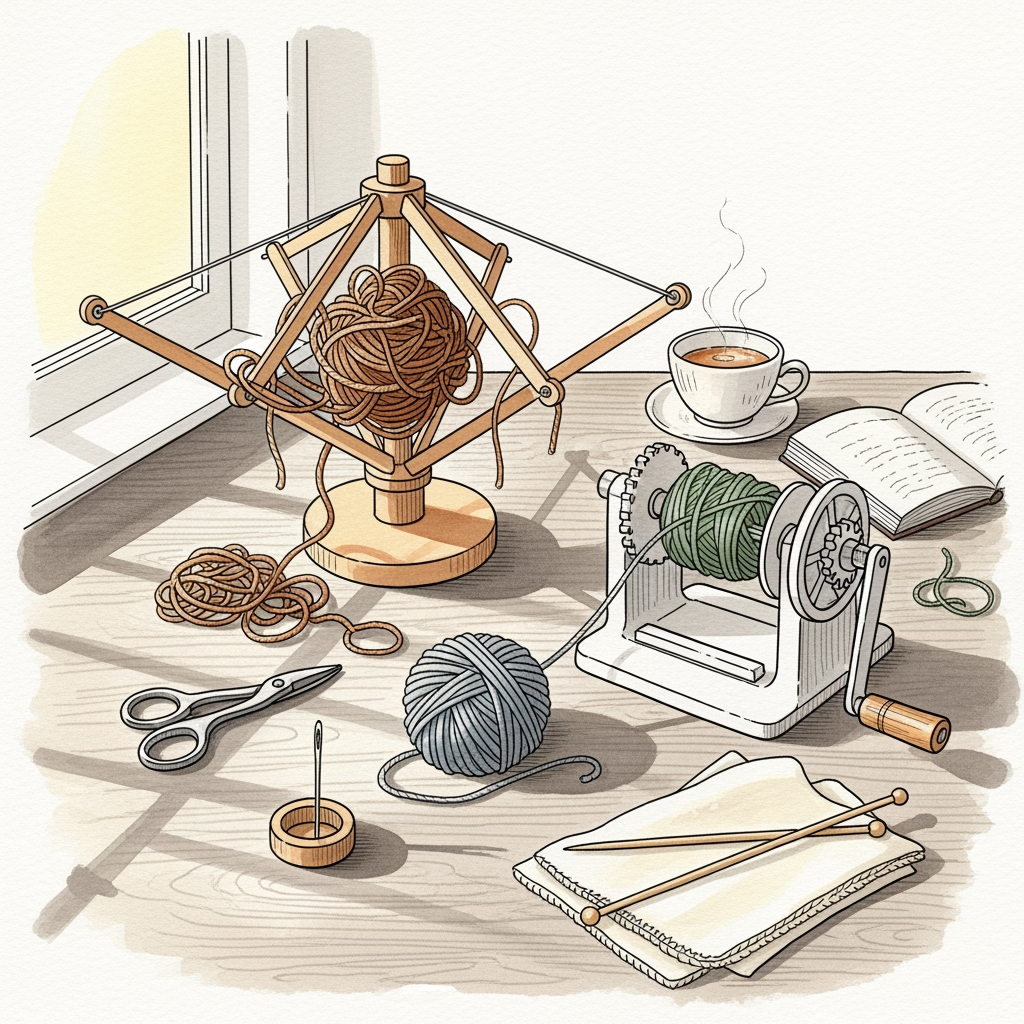
Transitioning from store-bought yarn cakes to luxurious, hand-dyed hanks is a rite of passage for every knitter. However, the joy of a hand-dyed skein quickly vanishes if you find yourself in a tangled, frustrating mess of yarn barf. A high-quality swift is the essential bridge between a beautiful hank and a manageable ball, saving you hours of tedious detangling. Investing in the right tool ensures your fiber remains pristine and your knitting time remains productive.
Stanwood Needlecraft Umbrella Swift: Best Overall
The Stanwood Needlecraft Umbrella Swift is widely considered the gold standard for a reason. Its smooth rotation and sturdy metal clamp allow it to handle everything from delicate lace-weight mohair to heavy, rustic wools without skipping a beat.
What sets this model apart is the precision engineering in the umbrella mechanism. It opens and closes with a satisfying, fluid motion, ensuring that the tension remains consistent as the skein shrinks. This is critical for hand-dyed wools, which can sometimes be prone to slight felting or fiber breakage if pulled too harshly.
If you are a frequent buyer of indie-dyed skeins, the reliability of the Stanwood is unmatched. It strikes the perfect balance between professional-grade performance and accessibility for the home hobbyist. It is a workhorse that will likely be the last swift you ever need to buy.
Amish-Style Wooden Swift: Best for Portability


If your knitting life happens on the go—at retreats, local meetups, or even just tucked away in a closet between projects—the Amish-style swift is your best friend. Unlike umbrella styles that require a table edge, these sit directly on a flat surface and can be disassembled in seconds.
The beauty of this design lies in its simplicity and lack of complex mechanical parts. Because it uses a rotating crossbar rather than a tension-based umbrella, there is almost nothing that can break or jam during transport. It is the perfect choice for the knitter who values a minimalist, "low-tech" approach.
However, keep in mind that you will need to manually adjust the pegs to fit the circumference of your hank. While this takes an extra minute, it provides a very stable base for winding, especially if you are working with slippery fibers like silk or bamboo blends.
Lacis Wooden Umbrella Swift: Best Premium Choice
When you move into the premium territory of the Lacis Wooden Umbrella Swift, you are paying for exquisite craftsmanship and heirloom-quality materials. The wood is often polished to a high sheen, which is not just for aesthetics; it ensures that your yarn glides off the swift without catching on any splinters or rough edges.
This is the swift for the knitter who treats their tools with the same reverence as their yarn. If you work with expensive, hand-dyed cashmere or silk-merino blends, the smoothness of this tool provides peace of mind. You never have to worry about a snag ruining a hundred-dollar skein of yarn.
While it is a significant investment, the durability and tactile satisfaction are worth it for the dedicated maker. It functions as both a high-performance tool and a beautiful piece of equipment that you won’t mind leaving out on your knitting table.
KnitPicks Yarn Swift: Best Value for Beginners
The KnitPicks yarn swift is the perfect entry point for someone who has just discovered the beauty of hand-dyed hanks but isn’t ready to invest in high-end equipment. It is lightweight, easy to store, and does exactly what it promises: it holds your yarn while you wind it.
It is particularly well-suited for the beginner who is still learning how to manage tension. Because it is lightweight, it doesn’t offer much resistance, which helps you "feel" if you are winding your ball too tightly. This is a common mistake that can stretch out the yarn and ruin its elasticity before it even hits your needles.
Don’t let the lower price point fool you into thinking it is fragile. While it may not have the heavy-duty metal components of more expensive models, it is perfectly capable of handling standard wool hanks for years of regular use.
Strauch Jumbo Ball Winder and Swift: Best Heavy Duty
If you are a prolific knitter who routinely deals with sweater-quantity hanks or bulky, hand-spun art yarns, the Strauch system is in a league of its own. It is designed for those who need to wind large amounts of yarn quickly without the swift wobbling or collapsing under the weight.
The stability of this setup is its greatest asset. When you are winding a massive, 400-yard skein of heavy worsted wool, lesser swifts can struggle to maintain a smooth rotation. The Strauch handles this mass with ease, preventing the jerky movements that often lead to tangles.
This is clearly a specialized tool for the "serious" knitter or the fiber artist. If you only wind a few skeins a year, it might be overkill, but if you are constantly prepping for your next big project, it will save you an incredible amount of time and frustration.
Ashford Wooden Umbrella Swift: Best Build Quality
Ashford has a long-standing reputation in the spinning and weaving community, and their wooden umbrella swift reflects that heritage. The construction is incredibly solid, utilizing high-quality wood that feels substantial and well-balanced in the hand.
What I appreciate most about the Ashford is the consistency of its tension. When you open the umbrella, it stays exactly where you set it, which is vital for hand-dyed yarns that may have been twisted and untwisted multiple times. A loose or collapsing swift is the fastest way to turn a beautiful hank into a knotted nightmare.
This is a tool that feels like it was built to last for generations. If you appreciate tools that work seamlessly with your hands rather than against them, the Ashford is a top-tier choice that justifies its price through sheer engineering excellence.
Understanding Swift Mechanics and Tension Control
At its core, a swift is designed to provide a rotating surface that allows yarn to unwind at the same speed you are winding it into a ball. The biggest mistake knitters make is failing to adjust the swift to the specific circumference of the hank.
If the swift is too loose, the yarn will slip off the arms and tangle; if it is too tight, you risk stretching the fibers. Always take a moment to gently stretch your hank around the arms and ensure it is snug but not under tension.
Remember that tension control is a two-part process involving both the swift and your ball winder (or your own hands). Your goal is to keep the yarn moving freely so that you aren’t pulling against the swift, which ensures the final cake has the perfect amount of "bounce" for your knitting.
How to Properly Set Up a Swift for Hand-Dyed Wool
Setting up your swift for hand-dyed wool requires a bit more care than commercial yarn. First, inspect the hank for any "ties" that might be holding the yarn in place; these must be removed carefully, or they will cause the yarn to catch as it spins.
Place the hank on the swift and rotate it slowly by hand to ensure it is centered. If the hank is lopsided, the swift will wobble, creating uneven tension that can lead to "yarn barf" later on.
Always wind at a steady, rhythmic pace. If you are using a ball winder, avoid the temptation to go as fast as possible. A consistent, moderate speed allows the yarn to lay naturally into the cake, preserving the character of the hand-dyed fibers and ensuring your knitting gauge remains accurate.
Umbrella vs. Amish-Style: Which Swift Suits You?
Choosing between an umbrella and an Amish-style swift comes down to your personal knitting environment. Umbrella swifts are superior for speed and ease of use, as they collapse like a standard umbrella and are ready to go the moment you place them on a table.

Amish-style swifts, by contrast, are the masters of stability and storage. They are perfect for small apartments where you need to tuck your tools into a drawer when not in use. They are also generally more durable because they lack the complex hinges and plastic parts found in many umbrella models.
Ultimately, if you have a dedicated craft space, the umbrella swift offers a more seamless workflow. However, if you are a traveling knitter or have limited surface space, the Amish-style swift provides a reliable, sturdy alternative that won’t let you down.
Maintaining Your Swift to Prevent Snags and Wear
A swift is a mechanical tool, and like any machine, it needs a little love to perform its best. For wooden swifts, keep an eye out for any small burrs or rough spots that could snag delicate fibers like mohair or silk. A light sanding with fine-grit sandpaper can easily smooth these out.
If your umbrella swift becomes stiff or squeaky, a tiny drop of furniture wax or a specialized lubricant on the joints can make a world of difference. Avoid heavy oils that might stain your yarn, and always wipe down your swift after use to remove any dust or stray fibers.
Finally, store your swift in a clean, dry place to prevent the wood from warping or the metal from oxidizing. Taking these small steps will ensure your swift remains a reliable partner for your knitting projects for years to come.
Choosing the right swift is an investment in the longevity of your yarn and the enjoyment of your craft. Whether you prioritize the portability of an Amish-style model or the seamless operation of a premium umbrella swift, the right tool will transform your winding process. Take the time to understand your specific needs, and you will find that a good swift makes every project start on the right foot. Happy knitting, and may your yarn always wind smoothly.
