
6 Best Felt Bead Trays For Preventing Rolling To Own
Keep your jewelry projects organized with our top 6 picks for the best felt bead trays to prevent rolling. Shop our expert recommendations and order yours today.
Beading is an extension of fiber arts, whether you are incorporating crystals into a lace shawl or stabilizing a heavy beaded hem on a garment. Just as slick nickel needles require a different tension than bamboo, small beads behave differently depending on the surface beneath them. Preventing tiny seed beads from skittering across the floor is as vital as keeping your yarn stash organized. The right tray keeps the creative flow uninterrupted by the frustration of chasing runaway materials.
The Beadsmith Bead Mat: A Classic for a Reason


This mat is the baseline for many crafters, offering a reliable, no-frills surface that effectively stops beads from rolling. It provides just enough friction to catch a seed bead before it gains momentum, which is essential when working with delicate glass or metallic finishes.
The simplicity of this mat makes it an ideal choice for beginners who are just starting to experiment with beaded knitting. Because it is flexible, it can be folded or rolled to fit into a project bag alongside your circular needles and stitch markers.
Keep in mind that while it is affordable and functional, it lacks the rigid structure required for complex, multi-color beadwork. Use this for straightforward projects where you aren’t managing dozens of different bead types simultaneously.
Bead On It Board: The Crafter’s Luxury Choice
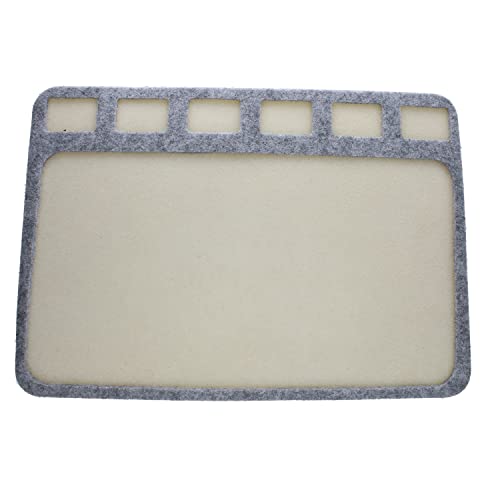
The Bead On It Board is the gold standard for those who treat their craft as a serious pursuit. These boards are handcrafted with a deep-pile, velvet-like surface that gently cushions beads, making them incredibly easy to pick up with a needle.
If you are working on a high-stakes project like a beaded wedding veil or intricate jewelry, the tactile feedback of this surface is unmatched. The raised edges act as a perimeter defense, ensuring that not a single bead escapes to the carpet, where they would be impossible to retrieve.
The investment is higher, but the durability and design quality pay off for long-term projects. It creates a dedicated workspace that helps maintain a professional rhythm during hours of repetitive beading.
Tulip Beading Mat: Best for Travel & Small Kits
Tulip is renowned in the knitting world for high-quality crochet hooks, and their beading mats reflect that same commitment to precision. These mats are thin, lightweight, and designed to stay exactly where placed on a table.
Because they are so compact, they are perfect for taking your beadwork on the go. Whether sitting on a plane or working at a local guild meeting, the mat stays flat and provides a secure surface for your findings.
The surface material is specifically engineered to be tacky enough to grip beads but smooth enough to allow for easy manipulation. It is the best choice for a portable setup that doesn’t sacrifice performance for size.
The Bead Buddy Design Save N Go: Most Portable

The Save N Go system is a revelation for anyone who needs to pack up their project mid-flow. It features a design that allows you to secure your beads and findings, fold the board, and store it safely without losing a single component.
For projects that span weeks, this is a lifesaver. You can stop working on a intricate beaded cuff, secure the board, and return days later to find everything exactly as it was left.
The internal construction is robust, ensuring that the beads don’t shift even if the board is placed vertically in a bag. It trades some of the luxurious feel of a stationary board for superior structural convenience.
Flocked Bead Board with Lid: For Project Safety

A flocked tray with a lid serves as a protective vault for your current work. The flocking offers a soft, grippy texture that prevents beads from dancing away, while the lid provides a physical barrier against pets, children, or accidental spills.
This is particularly useful if you share a craft room or a living space. It allows you to keep an intricate, unfinished project out without the risk of materials being scattered or disturbed by daily household activities.
While it is bulkier than a simple mat, the peace of mind is worth the extra space. It is the most reliable option for long-term storage of active projects that involve a large volume of loose beads.
Multi-Compartment Flocked Tray: For Colorwork
When tackling stranded colorwork that requires a variety of bead colors, organization is the difference between a smooth project and a tangled headache. Multi-compartment trays allow you to separate beads by size, finish, or color spectrum.
The flocked lining in each individual well prevents the beads from clinking loudly or hopping over the dividers. This level of segregation is essential when working with nuanced color changes or specific patterns where swapping a bead color would disrupt the design.
Using this tray acts as a physical map for your project, keeping your materials as organized as your color-coded yarn skeins. It is an essential tool for any weaver or knitter who frequently manages complex, multi-bead palettes.
Why a Felt Surface is a Must-Have for Beading
A felted or flocked surface provides the necessary resistance to stop beads from rolling, a property that smooth plastic or wood surfaces lack. When working with beads, you want a surface that grips the base of the bead just enough to slow it down without trapping it too firmly.
Just as a wooden needle provides more “grab” than a metal one for slippery silk yarn, a felted tray provides the “grab” needed for slippery glass beads. It effectively creates a small nest for each piece.
Beyond friction, the soft surface protects the integrity of your beads. Delicate finishes on glass or metallic coatings can scratch if dragged across a hard, abrasive surface; a soft felt mat preserves their luster.
Key Features to Look For in a Bead Mat
When selecting a mat, consider the scale of your projects and the mobility you require. Durability, friction level, and organization are the three pillars of a good bead tray.
- Friction: Look for a high-quality, velvet-like flocking that grips beads securely.
- Edge Design: Raised edges are essential for preventing “accidental launches” off the table.
- Portability: Determine if the mat needs to be a permanent fixture or something that fits in a project bag.
- Storage: If you frequently start and stop projects, prioritize mats with lids or folding capabilities.
How to Clean and Care for Your Felt Bead Mat
Bead mats accumulate dust and stray fibers over time, which can interfere with their grippy texture. A clean mat ensures that your beads stay put exactly where they should.
Use a piece of low-tack painter’s tape to gently lift lint, pet hair, or yarn fuzz from the flocked surface. For deeper cleaning, a very light vacuum with a brush attachment can help, but avoid harsh chemicals or water, which can degrade the adhesive or the flocking itself.
If the mat begins to lose its grip, it is often a sign of heavy dust buildup rather than the material wearing out. Keep the surface covered when not in use to maintain its performance for years to come.
Mat vs. Board vs. Tray: Which Style is for You?
The choice between a mat, a board, and a tray comes down to your workspace environment and project complexity. A mat is best for those who value flexibility and frequent travel.
A board is the preferred choice for a stationary, dedicated craft corner where long-term projects are the norm. It provides a tactile, professional experience that centers the focus on the work at hand.
A tray is the solution for the highly organized crafter who manages complex color palettes. Assess how many types of beads you are using simultaneously; if you have more than three, opt for a compartmented tray.
The right beading surface acts as an invisible assistant, allowing you to focus entirely on the placement of each bead rather than the retrieval of dropped materials. By investing in a high-quality felt surface, you ensure your beadwork remains as structured and precise as your knitting gauge. Choosing the right tool depends largely on the mobility of your craft, but prioritizing a grip-heavy surface is a non-negotiable step toward mastering this detailed art.

