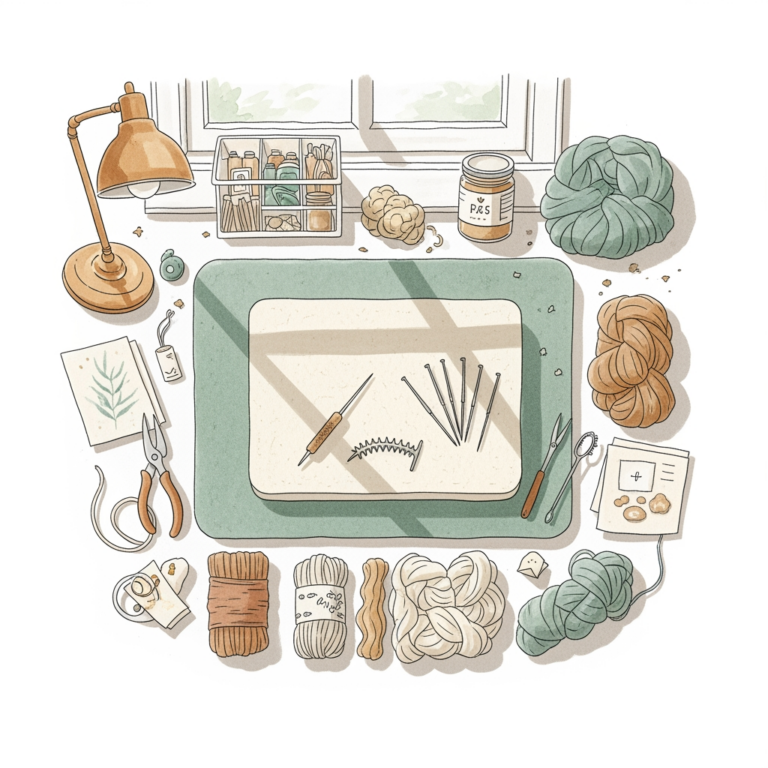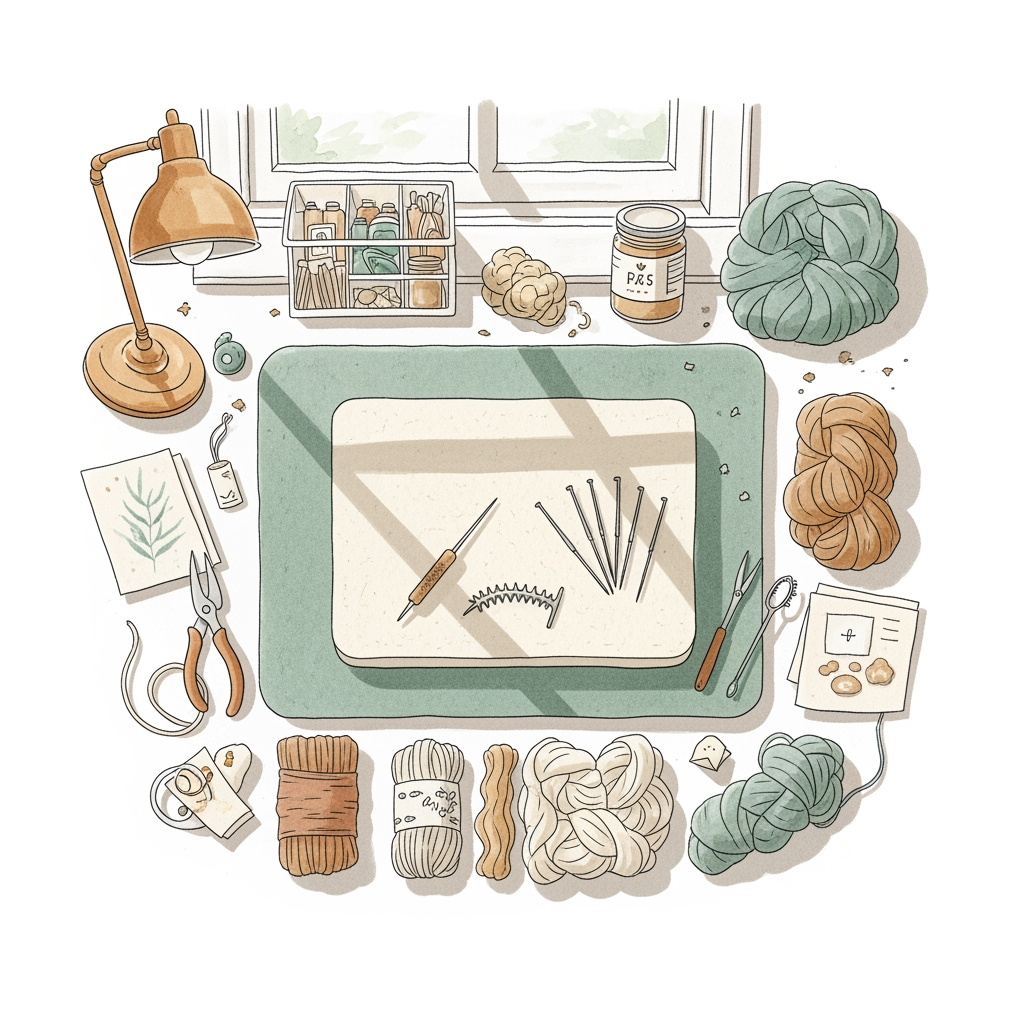
6 Best Needle Felting Worktables for Stability
Discover the 6 best needle felting worktables for maximum stability. Our guide reviews top-rated surfaces to ensure precision and comfort for every project.
Needle felting is a rhythmic, meditative craft, but much like maintaining consistent tension in stranded colorwork, it requires a rock-solid foundation. A wobbly or soft work surface can lead to broken needles, uneven sculpting, and unnecessary wrist fatigue. Choosing the right mat is just as crucial as selecting the correct needle gauge for your wool roving. Here are the best surfaces to ensure your felting projects remain precise and stable.
Clover Needle Felting Mat: Best Overall Choice


The Clover mat is a staple in many fiber studios for good reason. Its unique brush-like bristles provide the perfect amount of resistance, allowing the needle to pass through the wool without hitting a hard, jarring surface.
This design is particularly beneficial when you are working on delicate, small-scale sculptures. Because the bristles "grip" the fiber, you don’t have to fight against the wool sliding around while you work.
However, keep in mind that the bristles can eventually trap tiny stray fibers. You will need to periodically clear the mat to maintain its effectiveness. For the average crafter, this is a small price to pay for such a consistent, forgiving surface.
Woolbuddy Large Felting Pad: Best for Stability

If you are working on larger, 3D projects that require a significant amount of force, a dense wool pad is your best friend. The Woolbuddy pad is thick, heavy, and stays exactly where you put it on your table.
Unlike foam, which can degrade and leave tiny plastic bits in your work, a tightly packed wool mat is completely inert. It feels firm under your hands, providing the necessary feedback to know exactly when your core wool has reached the desired density.
The tradeoff here is that wool pads are generally more expensive than their synthetic counterparts. If you are a beginner, consider this an investment in your long-term comfort and the longevity of your needles.
Sullivans Foam Felting Block: Best Value Pick

Sullivans foam blocks are the "workhorse" of the felting world. They are inexpensive, lightweight, and provide a decent amount of cushioning for standard needle penetration.
These blocks are perfect if you are just starting out and aren’t sure how deep you want to dive into the craft. They are also easily replaceable, which is helpful if you tend to felt with aggressive, deep stabs that eventually chew up the foam.
Just be aware that foam eventually loses its structural integrity. Once the surface becomes too pitted, it’s time to swap it out to prevent your needle from bending or snapping during delicate shaping.
Dimensions Needle Felting Mat: Best for Detail

Dimensions mats are designed for precision work, often found in their popular project kits. They offer a medium-density surface that is ideal for those who prefer to work with finer gauge needles.
If you are adding intricate details to a piece—like eyes on a felted animal or fine lines on a decorative piece—the stability of this mat is a major advantage. It holds the work steady without being so hard that it dulls your needle tips.
This mat is best suited for small to medium projects. If you try to felt a massive, heavy sculpture on this surface, you might find it lacks the necessary weight to keep from shifting.
Felted Sky Wool Mat: Best Sustainable Surface

For the eco-conscious maker, a natural wool mat is a joy to use. Felted Sky offers a dense, natural surface that feels much more organic than industrial foam.
The natural friction of the wool fibers helps lock your project in place while you work. It’s a tactile experience that complements the process of turning raw roving into a finished sculpture.
Because it is a natural product, it won’t shed synthetic debris into your fiber. It is a premium choice, but for those who prioritize sustainability in their fiber arts, it is well worth the cost.
Heidifeathers Firm Foam Pad: Best for Durability

Heidifeathers is known for producing high-density foam that resists the "pitting" effect common with cheaper blocks. If you are a heavy-handed felter, this pad will last significantly longer than standard craft store foam.
The firmness of this pad is its standout feature. When you are firming up a core shape, you want a surface that provides immediate resistance. This allows you to achieve a solid, professional finish much faster.
While it is still foam, it is a significant step up in quality. It strikes a great balance between the affordability of synthetic materials and the performance of a professional-grade tool.
Why Stability Matters for Needle Felting Work
Stability is the difference between a smooth crafting session and a frustrating one. When your mat slides across the table, your needle angle changes, which increases the risk of snapping your needle tips.
Think of it like holding your knitting needles; if your hands are tense because your equipment is unstable, your gauge will suffer. A stable mat allows you to maintain a consistent, relaxed rhythm.
When your surface is secure, you can focus on the artistic side of felting. You’ll spend less time chasing your project and more time sculpting.
Essential Features of a Quality Felting Surface
When evaluating a mat, look for three primary characteristics: density, grip, and longevity. A high-density material, whether it is wool or foam, is non-negotiable for professional results.
- Density: Prevents the needle from hitting the table, which preserves your needle points.
- Grip: Ensures the wool fibers stay in place, making it easier to sculpt intricate curves.
- Size: Should be large enough to accommodate your hands comfortably.
Avoid mats that are too soft or squishy. If your needle sinks too deep into the mat, you lose the tactile feedback necessary to gauge the "felted-ness" of your project.
How to Maintain Your Needle Felting Worktable
Proper maintenance ensures your tools last for years. For foam mats, periodically rotate the pad to distribute the wear and tear across the entire surface.
If you use a bristle-style mat, use a small comb or a stiff brush to remove trapped fibers. This prevents the mat from becoming clogged, which can make it feel "bouncy" and less effective.
For wool pads, you can occasionally "re-felt" the surface by gently brushing it or even lightly steaming it if it becomes too compressed. Treat your mat with the same care you would your favorite pair of knitting needles.
Tips for Choosing the Right Size Felting Mat
The size of your mat should match the scale of your work. If you are creating small ornaments, a 5-inch square mat is perfectly adequate and keeps your workspace tidy.
However, if you are working on larger dolls or sculptures, you need a surface that allows you to move the piece around without it falling off the edge. A larger mat also provides a better "cushion" area for your hands.
When in doubt, go larger. It is always better to have extra space than to be cramped, especially if you are working on a multi-part project that requires several pieces of wool roving spread out.
Finding the right needle felting surface is a personal journey that depends on your specific sculpting style and the density of your wool. Whether you prefer the precision of a bristle mat or the sturdy, natural feel of a wool pad, the goal remains the same: a stable, reliable foundation. Invest in quality, keep your surface clean, and your felting projects will be all the better for it. Happy crafting!