6 Best Decorative Push Pins For Pinning Pattern Swatches
Organize your workspace in style with these 6 best decorative push pins for pinning pattern swatches. Elevate your mood board today and shop our top picks now.
A swatch is the essential bridge between a beautiful yarn and a finished garment that actually fits. While a standard blocking pin does the job, using decorative pins transforms a routine technical task into an inspiring part of the creative process. Choosing the right hardware ensures that stitches remain undisturbed while providing the necessary tension for professional-looking results. Selecting tools that offer both utility and aesthetic appeal encourages more frequent and precise swatching.
KatyDidCrafts Yarn Ball Pins: Best for Knitters


These pins feature miniature yarn ball toppers that resonate perfectly with the identity of any fiber enthusiast. Beyond their charm, the round shape provides a tactile grip, making them significantly easier to handle when fingers are tired from a long knitting session.
The scale of these pins is generally suited for medium-weight yarns like worsted or aran. If working with delicate lace-weight mohair, the weight of the topper might cause the pin to tilt slightly if not inserted at a proper angle.
Always check the post length before pinning through a thick swatch. These are ideal for pinning to foam blocking mats where a bit of visual flair helps mark specific stitch counts or row repeats.
U Brands Rose Gold Geo Pins: For a Modern Look
Geometric-headed pins offer a sophisticated, streamlined profile that sits flush against the swatch. Their rose gold finish provides a clean contrast against lighter-toned yarns, making it easy to identify pin placement at a glance.
Because these pins have a flatter head design, they are excellent for preventing the fabric from bunching up. The metallic construction is sturdy, allowing for use on dense, felted, or heavy wool swatches that might bend inferior plastic-topped pins.
However, the metallic surface can be slippery. Ensure the pins are inserted deeply into the blocking mat to prevent them from sliding out under the tension of a particularly springy fiber like high-twist merino.
Gleam & Glimmer Pearl Pins: Most Elegant Choice
Pearl-headed pins are a timeless staple, offering a smooth finish that won’t snag delicate fibers like silk or bamboo. The spherical head acts as a natural stopper, preventing the pin from slipping through loose, open-work swatches.
These are particularly useful when blocking intricate lace patterns where every picot point needs precise positioning. The white or cream pearls reflect light, which helps in seeing the shape of the swatch clearly against a dark blocking board.
Keep in mind that the heads are often fused to the pin shaft. Avoid using these on extremely thick, multi-layered knits where a strong tug might pop the pearl head off the wire.
The Purl Patch Sheep Pins: For a Modern Touch of Whimsy
Sheep-themed pins add a playful element to the workstation, making the tedious process of blocking feel like a lighthearted endeavor. Their design is usually lightweight, which is a major advantage for blocking airy, delicate swatches.
The surface area of the sheep topper acts as a gentle anchor against the fabric. They are particularly effective when working with very soft, slippery fibers that tend to “crawl” away from standard straight pins.
Be aware that these toppers can be wider than the pin itself. If the goal is to pin very close together for a tight tension test, the sheep heads might overlap and cause the fabric to distort slightly.
Tusker Made Wood Block Pins: Best Natural Option
Wood-topped pins offer a warm, earthy aesthetic that complements natural fibers like wool, alpaca, and cotton. They are generally matte in texture, which provides a better grip for the fingers when adjusting tension on a damp swatch.
The wood is typically lightweight, meaning it won’t add unnecessary drag to the corners of a swatch. This is ideal when working with fiber that has a high memory, such as wool that is prone to shrinking back during the drying process.
Because wood is porous, these pins should be dried thoroughly after use on wet blocking mats. Proper maintenance ensures the wood remains smooth and free of burrs that could potentially snag a fine-gauge knit.
Anthropologie Monogram Pins: For a Personal Touch
Monogram pins serve as functional markers that double as a way to label different swatches by yarn weight or fiber content. By pinning a specific letter to a swatch, you create an organized system for testing how different needles affect your personal gauge.
These pins often have a heavier, more substantial feel than standard quilting pins. Use them for pinning down the corners of a swatch to keep it squared up, rather than using them for every single stitch.
They are an excellent gift or a way to celebrate a specific, long-term project. Ensure they are stored in a dry place, as the metal alloys used for decorative monograms can sometimes be more prone to oxidation than simple stainless steel.
Push Pin vs. T-Pin: What’s Best for Swatches?
T-pins are the gold standard for blocking because they offer superior holding power in foam boards and cork surfaces. Their T-shape prevents them from sinking deep into the fabric, while the crossbar allows for easy removal without stressing the stitches.
Decorative push pins, by contrast, are designed for visual impact and light-duty pinning. While they are beautiful, they lack the aggressive holding power of a T-pin and can be more difficult to remove once the swatch has dried and the yarn has stiffened.
The best approach is to use T-pins for the primary tensioning of the swatch edges. Reserve the decorative pins for pinning the center, marking changes, or simply aesthetic enjoyment.
How to Choose Pins for Your Type of Blocking Mat
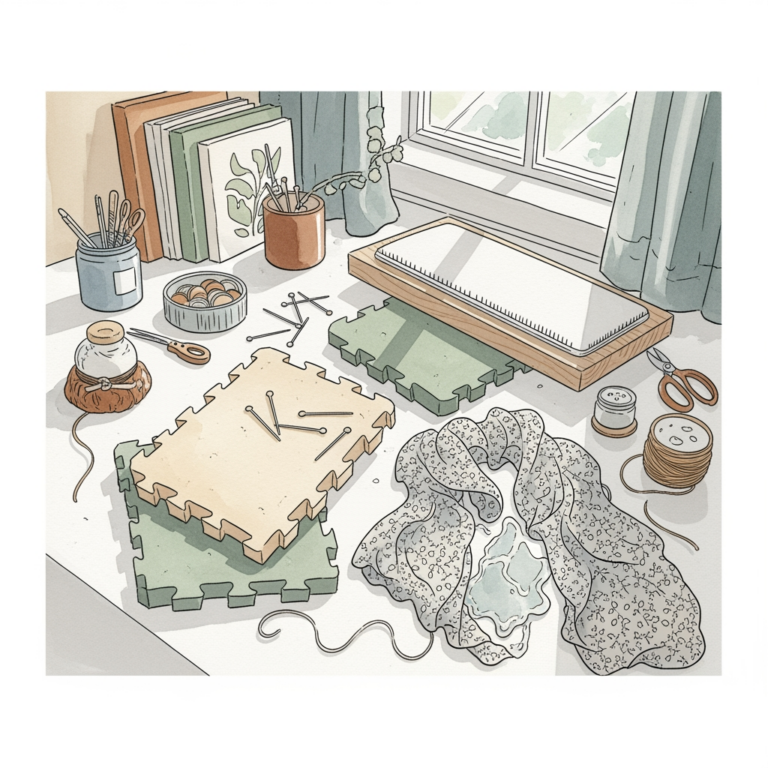
Blocking mats vary from dense, interlocking foam tiles to soft cork boards and even folded towels. If using foam tiles, T-pins and longer decorative pins will sink securely and provide the necessary resistance against the tension of the swatch.
If using a soft cork board or a towel over a mattress, the pin must be sturdy enough to be pushed in at a significant angle to counteract the “pull” of the yarn. Flimsy decorative pins will bend under this pressure.
Always test the grip on a scrap piece of fabric before pinning an entire garment. If the pin slides out easily, it will not be able to maintain the dimensions of the swatch during the drying process.
Pinning for Blocking vs. Display: Key Differences
Blocking requires pins that can withstand damp conditions and constant tension. The pins must not rust or leave chemical stains on the yarn, especially when blocking light-colored or white wool, which is highly absorbent.
Displaying swatches, whether on a board for reference or a wall for inspiration, requires pins that are visually pleasing and gentle. Since there is no tension involved, you can prioritize the decorative nature of the head over the length or strength of the shaft.
Never use pins with plastic coatings for long-term display if there is any chance of moisture, as these can degrade over time. Stick to high-quality stainless steel or nickel-plated pins for both display and blocking.
Caring For Pins to Prevent Yarn Stains and Rust
Rust is the enemy of all knitting projects, capable of leaving permanent, unsightly brown marks on precious hand-dyed yarns. To prevent this, always ensure your pins are completely dry before returning them to their container.
Store pins with a small silica gel packet if the storage area is prone to humidity. If a pin shows any sign of pitting or dullness, discard it immediately, as the rough surface will catch on delicate fibers and cause pulled threads.
If using pins with decorative finishes, wipe them down with a clean, dry cloth after each use. This removes any moisture or soap residue from the blocking process and ensures your tools remain in pristine condition for years of swatching.
A well-organized set of pins is a knitter’s secret weapon for achieving consistency across every project. By investing in tools that are both functional and delightful to use, the process of swatching becomes a rewarding habit rather than a tedious chore. Keep these tips in mind, and your tension—and your finished knits—will surely show the difference.