6 Best Desktop Cutting Mats For Fabric Trimming
Find the perfect surface for your sewing projects with our review of the 6 best desktop cutting mats for fabric trimming. Click here to upgrade your craft space.
Precision cutting is just as vital as tension control when preparing fabric for backing quilts, lining heirloom-quality sweaters, or creating custom sewing projects. A high-quality cutting mat acts as the foundation for every crisp edge, ensuring that rotary blades remain sharp and surfaces stay protected. Selecting the wrong mat can lead to frayed edges or, worse, damaged tabletops beneath the workspace. This guide breaks down the top choices for fiber artists who demand durability and accuracy in their studio.
OLFA RM-12S Rotating Mat: Best for Small Spaces


A rotating mat transforms the experience of trimming small pieces or squaring up fabric blocks. By allowing the fabric to spin rather than requiring the hands to shift positions, the risk of accidental slippage is significantly reduced.
This feature proves particularly useful when trimming smaller, intricate shapes or when working in cramped knitting nooks. Since many knitters utilize limited table space for both pattern drafting and blocking, the compact footprint of this mat remains a significant advantage.
The circular design may feel restrictive for those working on long strips or large backing panels. However, for precision tasks—like cutting bias binding or trimming small appliqués—the convenience of the rotation is unmatched.
Fiskars Eco Mat: Best Sustainable Choice

Sustainability often ranks as a high priority for makers who care deeply about the origins of their wool and the environmental footprint of their tools. The Fiskars Eco Mat is crafted from recycled materials, offering a greener alternative without sacrificing performance.
These mats remain surprisingly durable despite their recycled composition, resisting deep cuts from rotary blades during repeated heavy use. They provide the same self-healing properties found in standard mats, ensuring the blade glides smoothly without catching on previously cut fibers.
Expect a slightly different surface texture compared to non-recycled versions, though this rarely impacts the accuracy of a ruler’s placement. Choosing this option aligns a studio practice with broader ethical considerations regarding production waste.
US Art Supply Self-Healing Mat: Best Value Pick

Budget-friendly tools often catch a bad reputation, but some entry-level mats punch well above their weight class. The US Art Supply mat provides a reliable surface for those just beginning their journey into sewing or those who need a spare mat for secondary workstations.
While it may not feature the heavy-duty density of professional-grade surfaces, it holds up exceptionally well for standard cottons and linens. If the intention is to use the mat for light trimming or pattern paper cutting, this selection provides excellent cost efficiency.
Avoid using excessively dull blades on this mat, as the self-healing capability is geared toward standard rotary sharpness. Replace blades frequently to maintain the integrity of the mat’s surface for years to come.
Dritz Omnigrid Double-Sided Mat: Most Versatile
Visibility is the cornerstone of accurate cutting, and the Dritz Omnigrid excels here with high-contrast, dual-sided markings. One side typically features a dark background, while the other is light, making it simple to find a grid that contrasts with any fabric color.
For projects involving complex colorwork or patterned fabric, the ability to switch between background shades prevents eye strain. The clarity of the grid lines helps maintain 90-degree angles, which is critical for projects that require perfectly squared fabric pieces.
The measurement scales are printed with high precision, which matters when accuracy within a sixteenth of an inch is necessary. This mat serves as a workhorse, transitioning easily between delicate quilting and heavier fabric trimming.
Arteza Self-Healing Mat: Best for Heavy Use

Heavy-duty cutting requires a surface that can withstand deep pressure without permanently warping or cratering. The Arteza mat is engineered with a multi-layer construction that emphasizes longevity under frequent, high-volume use.
This mat is ideal for those who spend hours each week trimming fabric for bags, pillows, or quilted garments. Because it resists deep gouges, the surface remains smooth, preventing the “skipping” sensation that often happens when a rotary blade hits a previously damaged track.
Keep in mind that this durability comes with added weight and thickness, which makes it less portable than smaller options. If the studio space is stationary, this investment will likely be the last mat needed for a long time.
Dahle Vantage Mat: The Professional’s Choice
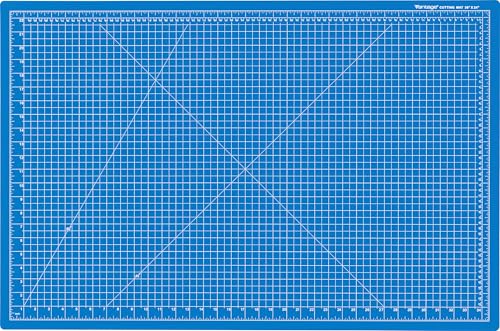
Professional makers often gravitate toward the Dahle Vantage mat for its exceptional density and longevity. This mat features a specialized self-healing material that seals cuts almost instantly, leaving virtually no trace of blade work behind.
It is particularly valued in high-traffic sewing rooms where multiple people might share equipment. The surface is exceptionally smooth, allowing for seamless movement of heavy-weight fabrics like wool coatings or dense canvas.
While the price point sits higher than generic alternatives, the lifespan of the mat offsets the cost. It is an investment in the long-term health of rotary blades, as the surface does not cause premature dulling.
How to Choose the Right Cutting Mat Size for You
Choosing the right mat size depends entirely on the scale of the projects being tackled. Small mats are perfect for trimming binding or small squares, whereas large mats allow for efficient cutting of entire yardage.
Consider the dimensions of the workspace before purchasing; a mat that hangs off the edge of a table is a safety hazard and will inevitably warp over time. Aim for a size that leaves at least an inch or two of clearance around the edges of the cutting area.
If space is at a premium, look for foldable or rotating mats that offer versatility without requiring a permanent large-scale footprint. Always prioritize the largest surface that comfortably fits the table rather than the largest one available on the market.
Understanding Self-Healing Mats and How They Work
Self-healing mats are composed of multiple layers of compressed vinyl that allow a blade to penetrate and then spring back into place. The physical design ensures the surface remains level, which is critical for consistent cuts across long lengths of fabric.
It is a common misconception that these mats “heal” like skin; instead, they essentially bridge the gap of the cut, hiding the evidence of the blade. Because they are soft enough to accept the edge of a blade, they significantly extend the life of rotary cutters compared to cutting on hard surfaces like wood or glass.
Never leave a hot iron on a self-healing mat, as the heat can permanently deform the surface and destroy the healing properties. Treat the mat as a precision instrument rather than a general-purpose workbench.
Keep Your Cutting Mat Flat: Storage and Care Tips
The longevity of a mat depends largely on how it is stored. Mats must remain flat at all times; rolling them or leaning them against a wall can cause permanent curves that make accurate cutting impossible.
Store the mat under a flat surface—like a desk or between pieces of stiff cardboard—when not in use. Avoid keeping it in direct sunlight or near heat sources, as extreme temperature fluctuations can cause the vinyl to warp or shrink.
Cleaning is equally important; wipe the mat down occasionally with a soft cloth and a mixture of water and a tiny bit of mild soap to remove fabric dust and lint. Proper maintenance prevents the buildup of debris that can eventually interfere with the grip of the rotary cutter.
Rotary Cutter Safety: Essential Tips for All Mats
Using a sharp blade is safer than using a dull one, but the safety of a rotary cutter remains paramount. Always engage the safety lock immediately after each cut, regardless of how brief the pause in activity might be.
Maintain a firm, controlled grip, and always pull the cutter away from the body, never toward the fingers. Using a high-quality quilting ruler acts as a necessary barrier between the hand and the sharp edge, providing both guidance and protection.
When the blade begins to skip or requires extra pressure to cut through a single layer, it is time to replace it. A dull blade is unpredictable and more likely to slip, leading to ruined fabric or painful nicks.
Selecting the right cutting mat is a foundational step in ensuring the success and safety of any textile project. By choosing a mat that matches the intensity of your work and treating it with care, the quality of your finished pieces will improve significantly.