6 Light-Duty Clips For Holding Paper During Display
Discover the 6 best light-duty clips for holding paper during display. Shop our curated selection to keep your documents organized and secure. Read more now.
Keeping a complex knitting pattern front and center is essential for maintaining a consistent gauge throughout a project. Whether working through intricate lace charts or complex cable repeats, having the instructions securely held at eye level prevents errors that occur from losing one’s place. The right clip acts as a dedicated assistant, ensuring the focus remains on the yarn and needles rather than managing unruly paperwork. Selecting a reliable tool for this purpose is a small investment that pays significant dividends in stitch accuracy.
Clover Wonder Clips: Best for Fabric & Paper
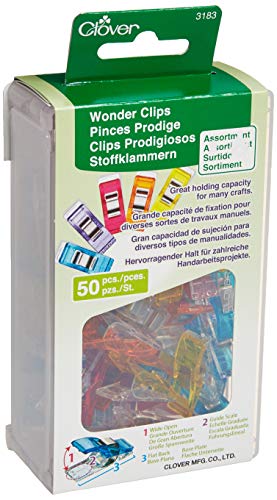

Clover Wonder Clips are widely recognized in the sewing world, but they are an overlooked gem for the knitting room. Their flat base allows them to sit flush against a tabletop, providing a stable anchor for holding pattern pages down while calculating row repeats.
Unlike metal clips, the plastic construction of Wonder Clips ensures they will not rust or snag delicate wool fibers if they accidentally come into contact with a project. They provide a firm, even tension that is strong enough to hold several pages of a printed pattern together without creasing or tearing the paper.
For the knitter working with heavy, thick pattern booklets, these clips offer a wide opening capacity that traditional paper clips cannot match. Consider them the primary choice when the pattern needs to stay open on a flat surface for long periods of time.
U Brands Mini Binder Clips: The Office Staple

Mini binder clips are the workhorses of the knitting community for a reason. Their steel construction provides a tight, reliable grip that ensures a pattern remains attached to a clipboard or a folding knitting stand, even in a drafty room.
The key advantage here is the foldable wire arm, which allows the clip to lay flat once the paper is secured. This minimizes bulk, which is critical when working in a cramped space, such as a crowded knitting circle or a small armchair.
Be aware that the metal edges can be sharp, especially on cheaper versions. Always inspect them for burrs before use to ensure they do not catch on mohair or other delicate, fuzzy fibers if the clip is accidentally brushed against the project.
Mini Wooden Clothespins: A Rustic Craft Vibe
Mini wooden clothespins offer a gentle, low-profile way to organize pattern pages without the risk of metallic marring. They are particularly useful for those who prefer a tactile, aesthetic approach to their knitting space.
Because they rely on a simple spring mechanism, they exert a lighter pressure than heavy-duty binder clips. This makes them ideal for holding a single chart page onto a pattern board without leaving deep indentations in the paper.
While they lack the extreme grip of steel, their small footprint is perfect for keeping patterns tidy in a project bag. They represent the best balance of function and form for the knitter who values a calm, natural workspace.
Knitter’s Pride Chart Clips: For Magnetic Boards

Knitter’s Pride chart clips are engineered specifically for the unique demands of tracking knitting charts. These clips are usually part of a larger magnetic system, designed to move seamlessly across the surface of a steel board.
These clips allow for precise, line-by-line tracking without obscuring the surrounding information. They are essential for complex colorwork patterns where seeing the context of the stitches above and below the current row is necessary.
The trade-off is that they are specialized tools that rarely serve a purpose outside of the magnetic board system. If a knitting setup is already centered around a magnetic board, these clips are the most efficient option for keeping patterns perfectly aligned.
Tim Holtz Bulldog Clips: A Sturdy, Vintage Look
The Tim Holtz brand of bulldog clips brings a heavy-duty, vintage aesthetic that appeals to knitters who value durability. These clips are designed to handle thicker stacks of paper, such as comprehensive pattern binders or multi-page lace tutorials.
Their construction is significantly more robust than standard office supplies, featuring a powerful spring that will not weaken over time. When working on a large project that spans several weeks or months, these clips hold the pattern securely through repeated movement.
Because of their industrial strength, exercise caution when using them near finished garments. The tension is high enough that they could leave a permanent crimp in delicate hand-dyed yarns or soft alpaca blends.
IKEA RIKLIG Curtain Clips: The Clever Budget Hack
Originally intended for hanging textiles, these curtain clips have become a popular hack for knitters who need a versatile way to suspend a pattern. By clipping the pattern and hanging it from a floor lamp or a stand, the instructions remain at eye level, saving the knitter from constant neck strain.
They are an exceptionally budget-friendly solution when stocking up for multiple project bags. The swivel hook attached to the clip provides a range of motion that fixed clips cannot offer, allowing the pattern to move with the knitter’s position.
Keep in mind that the spring action on these is designed for fabric, not heavy cardstock. They work best for standard printer paper or thin, lightweight pattern charts.
Choosing the Right Clip for Your Knitting Pattern
Selecting the correct clip depends entirely on the thickness of the document and the environment of the knitting space. A bulky pattern booklet requires the high tension of a binder or bulldog clip, while a single-page chart is better served by something lighter like a wooden clothespin.
Consider the surface where the pattern will live. If working on a lap, prioritize a clip with a low profile that won’t dig into the legs. If the pattern is mounted on a wall or stand, prioritize clips with hooks or loops for easy attachment.
Ultimately, the best clip is the one that disappears into the background of the knitting process. If the knitter has to fight with the clip to turn a page, it is the wrong tool for the task.
Plastic vs. Metal vs. Wood: Which Clip Is Best?
- Plastic: Best for avoiding snags on delicate fibers and preventing rust in humid environments.
- Metal: Necessary for heavy-duty, long-term grip but requires care to avoid damaging yarn or paper.
- Wood: Offers the most aesthetic appeal and the gentlest grip, though it is the most prone to breakage over time.
Each material carries different friction properties that affect how easily a pattern can be adjusted. Metal provides the most secure hold, but plastic allows for smoother, faster page-turning without the risk of tearing.
Gauge whether the project uses sensitive fibers, such as silk or unspun wool, when making the final selection. Using a metal clip near these fibers is a risk that is often not worth taking.
Tips for Using Clips with Your Pattern Keeper
When using a pattern keeper or a magnetic board, the clip should be placed at the very top of the page. This prevents the clip from blocking the view of the current row and keeps the weight distributed evenly.
Avoid clipping pages directly over the chart lines if possible. Over time, the pressure from the clip can cause the ink to smear or the paper to become brittle along the edge, making it difficult to read complex stitch keys.
Always leave a small buffer of paper between the edge of the clip and the actual knitting instructions. This small habit preserves the integrity of the printed document for future project repeats.
How to Keep Clips From Damaging Your Patterns
To protect patterns from permanent creasing, place a small piece of scrap cardstock between the teeth of the clip and the pattern page. This distributes the pressure and prevents the sharp metal edges from indenting the paper.
If using metal clips, check them regularly for oxidation. A clip left in a damp knitting bag can transfer rust marks to both the paper and the surrounding yarn, which are often impossible to remove.
When putting a project away, remove the clips entirely to allow the paper to rest flat. Storing a pattern clipped for long periods sets a deep crease that can eventually lead to tearing along the binding edge.
Developing a consistent system for organizing charts and patterns is as important as choosing the right needles for a project. By selecting the appropriate clips and using them with care, a knitter ensures that every session is focused entirely on the craft, free from the frustration of misplaced instructions. A well-organized workspace serves as the foundation for successful, error-free knitting. Happy making.