6 Best Gemstone Beads For Adding Weight And Texture
Enhance your jewelry designs with our top 6 gemstone beads for adding weight and texture. Read our expert guide to choose the perfect materials for your project.
Incorporating gemstone beads into a knitted fabric elevates a simple project into a heirloom-quality piece of wearable art. While plastic or glass beads are lightweight and predictable, natural stones bring a deliberate weight and a tactile richness that shifts how a garment moves against the body. Choosing the right gemstone requires balancing the desired aesthetic with the structural integrity of the yarn. This guide navigates the essential properties of six distinct gemstone beads to ensure every stitch remains secure and beautiful.
Hematite Rondelle Beads: Best for Serious Drape


Hematite is an exceptionally dense, metallic-finish stone that provides the most dramatic drape of any bead category. Because of its weight, it serves as an excellent anchor for the hem of a delicate lace shawl or the cuffs of a heavy wool cardigan.
These beads are typically finished with a high-polish sheen that creates a sophisticated contrast against matte wool or mohair yarns. The rondelle shape—a flattened disc—sits neatly within the stitch, preventing the aggressive snagging that can occur with more angular or irregular stone shapes.
Be mindful that the high density of hematite can cause the fabric to stretch over time. When using these, consider reinforcing the bind-off edge or utilizing a slightly tighter gauge to support the added mass.
Matte Lava Stone Rounds: Best for Natural Texture
Lava stone is remarkably lightweight despite its rugged, porous appearance, making it the perfect choice for projects where volume is desired without adding excessive weight. These beads offer a raw, organic texture that pairs beautifully with rustic, woolen-spun yarns or tweed blends.
The natural grip provided by the pitted surface of the lava stone helps keep the bead stationary within the knitting. Unlike smooth glass, these beads are less likely to slide down a sleeve or shift out of place once the tension is set.
Use these for garments intended for casual, everyday wear. Their matte finish complements earthy palettes and hides small scratches or dings that inevitably occur during the life of a hand-knit sweater.
Picture Jasper Cube Beads: Best for Earthy Tones
Picture Jasper is prized for its intricate, landscape-like inclusions and earthy color palette. The cube shape offers a modern, structural aesthetic that creates a distinct geometric pattern when repeated across a row of knitting.
Because cubes have flat sides, they sit flush against the fabric surface rather than rolling around. This makes them ideal for structural placement, such as creating a line of beads down the center of a scarf or framing a collar.
Ensure the holes in these beads are drilled cleanly, as stone cubes can occasionally have sharp edges near the aperture. A quick check with a needle before stringing can save the fiber from being severed during the knitting process.
Faceted Agate Bicones: Best for Subtle Sparkle
Faceted agate provides a refined, restrained shimmer that elevates a garment without appearing overly ornate. The bicone shape—two cones joined at their bases—is structurally sound and allows the bead to nestle into the V-shape of a knit stitch with ease.
The faceting catches the light during movement, which adds a layer of depth to solid-colored yarns. Agate is also remarkably durable, making it a reliable choice for items that will see frequent wear and laundering.
When selecting agate, look for consistency in the drilling. Because the stone is harder than many other minerals, poorly drilled holes can be abrasive to natural fibers like delicate merino or silk.
Tiger’s Eye Polished Nuggets: Best for Rich Sheen
Tiger’s eye is famous for its “chatoyancy,” an optical phenomenon that creates a moving, silky band of light across the surface of the stone. These nuggets are typically irregular in shape, which adds a fluid, organic feel to the finished knit.
The varying sizes of nuggets create visual interest and break up the uniformity of the stitches. They work exceptionally well as focal points in complex cable patterns where the beads can be tucked into the recessed sections of the twist.
Because nuggets vary in shape, they require a knitter to pay close attention to the stitch count. Adjusting the spacing between beads is often necessary to prevent bunching or uneven fabric tension.
Unakite Chip Beads: Best Budget-Friendly Option
Chip beads are small, irregular fragments of stone that offer a high-texture look at a very accessible price point. Unakite, with its signature mottled green and pink coloration, adds a vintage, eclectic charm to any project.
Because chips are small and varied, they provide a sense of movement in the fabric without the heaviness of larger polished stones. They are an excellent way to introduce gemstone elements to beginners who might be intimidated by the cost or weight of larger beads.
Be cautious of the edges on chip beads, as they can be sharper than polished rounds or rondelles. Pairing them with a sturdy, high-twist yarn will help prevent the beads from wearing through the fiber over time.
How to Match Bead Hole Size to Your Yarn Weight
The most common failure in beaded knitting is choosing a bead with a hole too small for the yarn, leading to damaged fibers or an inability to pass the yarn through. Always verify the hole diameter against the actual width of the yarn under slight tension.
If the yarn is a fuzzy mohair or a high-twist wool, the “drag” factor will be significantly higher. A bead that slides easily on a smooth cotton yarn might snag or bunch when threaded onto a textured fiber.
A simple rule of thumb is to ensure the bead hole is at least 0.5mm larger than the diameter of the yarn when it is slightly stretched. If in doubt, opt for a larger aperture to protect the structural integrity of the stitches.
Pre-Stringing vs. Crochet Hook: Adding Beads
Pre-stringing involves loading all the beads onto the working yarn before casting on, which is the most reliable method for precise placement. This approach allows the knitter to focus solely on the stitch pattern without stopping to fiddle with tools.
Using a fine crochet hook to pull the yarn through the bead mid-stitch is an alternative that allows for greater flexibility. This method is preferred when the exact placement of the beads is determined during the knitting process or if a pattern requires irregular bead distribution.
Consider the time investment of each method; pre-stringing requires an upfront commitment, while the hook method interrupts the knitting rhythm. For complex, color-work heavy projects, pre-stringing is usually the safer bet to avoid pattern errors.
Caring for Knits with Heavy Gemstone Beads
Gemstone-adorned knits require more specialized care than standard woolens, primarily to protect both the stone and the fiber. Always hand-wash these pieces in cool water using a gentle detergent, and avoid soaking for extended periods.
Weight is the enemy of shape retention; never hang a garment decorated with heavy stone beads. Always dry the piece flat and reshape it carefully, ensuring that the distribution of beads does not cause the wet yarn to stretch unevenly.
When storing, keep the item folded in a breathable container to prevent the weight of the beads from putting undue stress on the shoulders or seams. A padded hanger is only appropriate if the weight is distributed across a wide, supportive surface.
Choosing the Right Tools for Beaded Knitting
Success with beads often comes down to the quality of the beading needle or threader. A flexible, collapsible-eye needle is essential for pulling yarn through smaller stone apertures without damaging the fiber.
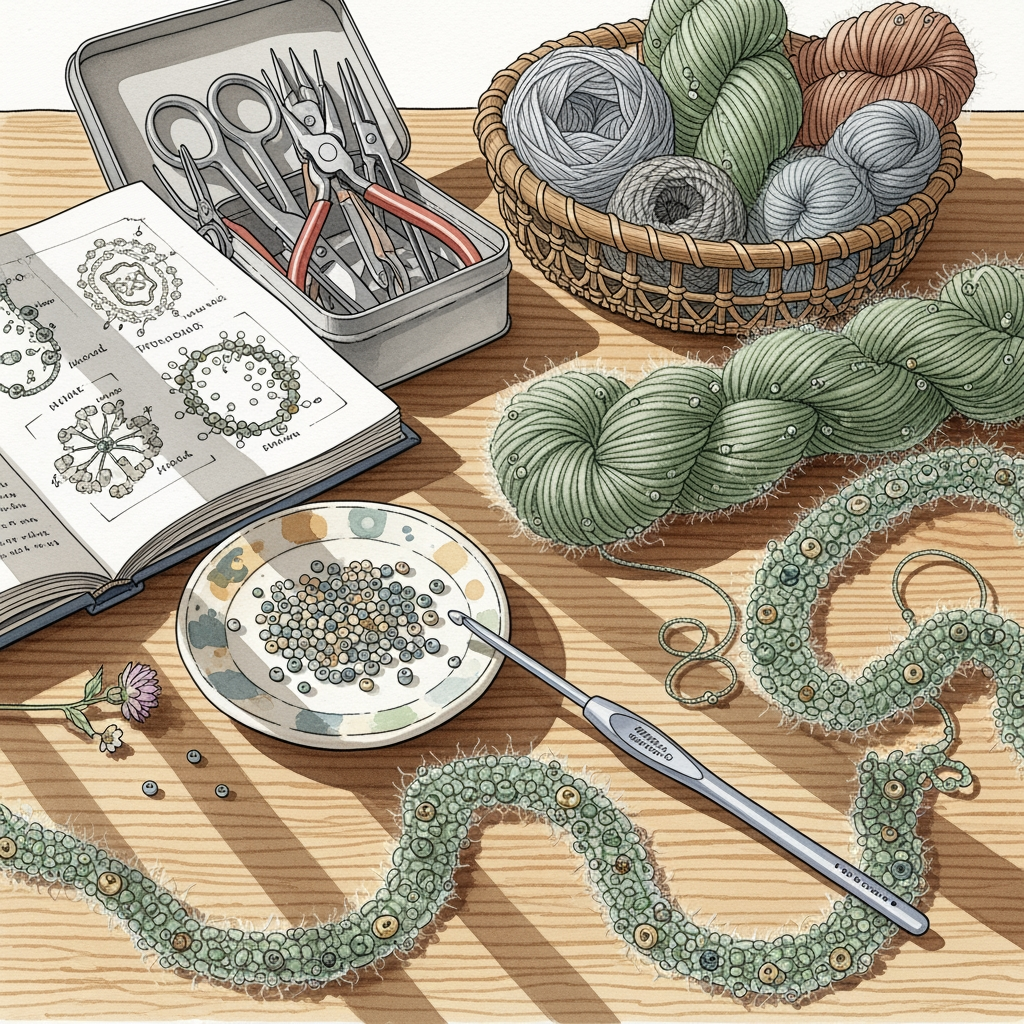
Invest in a set of ergonomic crochet hooks ranging from 0.5mm to 1.0mm specifically for the hook-on-the-fly method. These hooks must be smooth and free of burrs, as even a tiny imperfection can fray fine yarn fibers instantly.
Lastly, consider the weight of the knitting needles themselves. If the project is heavy with stones, shifting to wooden or bamboo needles can provide a bit more grip and control, helping to manage the extra mass while working the stitches.
Incorporating gemstone beads is a rewarding exercise in balancing utility with aesthetics. By selecting the right stone for the weight and texture of the yarn, the resulting project gains a level of luxury and permanence that mass-produced accessories simply cannot replicate.