6 Best Stiletto Tools For Fabric Guiding To Try
Upgrade your sewing precision with our 6 best stiletto tools for fabric guiding. Explore these top-rated essentials and improve your stitching accuracy today.
Achieving precise seam control often feels like the difference between a project that looks professional and one that clearly reveals its handmade origins. A quality stiletto acts as an extension of the fingers, guiding fabric under the needle with precision that human digits simply cannot match. Whether managing tricky silk blends or thick, lofty wools, this tool prevents the minor shifts that ruin a perfect garment. Investing in the right guide elevates the sewing process from a struggle against shifting layers to a smooth, controlled experience.
Clover Tailor’s Awl/Stiletto: Best Overall
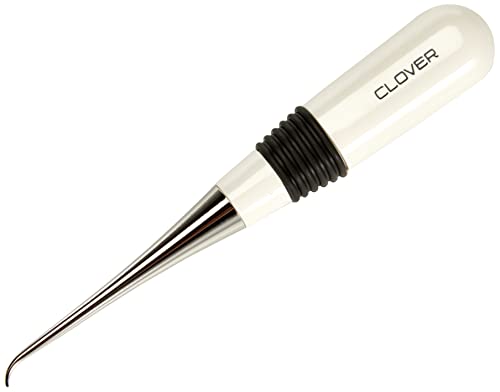

The Clover Tailor’s Awl/Stiletto earns top marks for its straightforward design and balanced weight. It features a sturdy metal point that maintains its shape even when pushing through multiple layers of heavy-duty denim or canvas.
The ergonomic handle provides a firm grip, ensuring the tool does not roll off the table during intense sessions. Its pointed tip is aggressive enough to guide fine silk or delicate lawn without snagging, making it a reliable workhorse for everyday sewing tasks.
While it lacks fancy attachments, its simplicity is exactly why it succeeds. For those who prioritize utility over aesthetics, this tool is the most dependable choice in a workspace.
ByAnnie Stiletto & Pressing Tool: Most Versatile
This tool is specifically engineered for those who demand more than just a guiding point. One end functions as a traditional stiletto, while the other features a flat, angled edge designed for pressing seams open directly under the needle.
It proves exceptionally useful when working with bulky binding or heavy interlining. Instead of constantly switching between a guide and an iron, the flat end allows for quick finger-pressing that saves time and improves accuracy.
The trade-off is that the pressing end can feel slightly cumbersome if the workspace is cramped. However, for quilters and bag makers who deal with frequent pressing, the efficiency gains far outweigh the minor adjustment in handling.
Tula Pink Hardware Stiletto: Premium Style Pick

High-quality stainless steel construction defines the Tula Pink Hardware Stiletto, offering a level of durability that few other tools can match. Beyond its striking aesthetic, the weight provides excellent stability when guiding fabric through high-speed sewing.
The slim, elongated tip reaches right up to the presser foot, allowing for maximum control of tiny seam allowances. It serves as an ideal accessory for precision-heavy projects, such as English paper piecing or delicate appliqué, where visual clarity is paramount.
While the price point is higher, the craftsmanship justifies the investment for those who value long-term durability. It is a tool designed to last for decades, provided the tip is handled with care to avoid blunting.
Dritz Stiletto/Seam Ripper Combo: Best Budget Buy
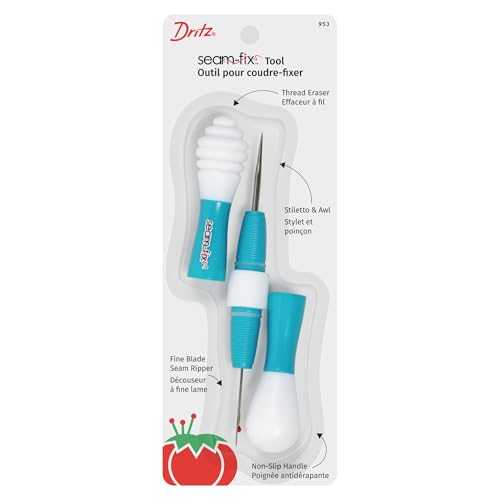
Combining two essential functions into one handle, the Dritz Stiletto/Seam Ripper is a space-saving solution for the minimalist sewing station. It allows for an immediate pivot between correcting a mistake and guiding the next seam.
This tool is perfect for beginners who are still assembling their kit and want to maximize value. The stiletto tip is sharp, and the seam ripper is adequate for clearing stray threads, though it may not hold up to years of heavy-duty abuse.
Be mindful that the dual-purpose design means the tool is slightly longer than a standard stiletto. For those with small hands, it may require a moment of adjustment to find a comfortable grip.
The Purple Thang Multi-Tool: Quilter’s Favorite
The Purple Thang is a unique plastic multi-tool that has earned a cult following for its versatility in guiding fabric and turning corners. Its notched end acts as a finger-saver, pressing down corners or feeding fabric through the machine without the risk of piercing the textile.
Because it is made of durable plastic, it will not scratch delicate fabrics or damage the finish of the sewing machine plate. It is particularly effective for those working with synthetic fabrics that might snag on metal tips.
While it lacks the piercing capability of a metal stiletto, it excels at tasks requiring gentle pressure. It is a must-have for anyone who frequently struggles with turning precise, crisp corners on quilts or structured bags.
Alex Anderson 4-in-1 Tool: Ultimate Multi-Tasker
The Alex Anderson 4-in-1 tool is a masterclass in functional design, incorporating a stiletto, a pressing tool, a seam ripper, and a tube turner. It simplifies the tool collection for quilters who need to perform varied tasks in rapid succession.
Each component is well-calibrated, ensuring the stiletto is sharp enough for guiding and the pressing end is sturdy enough for creating sharp creases. It is essentially an entire sewing studio in one compact instrument.
The complexity of the tool means it has a steeper learning curve for users who are used to simple, single-use implements. Those who take the time to master its various ends, however, will find their workflow becomes significantly more fluid.
How to Choose the Right Stiletto for Your Needs
Selecting the right stiletto depends on the primary material and the type of project on the table. For delicate fabrics like silk or rayon, a finer, sharper tip is essential to avoid tearing or leaving permanent holes.
Conversely, when working with heavy-weight upholstery or layers of batting, a sturdier metal point is necessary to handle the added resistance. Consider the handle weight as well; a heavier tool provides better stability for thick fabrics, while a lighter tool reduces fatigue during long, intricate sewing sessions.
- For precision work: Look for a thin, tapered metal tip.
- For heavy-duty projects: Prioritize a blunt, high-strength metal shaft.
- For frequent pressing: Choose a multi-tool with a dedicated flat pressing edge.
Using a Stiletto Safely at Your Sewing Machine
Safety is paramount when using sharp tools near moving machinery. Always keep the point of the stiletto angled away from the fingers, and never use the tool to force fabric directly under a descending needle.
The stiletto is meant to guide and nudge, not to block the path of the needle. A common mistake is pushing too hard, which can cause the tool to skip off the fabric and onto the sewing machine plate or, worse, toward the hands.
Always keep eyes on the presser foot rather than the tool itself. If the tool starts to feel like a distraction or a safety hazard, pause the machine and reposition the fabric by hand before continuing with the guide.
Metal vs. Plastic Stiletto Tips: Key Differences
Metal tips provide unmatched precision and strength, making them the standard for fine sewing and high-tension tasks. They can pierce through multiple layers easily, but they also have the potential to snag loosely woven fabrics or scratch delicate finishes.
Plastic tips, like those found on the Purple Thang, are inherently safer and more forgiving on the fabric. They are excellent for maneuvering delicate materials where you cannot risk a snag, but they lack the rigidity required for heavy-duty fabric manipulation.
Ultimately, the choice often comes down to the weave of the fabric and the desired result. Most experienced sewers keep at least one of each in their arsenal to account for the physical differences between various textiles.
Beyond Seams: Other Smart Uses For a Stiletto
A stiletto is not limited to simply guiding fabric through a sewing machine. Its sharp point is perfect for turning out tight corners on collars, cuffs, and bag handles, ensuring crisp, professional-looking points without the bulk of scissors.
It also serves as a valuable tool for untangling knotty threads or pulling through basting stitches after a project is finished. Many sewers find that having a stiletto handy for popping out stubborn pins or guiding decorative trims makes the finishing process much faster.
Some even use the tool to carefully lift delicate embroidery threads or to space out small pleats during assembly. A high-quality stiletto is a versatile companion that finds its way into almost every step of the garment-making process.
Choosing the right stiletto transforms the way the machine handles fabric, turning a battle against shifting layers into an exercise in controlled precision. By balancing the need for sharpness against the safety of the textile, the right tool ensures that every stitch lands exactly where it is intended. With a little practice, these simple instruments become an indispensable part of the sewing experience, consistently raising the bar for the final result.