6 Best Presentation Cases For Transporting Knitted Samples
Protect your hard work with these 6 best presentation cases for transporting knitted samples. Keep your projects safe and organized. Read our top picks today.
Transporting delicate knitted samples requires a strategic balance between maintaining the structural integrity of the stitches and ensuring professional presentation. Whether traveling to a trunk show, meeting a yarn shop owner, or documenting a portfolio for a design submission, how a piece arrives speaks volumes about the maker’s attention to detail. Improper storage often leads to flattened cables, crushed mohair, or unwanted creasing that ruins the drape of a finished garment. Investing in the right transport system is a necessary evolution for any knitter transitioning from hobbyist to professional creator.
Itoya Art Profolio: Best for Flat Swatches


The Itoya Art Profolio is the industry standard for presenting swatches because it mimics the clarity and professionalism of a photography portfolio. The acid-free, archival-safe sleeves prevent fiber degradation while allowing viewers to examine stitch definition without touching the delicate fibers.
Because the sleeves are rigid yet flexible, they excel at protecting swatches from dust, oils, and moisture during transit. The black mounting paper included inside each page provides a high-contrast background that makes intricate stitch patterns—like complex lace or twisted stitches—pop visually.
Consider the tradeoff: while these offer supreme organization, they are not designed for bulky pieces. If a swatch is overly textured, such as a thick bobble or intense popcorn stitch, it may struggle to fit comfortably without distortion.
Pelican 1400 Case: For Ultimate Protection
When transporting rare hand-dyed yarns or heirloom-quality samples, nothing beats the ruggedness of a Pelican case. These hard-shell, watertight containers provide a crush-proof environment that essentially guarantees the safety of the contents.
The internal pluck-foam allows for a completely customizable interior, meaning a sample can be cradled exactly to its dimensions. This prevents the shifting that often happens in soft bags, ensuring that edges don’t curl or snag during transit.
Be aware that these cases are heavy and lack aesthetic elegance, making them better suited for trade shows or mail-in submissions than local networking events. If the priority is absolute structural preservation over portability, this is the definitive choice.
Namaste Maker’s Train Case: Best for Organization
The Namaste Maker’s Train Case serves as a bridge between a stylish tote and a functional transport vessel. Its structured design keeps items upright, preventing the cascading mess that often occurs in standard fabric bags when they are tipped over.
Internal compartments allow for the separation of different samples, preventing fiber migration where fluff from a loose-spun wool might get embedded into the fibers of a tighter, smoother cotton or linen swatch. The reinforced bottom keeps the base of the bag from sagging, preserving the shape of the samples placed inside.
This is the ideal option for the knitter who needs to keep tools, patterns, and samples in a single, cohesive unit. It lacks the crush-protection of a hard case, so prioritize placing it where it will not be buried under heavier luggage.
Lineco Archival Box: Pro-Level Presentation

Lineco archival boxes are favored by museum professionals and textile conservators for a reason: they are built to last a lifetime. Using these boxes signals that the work inside is intended for long-term study or display, elevating the perceived value of the samples.
The rigid, acid-free construction creates a climate-controlled environment that resists temperature fluctuations. This is particularly important for samples containing animal fibers like merino, alpaca, or cashmere, which are sensitive to humidity changes and environmental pollutants.
While these offer the highest level of archival safety, they are not convenient for quick access. Use them when shipping samples or storing a permanent library of master swatches rather than for daily transport to local meetings.
WallyBags Garment Bag: For Full-Size Sweaters
Full-sized garments require a different transport philosophy than swatches to avoid horizontal creasing or sagging of the shoulder seams. A high-quality garment bag keeps large pieces hanging, which allows gravity to work with the knitting rather than against it.
By keeping a sweater hanging, the weight is evenly distributed rather than bunched up in a suitcase. This is vital for heavy wool sweaters or garments made from cellulose fibers like bamboo or linen, which are prone to permanent wrinkling if stored in a folded pile.
Ensure the bag is breathable. While many garment bags are plastic, selecting one with a natural fiber lining or canvas construction prevents moisture entrapment and mustiness.
Clear Vinyl Bags: The Most Budget-Friendly Pick
Clear vinyl bags are the workhorse of the knitting world, providing instant visibility of the contents without the high cost of specialized equipment. They protect against spills and light rain, which is essential when commuting through unpredictable weather.
The primary advantage is speed; a quick glance tells the knitter exactly which project or sample is inside. For those working with multiple yarn weights, these bags keep the fiber characteristics—like halo or ply—clear and separated.
The downside is the lack of rigidity. If vinyl bags are used, they should be placed inside a larger, structured bag to prevent the contents from bending or folding. They are excellent for short-term transport but are not suitable for long-term storage due to their non-breathable nature.
How to Choose the Right Case For Your Samples
Selecting the right case depends entirely on the fiber content and the intended purpose of the sample. For highly textured, hand-dyed yarns, prioritize physical protection and crush resistance. For simple, smooth-knit swatches intended for design submission, focus on clarity and flat storage.
Think about the duration of the trip. A quick car ride to a local guild meeting requires far less protection than shipping a box of samples across the country for a magazine feature.
Always consider the weight of the fiber. Heavy wools will shift more in a soft case, leading to distortion. Lightweight mohair blends require separation to prevent tangling with other samples, making individual sleeves or bags essential.
Packing Tips to Keep Your Knits Wrinkle-Free
The most effective way to prevent wrinkles is to layer samples with acid-free tissue paper. This reduces friction between the knitted surfaces and prevents the “locking” that can occur between fuzzy fibers during transit.

When folding a garment, follow the natural lines of the construction rather than forcing a new fold. Lay the piece flat on a clean surface, smooth it out, and allow the weight of the garment to settle before placing it into the transport case.
Avoid over-stuffing. If a case is packed too tightly, the pressure will compress the yarn, causing a loss of stitch definition and potentially damaging delicate fibers. Give every sample enough space to breathe and maintain its shape.
Building Your On-the-Go Sample Repair Kit
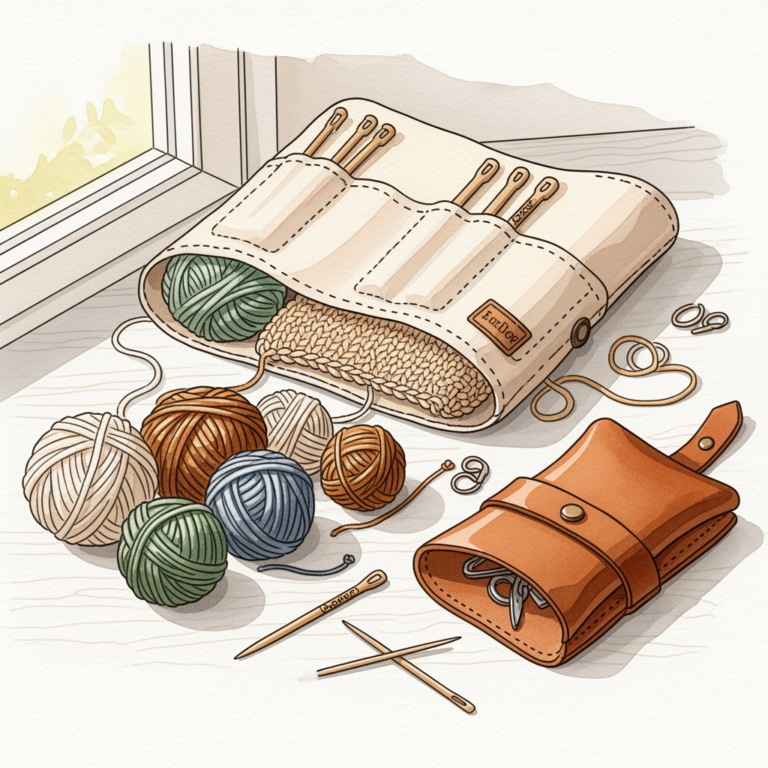
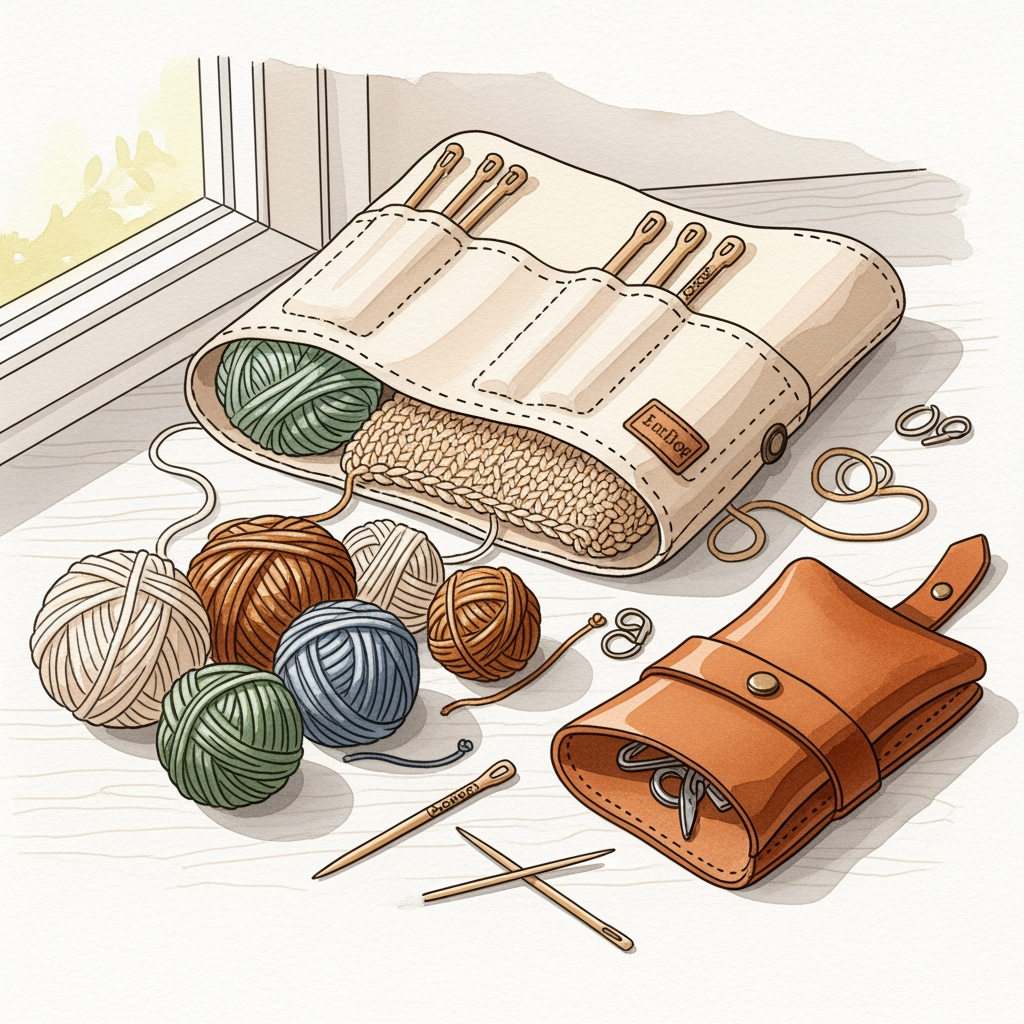
Even with perfect packing, accidents happen. A professional knitter always travels with a compact repair kit stored inside their sample case. This should include a bent-tip tapestry needle for weaving in loose ends and a set of locking stitch markers.
Include a small pair of folding scissors and a tiny container of mild wool wash or a spot-cleaner for unexpected stains. A small wooden tool for fixing snags—a “snag nab-it” or a simple crochet hook—can be the difference between a pristine sample and one that looks neglected.
Keep these items in a small, separate pouch to ensure they do not snag the samples during transit. Being prepared allows for a last-minute fix that maintains a professional standard right before a presentation.
DIY & Budget Options for Transporting Swatches
For knitters on a budget, rigid cardboard folders or clean, repurposed plastic sleeves offer adequate protection for swatches. Creating a DIY portfolio using a standard binder and archival sheet protectors provides most of the benefits of professional cases at a fraction of the cost.
If using boxes, line them with unbuffered, acid-free tissue paper to create a soft, protective nest. This prevents the cardboard from abrading the yarn and provides a neutral barrier against any chemicals in the box material.
The key to DIY options is consistency. As long as the environment is dry, acid-free, and prevents crushing, the samples will remain in excellent condition regardless of the price tag on the container.
Properly transporting knitted samples is an extension of the craft itself, reflecting a commitment to the fiber arts. By selecting a transport method that matches the specific needs of the fiber, you ensure that every hour spent at the needles is represented with the care it deserves.