7 Best Spray Nozzles For Gradient Effects To Try
Master smooth blends with our expert guide to the 7 best spray nozzles for gradient effects. Explore our top-rated picks and elevate your spray paint art today.
Achieving a seamless gradient on hand-knitted garments transforms a simple project into a bespoke piece of wearable art. While dip-dyeing offers saturation, spray techniques allow for precise color placement and soft transitions across natural fibers like wool or mohr. Choosing the right tool dictates whether the result appears professional and fluid or patchy and uneven. Mastering the spray method opens a new frontier for custom-dying single-ply yarns or entire finished sweaters.
Preval Sprayer: Best for Aerosol-Style Control
The Preval unit functions as a portable, replaceable aerosol system that offers the consistency of spray paint without the environmental burden of permanent canisters. It is ideal for applying light layers of dye to a finished shawl where you need to avoid soaking the fabric and potentially causing unwanted felting.
Because the spray pattern is fine and consistent, it creates an excellent “mist” that sits on the surface of the fiber rather than penetrating through every layer. This is vital when working with delicate lace weight yarns, where over-saturation often leads to color bleeding into unwanted sections.
The main trade-off is the recurring cost of the power units. If you are planning a large-scale project, such as dyeing multiple sweaters, the expense of replacing power canisters can escalate quickly.
Jacquard Spray Bottles: Best for Classic Dyeing


These heavy-duty trigger sprayers are staples in textile studios because they handle concentrated dye solutions without clogging. Unlike standard household spray bottles, these feature adjustable nozzles that can shift from a wide, diffuse spray to a direct stream for pinpoint color accents.
When working with natural fibers like superwash merino or cotton, the volume of spray matters. These bottles allow for a higher flow rate, which helps push pigment into the twist of the yarn, ensuring the color doesn’t just sit on the surface and wash out later.
The primary drawback is the hand fatigue caused by manual pumping. If you are dyeing a large volume of yarn, anticipate frequent breaks to prevent strain during the application process.
Iwata Eclipse Airbrush: Best Pro-Level System
For knitters who treat their yarn like a canvas, the Iwata Eclipse offers unmatched precision and control. This gravity-fed airbrush allows for extremely thin lines, soft gradients, and intricate shading that manual spray bottles simply cannot replicate.
This tool shines when executing complex designs, such as subtle ombre effects on individual skeins of silk or high-end alpaca. Because the nozzle is so refined, you can layer colors with microscopic precision, creating shifts in tone that look completely organic.
However, the barrier to entry is high. Beyond the initial investment in the compressor and the brush, the learning curve for maintenance and air pressure control is significant.
Paasche H-SET: Best Airbrush Kit for Beginners
The Paasche H-SET is a siphon-feed system that is legendary for its durability and ease of use. It is a workhorse for fiber artists who want to move beyond basic bottles but are not ready for the delicate maintenance of high-end gravity-fed brushes.
Because it is a siphon-feed system, you can easily swap between different color jars by simply unscrewing one and attaching another. This is an immense advantage when you are working on a gradient and need to quickly switch from a pale blue to a deep navy to achieve a smooth transition.
The tradeoff is that it requires more cleaning than a bottle, and you must ensure your dye is properly filtered to avoid clogs. Always strain your dye solution through a fine mesh or a coffee filter before loading it into the reservoir.
Chapin Garden Sprayer: Best for Large Batches
When you need to dye a large quantity of fiber—such as a series of heavy wool blankets or several skeins of bulky-weight roving—a pressurized garden sprayer is the most efficient tool. These units hold significant volume and use a pump-up mechanism to deliver a steady, continuous stream of dye.
The wide coverage area is perfect for base-coating a project in a uniform color before applying more specific, hand-painted gradients with a smaller tool. It saves time and minimizes the repetitive motion that often plagues manual trigger bottles.
The risk here is a loss of detail. These sprayers are meant for large, sweeping applications; they are not suitable for fine, artistic shading or subtle color transitions on delicate knitwear.
Flairosol Sprayer: For Ultra-Fine Mist Effects
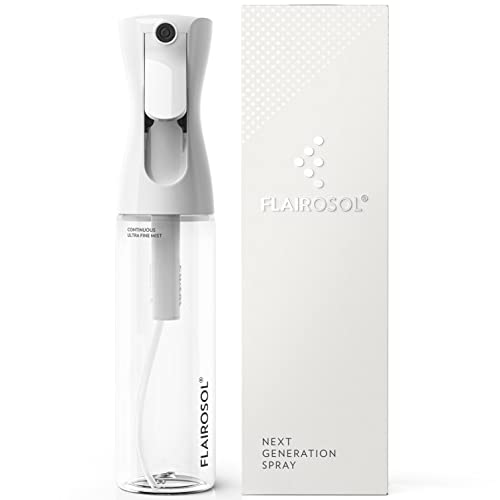
The Flairosol stands out because it utilizes a unique propellant-free system to create a continuous, ultra-fine mist. It delivers a cloud of color that is remarkably even, making it the top choice for preventing those annoying “blotches” that can ruin a gradient.
This tool is particularly effective for those working with fibers that are sensitive to moisture, such as mohair or angora. A heavy, wet spray can cause these fibers to mat or clump, but the light mist from a Flairosol settles gently on the surface without saturating the fiber.
The nozzle is not adjustable, meaning you are limited to a single spray pattern. It is a specialized tool, best used for that final, finishing layer of color rather than initial heavy dyeing.
Dritz Fine Mist Bottle: Best Budget-Friendly Pick
The Dritz fine mist bottle is a reliable, entry-level option that provides a surprising level of consistency for its price point. While it lacks the high-end mechanical precision of an airbrush, it is perfectly capable of producing a respectable gradient on wool or nylon blends.
It is an excellent starting point for a knitter who is curious about spray-dyeing but does not want to invest in expensive machinery. It allows you to experiment with color theory and application techniques without breaking your yarn budget.
The build quality is essentially plastic-on-plastic, meaning it will eventually succumb to wear and tear. It serves as a great “gateway” tool to help you understand if you enjoy the process before moving up to professional-grade hardware.
How to Choose Your Sprayer: Airbrush vs. Bottle
Deciding between an airbrush and a bottle depends on your project goals and your tolerance for technical complexity. Airbrushes are precision instruments that require compressor settings, nozzle maintenance, and meticulous cleaning routines, but they offer unparalleled artistic control.
Manual spray bottles, conversely, are portable and straightforward, making them perfect for outdoor or kitchen-table dyeing sessions. Consider the scale of your work: if you are creating fine-art wall hangings, the airbrush is your best friend.
If you are just adding subtle variegated effects to your hand-knitted socks, a simple spray bottle will achieve the desired outcome with far less fuss. Always consider the thickness of your dye solution as well; thicker mixtures often require the wider nozzle of a traditional bottle to avoid clogging.
Setting Your Dye: Heat, Steam, and Vinegar Tips
Once the dye is on the fiber, it must be set to ensure colorfastness. For most protein fibers like wool, alpaca, or silk, heat is the most reliable method for bonding the dye molecules to the fiber.
Steam-setting is often gentler than immersion in hot water and is preferred for finished knitted items to prevent unwanted shrinkage. Place your project in a steamer or an oven-safe container covered with foil, and introduce heat for 30 to 60 minutes to ensure the dye fully penetrates the fibers.
Adding white vinegar or citric acid to your dye solution acts as a mordant, lowering the pH and helping the fiber “grab” the pigment. If your colors are looking dull or fading during the first wash, experiment with slightly increasing the concentration of acid in your mix.
Cleaning and Care for Your Dye Spraying Tools
The longevity of your tools depends almost entirely on how you treat them immediately after the dye job is finished. Dye particles can dry and harden quickly, creating microscopic blockages that permanently alter the spray pattern of any nozzle.
Always flush your sprayers with clean, warm water immediately after use until the water runs clear. For airbrushes, take the extra step of using an airbrush-specific cleaning solution or a mild soapy water mixture to clear the needle and nozzle assembly.
Never store your tools with dye remaining in the reservoir. Even if you plan to use the same color tomorrow, leaving the nozzle wet and unattended can lead to clogs that are nearly impossible to clear without a complete teardown of the mechanism.
Properly maintained dyeing equipment is as essential to the craft as the quality of your yarn. By selecting the right sprayer and committing to consistent maintenance, you ensure that every project showcases beautiful, intentional gradients that elevate your knitting to professional standards. With these tools in your kit, the possibilities for custom colorwork are limited only by your creativity.