6 Knotting Tools For Professional Silk Cord Finishing
Master professional silk cord finishing with our guide to the 6 essential knotting tools. Learn how to secure your jewelry designs perfectly—read the guide now.
Achieving a professional finish on silk-knotted jewelry requires more than just patience; it demands the right equipment to handle the delicate nature of the fiber. Silk cord is prone to fraying and stretching, making the transition from a simple string of pearls to a finished heirloom piece a technical challenge. Selecting high-quality tools ensures that the tension remains consistent across the entire length of the strand. Mastering these specialized implements transforms a tedious, manual task into a refined craft process.
Beadsmith Knotter Tool: For Consistently Perfect Knots
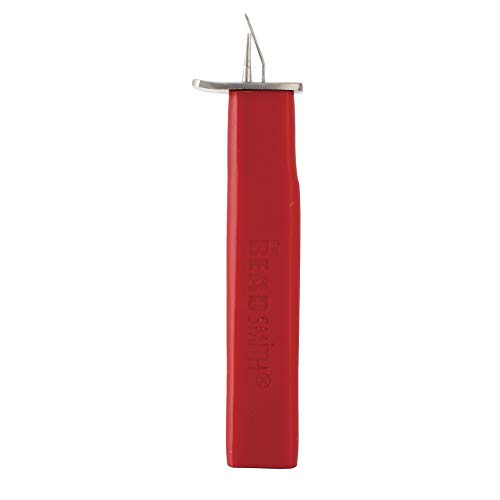

The Beadsmith Knotter tool functions by guiding the knot directly against the bead, minimizing the risk of gaps that often plague manual knotting. It creates a tight, uniform bridge between individual elements, which is essential for preserving the drape of a necklace.
Using this device requires a rhythmic approach, similar to maintaining even tension when working with lace-weight yarn. It eliminates the guesswork of hand-positioning knots, which often result in uneven spacing or loose loops that compromise the durability of the silk.
While it offers precision, the tool can feel rigid for those accustomed to the tactile feedback of manual methods. It is best suited for long strands where consistency is the primary goal.
Griffin Silk Cord with Needle: The All-in-One Solution

Griffin silk cord comes pre-threaded with a needle, effectively removing the frustration of maneuvering thread through a tiny eye. This configuration is a massive time-saver, as silk tends to fray instantly upon contact with standard needles.
The integrated needle is engineered to be slender enough to pass through most cultured pearls and gemstone beads without friction. This reduces the wear and tear on the silk fiber, ensuring the integrity of the cord remains high throughout the assembly process.
Reliability is the hallmark of this product, though the fixed needle size does limit flexibility. If the silk diameter is too thick for a specific bead drill hole, the convenience of the attached needle becomes a point of contention.
The Beadalon Knot-a-Bead: A Handy Knotting Assistant

The Beadalon Knot-a-Bead board is designed to hold the silk cord in place at a specific height, allowing for hands-free knotting. It acts as a third hand, which is invaluable when balancing the weight of a long strand of beads.
This tool is particularly helpful for those struggling to maintain a consistent knot position near the bead. By locking the silk into place, it allows for a measured pull that keeps the knot flush against the bead hole, mirroring the precision seen in high-end boutique jewelry.
It is an investment piece for those who knot frequently, yet it may be overkill for someone working on a single, short project. Assess the volume of jewelry production before committing to a specialized board.
G-S Hypo Cement: For Securing Your Final Knot for Good

G-S Hypo Cement is the gold standard for sealing silk knots due to its needle-point applicator and precision flow. A tiny drop applied to a finished knot bonds the fibers without creating a brittle or unsightly clump.
Unlike super glues, which can turn silk yellow or make it stiff and prone to snapping, this adhesive remains slightly flexible. This flexibility is vital, as jewelry needs to move and contour to the body without the risk of the knot fracturing under tension.
Always apply the adhesive sparingly, as excess cement can spread and discolor surrounding silk. A pin-head amount is usually sufficient to ensure a lifetime of security.
Xuron TweezerNose Pliers: For Ultimate Knot Control
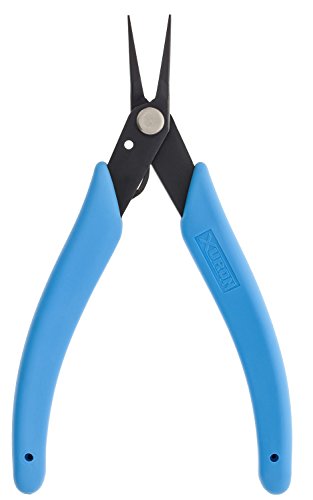
Xuron TweezerNose pliers provide a level of grip and maneuverability that standard household pliers simply cannot match. The fine, tapered tips allow for precision placement of the knot inside a clam shell or against a crimp cover.
When handling silk, the main challenge is preventing the metal from pinching or cutting the fibers. These pliers feature smooth, polished inner jaws that protect the delicate cord while maintaining a firm hold during the knot-tightening phase.
Ergonomics are a major factor here; the comfortable handle allows for extended sessions without hand fatigue. If the project requires intricate assembly, the investment in specialized jewelry pliers pays for itself in reduced frustration.
Gingher Stork Scissors: For Crisp, Professional Cuts

A clean cut is the first step in successful silk threading, as frayed ends are nearly impossible to feed through small-gauge beads. Gingher Stork scissors are renowned for their razor-sharp, fine-pointed blades that provide a clean shear across synthetic or natural fibers.
Dull scissors will crush the silk cord, creating a fuzzy, thickened end that resists threading. Keeping these dedicated scissors exclusively for silk ensures the blades remain sharp and effective for the life of the tool.
Beyond functionality, the slim design allows for trimming knots close to the bead without damaging the surrounding silk. Precision in cutting is an often-overlooked detail that separates amateur work from professional results.
Choosing the Right Silk Cord Size for Your Project
Selecting the correct cord diameter depends entirely on the size of the bead holes and the weight of the material. A cord that is too thin will allow the knots to pull inside the bead, while one that is too thick will lead to difficult assembly and potential breakage.
When determining size, compare the cord diameter to the drill hole of the bead. Ideally, there should be enough room for the silk to pass through twice—once for the stringing and once for the return path in a knotted sequence.
Test the fit by threading a single bead before committing to an entire strand. If the silk requires force to push through, move down one size to prevent snap-backs or fraying.
Knotter Tool vs. Awl & Tweezers: Which Is for You?
The choice between a specialized knotter tool and the traditional awl-and-tweezers method is a matter of workflow preference. The tool provides consistency for long, monotonous sequences, whereas the awl allows for greater tactical control in tight spaces.
The awl is the preferred choice for those who value the “feel” of the knot, as it allows the maker to slide the knot into position manually using the tip of the tool. However, this requires a steeper learning curve and a higher degree of dexterity.
For beginners, the knotter tool is generally the more reliable path to success. Seasoned professionals often keep both on hand, switching tools based on the complexity of the bead layout or the specific tension requirements of the silk.
Pro Tip: How to Achieve Perfectly Spaced Knots
Uniformity in knotting comes down to the amount of tension applied before the knot is fully closed. To ensure every knot sits at the exact same distance from the bead, use a gauge or a simple template marked on the work surface.
Consistency is also achieved by standardizing the number of “wraps” per knot. Whether utilizing a single or double overhand knot, keep the movement identical for every single bead on the strand.
Developing a consistent “pull” strength is a skill that improves with time. Practice on a dummy strand until the tension feels automatic before moving on to precious materials.
FAQ: Why Won’t My Silk Knots Stay Tight?
The most common reason for loose silk knots is the use of a cord that is too slick or failing to “set” the knot properly. Silk is naturally slippery, and if the knot is not tightened firmly, it will naturally migrate away from the bead over time.
Ensure the knot is pulled taut in multiple directions to lock the fibers into place. Applying a tiny amount of knot sealer or adhesive can act as a final insurance policy to prevent the silk from shifting.
If the knot continues to fail, check that the silk is not being stretched during the knotting process. Over-stretching the silk results in “snap-back,” where the cord recoils, loosening the knot once the tension is released.
Mastering the mechanics of silk cord finishing requires both high-quality tools and a methodical approach to handling the material. By aligning the correct cord thickness with the right knotting technique, any maker can achieve a durable, professional-grade result. Dedicate time to practice the tension and tightening process, as these refined details ensure the longevity of the finished piece. With the right tools in hand, the barrier between a collection of beads and a finished heirloom disappears.