7 Craft Lights For Low Light Crafting To Improve Clarity
Struggling to see your projects? Improve your detail work with these 7 craft lights designed for low light crafting. Read our expert guide and brighten today.
Straining to see dark-colored alpaca yarn at midnight is a frustration every knitter knows well. Poor lighting leads to dropped stitches, missed cable crosses, and eye fatigue that cuts a knitting session short. Choosing the right craft light transforms a dimly lit corner into a high-visibility studio. These seven options provide the clarity necessary to master complex stitch patterns without sacrificing comfort.
Neatfi XL 2,200 Lumens Lamp: Best for Big Projects
When working on large-scale afghans or oversized sweaters, standard desk lamps simply cannot cover the surface area. The Neatfi XL provides an expansive, shadow-free spread that illuminates the entire lap area. This is essential for maintaining consistent tension across wide panels of fabric.
The immense output of 2,200 lumens ensures that every stitch is crisp and visible, even when using deep indigo or black yarns. Its heavy-duty design keeps it steady, preventing the accidental wobbles that occur with lightweight hobby lamps. It is a workhorse for those who spend hours tackling complex, multi-skein projects.
Because of its significant size, this lamp requires a dedicated, sturdy table surface. It is less about portability and more about creating a permanent, professional-grade knitting station. If the goal is long-term comfort for massive projects, the reach and power of this unit are unmatched.
OttLite Magnifier Lamp: Best for Intricate Lacework


Lacework often involves 2.0mm needles and fine, fingering-weight yarn that can disappear under average lighting. The OttLite Magnifier Lamp bridges the gap by combining bright, high-contrast light with a built-in magnifying lens. This combination is vital for spotting a missed yarn-over in a complicated chart.
Magnification prevents the eye strain that inevitably leads to errors in stitch counts. By enlarging the work, it becomes significantly easier to identify the anatomy of a stitch, such as differentiating between a knit stitch and a purl bump. This precision is non-negotiable for professional-level finishing and complex lace repeats.
While the lens can take some time to get used to, the clarity it provides is transformative for high-detail work. Ensure the lamp is positioned at a height that allows the lens to hover naturally over the needles. It is the gold standard for those who demand absolute stitch perfection.
Glocusent LED Neck Light: Best for The Ultimate Travel Option

Travel knitting requires solutions that don’t rely on finding a power outlet or flat table space. The Glocusent LED Neck Light sits comfortably around the collar, casting light directly onto the needles. It is the perfect companion for knitting on airplanes, in passenger seats, or during knitting group meetups.
The adjustable color temperature allows for shifting between cool light for dark yarns and warmer light for lighter fibers. Because it moves with the body, the light is always focused exactly where the hands are working. It eliminates the need to constantly readjust a lamp base as the project grows or as the posture shifts.
While it lacks the sheer power of floor lamps, the convenience factor for on-the-go makers is unbeatable. It is lightweight enough that it won’t cause neck strain during long sessions. This is a must-have for the dedicated commuter or social knitter.
Brightech Litespan Floor Lamp: Top Natural Light Pick
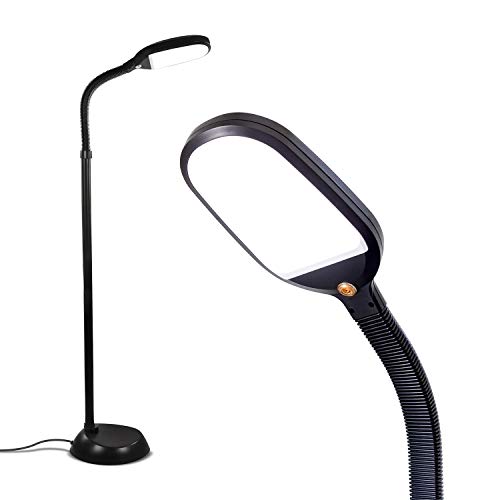
Color accuracy is vital when choosing yarn for stranded colorwork or steeking projects. The Brightech Litespan mimics daylight, ensuring that the yarn chosen in the store looks exactly the same when sitting in the living room. This prevents the disappointment of discovering a color clash after hours of knitting.
The floor-standing design is ideal for those who prefer to knit from a comfortable armchair or sofa. The flexible neck allows for precise adjustments, directing the beam exactly onto the needles without creating glare on the yarn surface. It is a sleek, unobtrusive addition to any craft room.
Beyond color accuracy, the longevity of LED technology means constant bulb replacements are a thing of the past. It is an investment in consistent, high-quality illumination. For those who prioritize accurate color rendering, this lamp is the primary choice.
Daylight DuoLamp Floor: Best for Shared Craft Spaces
Working in a space shared with family or other hobbyists requires a lamp that focuses light on the task without blinding everyone in the room. The Daylight DuoLamp is designed with a focused beam that stays where it is directed. It prevents the light spill that often causes friction in shared environments.
The adjustable brightness levels are a key feature for varying times of the day. One might need maximum brightness for intricate cabled designs in the evening, but lower levels for simple garter stitch rows during the day. Its dual-head design offers even more coverage when working on larger items that drape over the knees.
This lamp is perfect for those who want professional lighting without the industrial look. It blends well with home decor while delivering the performance of a studio lamp. It is a balanced, highly functional choice for busy households.
LuminoLite Clip-On Light: Best Budget-Friendly Choice

Not every knitter needs a studio setup to enjoy their craft. The LuminoLite clip-on light offers a simple, effective solution that attaches directly to a table, hoop, or frame. It is an ideal entry point for beginners who want to improve their setup without a significant financial commitment.
Despite the low price, it offers sufficient brightness for standard knitting tasks. Its small footprint makes it easy to move from a desk to a bedside table. While it lacks the advanced features of premium lamps, it solves the most common problem: lack of direct, localized light.
This lamp is best suited for straightforward, light-colored projects. It may struggle with extremely dark or fuzzy yarns that require higher contrast. However, as an introductory tool, it provides immediate, tangible improvements to visibility.
BenQ e-Reading Desk Lamp: The Premium Crafter’s Pick
When it comes to high-end design and eye comfort, the BenQ e-Reading lamp is a standout. It utilizes a curved light bar that provides an exceptionally wide, even spread of light across a knitting chart or pattern book. This is particularly helpful when juggling a pattern, a tablet, and multiple needles simultaneously.
The lamp automatically adjusts its brightness based on the ambient light in the room, maintaining a consistent level of comfort. This reduces the flicker and harsh contrast that lead to headaches during long-form projects. The build quality is exceptional, making it a permanent fixture for a serious craft desk.
While it represents a significant investment, the reduction in eye strain is worth the cost for those who knit every single day. It creates a high-visibility environment that keeps the focus entirely on the needles. It is the premier choice for the discerning, dedicated fiber artist.
Choosing Your Light: Lumens and Color Temperature
Understanding light specifications is essential for selecting the right tool for the job. Lumens measure the total brightness, while color temperature, measured in Kelvins (K), determines whether the light appears warm or cool. A higher Kelvin rating (5000K+) mimics daylight, which is best for seeing deep colors clearly.
For dark yarns, aim for a higher lumen output and cooler color temperatures to prevent the stitches from blending into the background. Conversely, lighter, high-sheen yarns may look better under warmer light to prevent harsh reflections. Always prioritize adjustable settings so the light can change with the project.
Do not be misled by labels promising “daylight” bulbs; look specifically for the Kelvin number. Aim for a spectrum that provides high contrast without causing eye-stinging glare. Tailoring these technical specs to the project at hand is a hallmark of an expert knitter.
Floor, Desk, or Neck Light: Which Style is Best?
The choice between floor, desk, and neck lights depends entirely on the knitting environment. Floor lamps are ideal for living room setups where the knitter stays in one place for long periods. They provide the most consistent coverage but occupy a permanent footprint.
Desk lamps offer precision and are perfect for those who keep their supplies and patterns organized on a tabletop. However, they are less effective for knitters who prefer to lounge. Neck lights are the only truly portable solution, freeing the knitter from being tethered to a specific chair or outlet.
Consider the physical constraints of the craft space before deciding. If the knitting happens in multiple rooms, a neck light is the most versatile. If the focus is on a single, dedicated studio, a sturdy floor or desk lamp will offer superior longevity.
Why Magnification Matters for Detailed Fiber Arts
Magnification is often viewed as a tool only for those with visual impairments, but it is actually a crucial asset for high-level technical knitting. Zooming in on the stitch structure allows a knitter to catch a twisted stitch or a dropped yarn-over immediately. This saves hours of corrective work, often referred to as “frogging” or ripping back.
For lace, cables, and stranded colorwork, magnification provides a clearer view of how the yarn interacts with the needle. It helps in spotting inconsistencies in gauge or tension that might only become visible after blocking. Seeing the work more clearly leads to a more polished, professional final product.
While it requires a slight adjustment period to get used to the depth of field, the benefits for precision work are immense. Investing in a lamp with a high-quality magnifying lens is a major step toward mastery of complex fiber arts. Once the clarity of a magnified view is experienced, it is hard to return to naked-eye knitting for fine details.
Investing in high-quality illumination is just as important as choosing the right wool or the perfect set of needles. A well-lit workspace minimizes errors, prevents physical fatigue, and ensures that every stitch is placed with intention and clarity. Whether selecting a flexible neck light for travel or a powerful floor lamp for the studio, the right equipment turns a dim, frustrating task into a rewarding, effortless experience.