
6 Best Bead Assortments For Adding Texture To Projects
Elevate your crafts with our guide to the 6 best bead assortments for adding texture to projects. Discover the perfect mix for your next design and shop today.
Adding beads to a knitting project transforms a simple accessory into a textured, light-catching heirloom. Beyond mere decoration, strategic beading provides weight and drape to delicate lace, elevating a standard stockinette fabric into a sophisticated focal point. Selecting the right beads involves balancing the size of the bead hole against the diameter of the yarn, ensuring the finished piece maintains its structural integrity. This guide explores the best assortments for achieving professional-level results, whether knitting with fine silk or robust wool blends.
Bead Landing Glass Seed Bead Box: Best Overall


This collection offers an excellent entry point for knitters who want a variety of colors without committing to a single style. The glass finish provides a consistent, high-quality aesthetic that stands up well to the tension of knitting needles.
The primary advantage here is the color coordination provided within a single box. It eliminates the guesswork of matching hues, which is helpful when working on multi-row borders or decorative motifs where color harmony is essential.
Expect slightly more variation in bead shape compared to premium Japanese brands. This rustic, organic look works beautifully on bohemian-style cowls or shawls where absolute geometric precision is less important than overall textural impact.
Miyuki Delica Seed Bead Set: Best for Lace
Miyuki Delicas are the industry standard for precision. Because they are cylinder-shaped and uniform, they stack perfectly against one another, making them the superior choice for intricate lace or charted designs where bead placement must be exact.
The large hole size relative to the bead diameter is a massive benefit for knitters. It allows a wider range of yarns to pass through easily, reducing the risk of fiber fraying or snagging during the transfer process.
Keep in mind that these beads are delicate and can shatter if struck against hard surfaces. Reserve them for projects like formal shawls or fine-gauge accessories where you intend to showcase high-level craftsmanship.
Toho Round Bead Assortment: Most Versatile
Toho rounds offer a slightly larger internal hole than other brands, which is a major advantage for knitters working with thicker fingering or sport-weight yarns. They provide the perfect balance between quality and ease of use.
These beads are highly durable and resist fading, even when subjected to the friction of being pulled through stitches repeatedly. The round shape is forgiving, meaning it won’t look “off” if a stitch is slightly twisted during the application.
If you are a beginner looking to experiment with beaded knitting, start here. The consistency of Toho products minimizes frustration, allowing the focus to remain on mastering the technique rather than fighting with irregular hardware.
Cousin DIY Glass E-Bead Mix: Best Budget Pick
When the project requires a large volume of beads for a heavy, textured effect, E-beads offer an economical solution. These beads are larger and have a more casual, rustic aesthetic than traditional seed beads.
They are ideal for projects using worsted or bulky weight yarns where smaller beads would simply get lost in the stitches. The weight of these beads can add a lovely “swing” to the edges of scarves or heavy wraps.
Be aware that E-beads are rarely uniform. Use them for projects where the texture is the main goal, rather than geometric accuracy. They are best suited for stash-busting projects or decorative wall hangings.
Czech Glass Fire-Polished Mix: Best for Sparkle
Czech glass beads are known for their facets, which catch the light from multiple angles. This creates a brilliant, reflective quality that is unmatched by standard molded glass or plastic options.
Because they are fire-polished, the edges are smooth and unlikely to cut through delicate protein fibers like silk or fine wool. This makes them a safer choice for high-end yarns that might otherwise be compromised by sharper, cheaper alternatives.
The trade-off is the cost and the fact that they are slightly heavier than seed beads. Ensure your garment has enough structure to support the added weight, as too many heavy beads can cause a light lace shawl to sag over time.
Artbeads Designer Seed Bead Blends: Best Colors
Artbeads blends are curated for impact, pulling together palettes that look professional and intentional. For knitters who want to achieve a sophisticated, multi-tonal effect without having to buy dozens of individual tubes, these are an ideal shortcut.
The quality of the finish is high, providing a professional polish to the final garment. Using a blended palette adds depth to a project, making it look as though it was designed with careful attention to nuance and color theory.
Remember that color blends can be inconsistent between batches. Purchase enough for the entire project at once to avoid running out of a specific colorway, as matching these custom blends later is notoriously difficult.
Choosing the Right Bead Size for Your Yarn
The golden rule of beading is that the yarn must pass through the bead hole with ease, along with the crochet hook or needle used to place it. If the yarn is too thick, it will prevent the bead from settling into the stitch correctly.
For lace-weight yarns, size 11/0 seed beads are standard. For fingering weight, consider moving to an 8/0 or 6/0 size to ensure the bead is visible and doesn’t disappear into the twist of the ply.
Always perform a swatch test before starting the full project. Thread a few beads onto your chosen yarn and knit a small square to see how the bead sits and whether it pulls or distorts the surrounding stitches.
How to Add Beads to Knitting: Two Key Methods
The “pre-strung” method involves threading all required beads onto the yarn before beginning the work. This is effective for all-over bead patterns, though it requires precise calculation of how many beads are needed per row.
The “crochet hook” method is more flexible and allows for adding beads as you go. Use a tiny steel crochet hook (usually 0.5mm to 0.75mm) to catch the stitch, pull the bead through, and return the loop to the knitting needle.
Both methods have their merits, but the crochet hook method is generally preferred for its versatility. It prevents the need to handle heavy, pre-strung yarn and allows for the placement of beads in specific, isolated locations.
Essential Tools for Your Beaded Knitting Kit
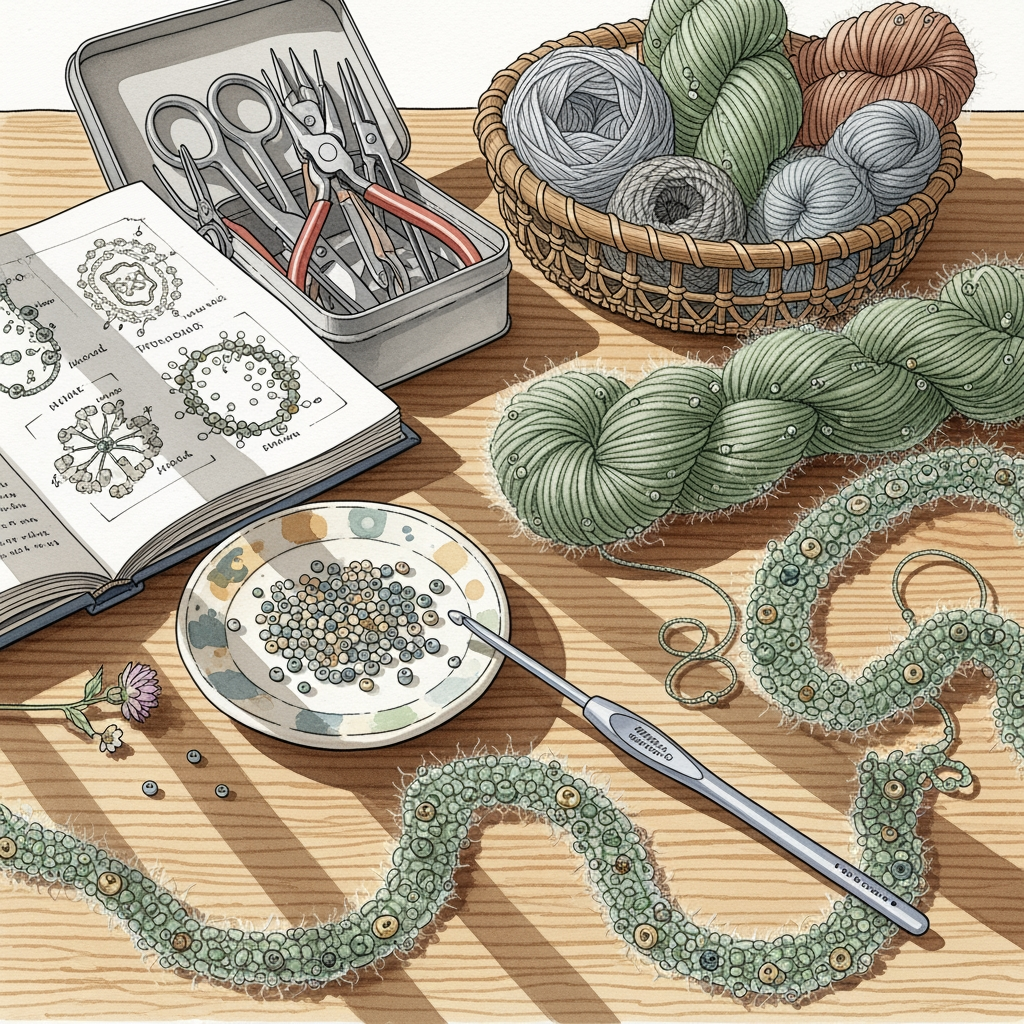
A high-quality, ultra-fine crochet hook is non-negotiable. Look for ergonomic handles to prevent hand fatigue, as beading adds time and repetitive motion to every single stitch.
A bead spinner can significantly speed up the pre-stringing process if you choose that method. For storage, use clear containers that allow you to see the color and finish of the beads clearly while keeping them sorted by size.
Consider using a beading needle—a long, collapsible-eye needle—to help thread the yarn if the eye of your crochet hook is too small. Keep a small mat or tray on your workspace to catch beads that inevitably bounce away during the knitting process.
How to Care for and Wash Beaded Garments
Beaded knits should always be washed by hand in cool water with a gentle, wool-specific detergent. Never agitate the garment, as the weight of the beads can stretch the wet fibers or cause them to pull loose from the knitting.
Lay the garment flat on a towel to dry, ensuring the beads are distributed evenly so they don’t leave permanent indentations on the fabric. Avoid wringing the piece out, which can put undue stress on the yarn connections.
Store beaded garments folded, rather than on hangers. Gravity will inevitably pull on the beads over time, potentially distorting the shape of the knit if the piece is left hanging in a closet.
Beaded knitting is an investment of both time and material, but the final result is a piece that carries a unique, tactile character. By matching your bead choices to the weight of your yarn and the specific requirements of your pattern, you create garments that are as durable as they are beautiful. Take the time to test your combinations, keep your tools organized, and enjoy the rhythm that adding just a little bit of sparkle brings to your needles.

