6 Best Miniature Clamps For Holding Pieces Together
Discover the 6 best miniature clamps for holding your precision projects together securely. Read our expert guide and find the perfect tool for your workbench.
Whether joining complex motifs for a modular blanket or securing a delicate lace shawl before blocking, the right miniature clamp turns a frustrating struggle into a precise task. Pins often snag delicate wool or silk fibers, leaving behind unsightly holes or distorted stitches. Mini clamps provide a damage-free alternative, holding layers in exact alignment without piercing the integrity of the yarn. Mastering the use of these tools is a hallmark of the transition from hobbyist to professional-level finisher.
Clover Wonder Clips: The All-Around Best Choice
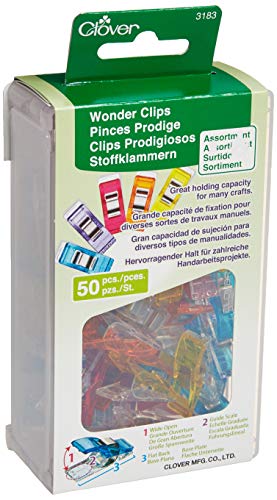

These clips are the gold standard in the fiber arts world for a reason. They feature a flat base that rests securely against a table surface, preventing the fabric from shifting while you work.
The opening is surprisingly wide for such a small tool, accommodating multiple layers of dense wool or heavy felted pieces. Because the tension is provided by a sturdy spring rather than a metal prong, they exert even pressure across the entire clip width.
This uniform hold prevents the “puckering” effect often seen when using concentrated-point fasteners. If you are aligning seams for a cardigan construction, these clips maintain the tension required for a seamless mattress stitch.
MumCraft Sewing Clips: Best Bulk Value Option

For projects requiring a high volume of fasteners—like long, continuous seams on a wool coat or attaching a lengthy edging to a blanket—buying in bulk is a necessity. MumCraft clips offer a nearly identical functionality to premium brands at a fraction of the per-unit cost.
The primary benefit here is the sheer number of clips available in a single package. You can saturate the edge of a large-scale project with clips, ensuring there is zero slippage between the fabric layers.
While the spring tension is slightly less refined than high-end alternatives, it remains perfectly adequate for standard-weight yarns. They are an ideal choice for the workshop where losing tools is an inevitability rather than a possibility.
Small Binder Clips: The Ultimate Budget-Friendly Hack

The common office binder clip is a surprisingly effective tool for holding heavy fabric or bulky knitted swatches in place. Their metal construction offers a significantly stronger grip than plastic alternatives, making them ideal for high-tension applications.
Use caution, however, as the metal arms can be awkward and may catch on loose yarn strands. It is best to fold the arms down completely after clipping to minimize the risk of snagging delicate fibers like mohair or cashmere.
These are best reserved for structural work where the fabric is firm and less prone to pulling. They are not recommended for fine, open-lace work where the weight of the metal could distort the stitch structure.
Pony 1-Inch Spring Clamps: For Heavy-Duty Needs
When working with heavy, thick textiles like hand-woven wool or stiff felt, standard mini clips may fail to keep the layers aligned. Pony spring clamps provide the extra mechanical advantage necessary to lock dense materials into place.
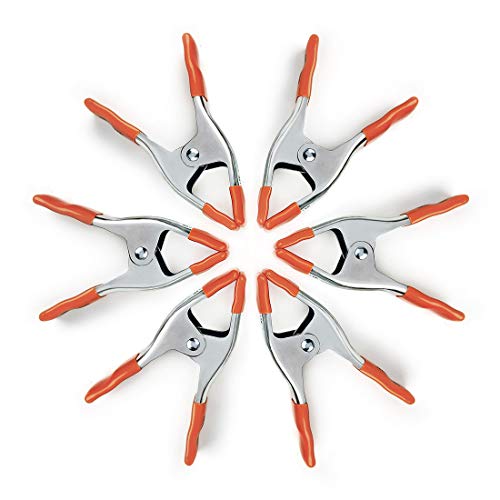
The rubber-tipped ends act as a buffer, protecting the surface of your project from the high-tension metal jaws. This grip is exceptionally secure, often surpassing the capabilities of lighter plastic tools.
They are particularly useful for keeping heavy project sections pinned to a blocking board during a wet-blocking process. The durability of these clamps ensures they will last for years, regardless of how often they are repurposed for non-fiber tasks.
Fons & Porter Binding Clips: A Quilter’s Favorite
Though originally designed for quilting, these clips possess features that translate perfectly to the knitting table. The design is contoured to follow the curve of a seam, allowing for a more natural flow when stitching pieces together.
The marking lines on the flat base are helpful for maintaining consistent seam allowances when joining pieces of different gauges or textures. This feature is invaluable when sewing a knitted panel to a woven lining, where precision is paramount.
They provide a firm, reliable hold that encourages consistent tension throughout the length of a seam. For those who struggle with “creep”—where one layer of fabric slowly slides against the other—these clips offer a necessary correction.
Clover Jumbo Wonder Clips: For Bulky, Thick Knits

Knitting with super-bulky or jumbo-weight yarn presents a unique challenge for fasteners: the bulk of the material often exceeds the capacity of standard clips. Jumbo Wonder Clips are specifically engineered to accommodate these larger dimensions.
Their size ensures that they can grasp multiple layers of thick, lofty wool without causing the clip to pop open unexpectedly. This reliability is critical when finishing garments like chunky sweaters or heavy winter accessories.
They maintain the same “no-damage” philosophy as the standard Wonder Clips, using gentle but firm pressure. Using a smaller clip on bulky material often leads to distortion, making the Jumbo variety a vital tool for the heavy-weight knitter.
How to Pick the Right Clamp for Your Next Project
Selecting the appropriate tool depends entirely on the weight and fragility of your yarn. Fine-gauge silk or cotton blends require light-touch clips, whereas dense, felted, or heavy wool projects demand high-tension options.
Consider the “reach” of the clip as well, as some designs are built for thin, flat seams while others are designed for rounded edges. Always test the clip on a swatch before using it on a finished garment to ensure no permanent indentations occur.
- For Fine Lace: Use lightweight, non-serrated plastic clips.
- For Structural Seams: Opt for metal-spring or binder-style clips.
- For Thick, Bulky Garments: Choose Jumbo-sized or wide-mouth plastic clips.
- For Blocking: Utilize clamps with protective rubber pads to prevent marking.
Plastic vs. Metal Clamps: Which One Should You Get?
Plastic clips are the safer choice for most knitting projects, as they lack the sharp edges that tend to snag delicate yarn fibers. They are lightweight, meaning they won’t weigh down or pull at the fabric while you are working.
Metal clamps, by contrast, offer superior longevity and gripping power. They are essential for heavier materials or when you need a high-tension hold that plastic cannot replicate.
The ultimate decision rests on the “snag factor” of your project. If you are working with an alpaca or mohair blend, keep metal well away from the fabric; if you are working with a tight-twist wool or synthetic blend, metal is perfectly acceptable.
Smart Ways Knitters Use Clips for Better Finishing
Clips are not just for holding seams; they are excellent tools for managing tension during the assembly process. By placing clips every few inches along a sleeve head, you can distribute ease more evenly before picking up your tapestry needle.
They can also be used to hold your place in a complex pattern repeat or to mark the underside of a fold when turning a hem. Some knitters even use them to attach a gauge swatch to a blocking board to ensure it dries in a perfectly square shape.
Treat your clips as a third and fourth hand. When they are used to properly support the weight of the garment while you stitch, you eliminate the pulling and straining that often leads to uneven or distorted seams.
Clip Alternatives: What to Use in a Pinch for Seams
If you find yourself without a single clip during a finishing session, simple office supplies can often step in to save the day. Paper clips, when bent slightly, can act as makeshift temporary fasteners.
Cotton scrap yarn or locking stitch markers are perhaps the most gentle alternatives, as they are soft and will never damage the integrity of your knitting. Simply thread a bit of scrap yarn through the seam and tie it off to hold the pieces in position.
Avoid using sharp safety pins unless they are specifically designed for fabric; standard pins often have burrs that will slice through expensive yarn. When in doubt, a temporary “basting stitch” using a contrasting color of smooth, plied yarn is the safest and most professional fallback.
Clips are a simple, inexpensive investment that pays for itself in reduced frustration and a more polished finish. By choosing the right tool for your specific fiber weight, you ensure your hand-knit garments maintain their intended shape and drape long after the final needle is pulled away. Always keep a variety on hand to ensure every project receives the structural support it deserves.