6 Best Acrylic Rulers For Fussy Cutting To Use
Find the 6 best acrylic rulers for fussy cutting to enhance your quilting precision. Read our expert guide now to choose the perfect tool for your next project.
Fussy cutting involves isolating a specific design element on a fabric print to center it perfectly within a quilt block or garment piece. Without the right acrylic ruler, the process can feel like a game of chance, often resulting in wasted material or off-center motifs. Achieving precision in this task requires tools that offer high visibility and stability during the cutting process. Investing in a specialized ruler transforms this meticulous technique from a source of frustration into a reliable, repeatable part of a project workflow.
Creative Grids Square Ruler: Best for Beginners


This ruler is widely regarded as a staple for those new to precise fabric manipulation because of its intuitive grid markings. The patented turn-around feature allows for consistent measuring from multiple sides without having to rotate the fabric or the ruler awkwardly.
Clear, black, and white markings ensure that even on high-contrast prints, the measurements remain visible. For a beginner struggling to align motifs, this clarity prevents the common error of miscalculating seam allowances, which is vital when working with delicate fabrics like silk or high-quality quilting cotton.
The tradeoff for this accessibility is a slightly thicker profile, which some find makes it harder to use with thinner rotary blades. However, for a novice, the stability provided by the thicker acrylic is a major advantage for safety and accuracy. Bottom line: Choose this if the goal is to eliminate measurement confusion early in the learning process.
Omnigrid Square Ruler Set: Best Value Overall
The Omnigrid set offers a multi-sized approach that allows for versatility across different project scales. These rulers feature a non-slip surface on the bottom, which is a significant help when trying to maintain alignment over a slippery or loosely woven fabric.
Having a set of different sizes is essential for fiber artists who move between small-scale patchwork and larger appliqué designs. The markings are printed on the underside to prevent wear, ensuring the grid stays accurate after hundreds of hours of repetitive use.
While these rulers provide great value, the markings can occasionally become obscured by intricate or busy patterns compared to ultra-clear alternatives. This set is a workhorse that handles daily wear exceptionally well, but it might lack the specialized “spotlight” features needed for extremely complex, multi-layered fussy cutting. Bottom line: Use this set if versatility and long-term durability are the primary objectives.
Fiskars Rotating Mat & Ruler: Most Versatile Combo
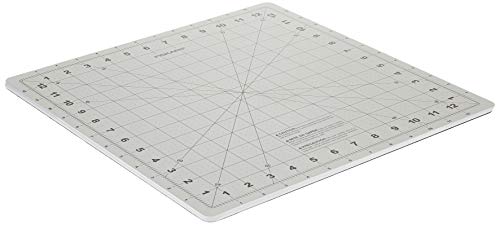
This system excels when the workspace is limited or when the project requires frequent movement. By pairing a rotating mat with an integrated ruler arm, it allows for cutting curves or complex shapes without the knitter ever having to shift their body position.
The main benefit here is the ability to maintain consistent hand pressure while turning the fabric beneath the blade. For those prone to hand fatigue during long sessions, this reduces the strain significantly, much like choosing an ergonomic handle for a crochet hook or knitting needle.
However, the size of the unit limits it to smaller project pieces. If the work involves full-yardage cuts or large blocks, this setup will not be sufficient. Bottom line: This is the premier choice for small, intricate motifs that require frequent orientation shifts.
Lori Holt Cute Cuts Rulers: For Themed Projects
These rulers are designed with a specific focus on aesthetics and ease of use in decorative sewing. They often include specialized markings for fussy cutting motifs, such as circles or specific geometric shapes that align perfectly with repeating patterns.
They feel substantial in the hand, which helps prevent slipping during a cut. Because they are often produced in smaller, branded series, they are as much a tool as they are a collectible accessory for the hobbyist’s craft room.
While the design is focused on “cute” aesthetics, the functionality holds up to professional standards. The main limitation is that the specialized shapes might not be necessary for standard square-block projects, potentially making them a redundant expense for basic quilting. Bottom line: Invest in these if the focus is on stylized, non-traditional shapes or decorative fussy cutting.
Arteza Square Quilting Ruler Set: Budget Pick
Arteza provides a highly functional, entry-level set that includes essential sizes for most standard quilt blocks. These rulers are cut from high-quality acrylic that resists cracking and chipping even under regular use.
The grid lines are vibrant and high-contrast, which helps when lining up a print that might otherwise hide under a standard clear ruler. They are lighter than professional-grade heavy-duty rulers, which makes them easy to maneuver but requires more attention to keep the ruler from shifting during a cut.
For those on a strict budget, this set removes the barrier to entry for fussy cutting without sacrificing significant accuracy. The tradeoff is the lack of specialized features like specialized grip textures or unique orientation markers found on more expensive alternatives. Bottom line: This is the smart pick for the budget-conscious maker who needs a reliable, standard toolset.
Fons & Porter Pyramid Ruler: For Unique Shapes
Triangles and pyramids are often the most challenging shapes to fussy cut because of the bias edges involved. This ruler is specifically engineered to handle angles that would be nearly impossible to align with a standard square grid.
The design forces the maker to consider the bias of the fabric, which is crucial when working with stretchier weaves. Understanding the bias—the diagonal line of the fabric—is just as important here as it is when preventing a knitted garment from growing or sagging over time.
Because this is a niche tool, it lacks the general-purpose utility of a square ruler. However, for those specific tasks involving complex geometry, it is indispensable. Bottom line: Acquire this if the project requirements involve triangles or geometric motifs that standard rulers cannot map.
What to Look For in a Fussy Cutting Ruler
A good fussy cutting ruler must prioritize visibility above all else. Look for rulers with bright, high-contrast markings that won’t fade or peel off with repeated exposure to friction or heat.
Stability is the next critical factor, often provided by non-slip backing or a slightly thicker acrylic profile. If a ruler moves while the blade is in motion, the entire motif is ruined, necessitating a re-cut.
Consider the transparency of the material as well. Some cheaper plastics yellow over time, which can interfere with the color accuracy when trying to align fabric prints. Opt for high-grade acrylic that remains clear for the life of the tool.
How to Properly Use Your Fussy Cutting Ruler
Start by placing the ruler over your fabric to audition the placement of the motif. Move the ruler around, rather than the fabric, to keep the grainline straight and avoid unnecessary stretching or distortion.
Once the motif is centered, use a steady, firm pressure along the center of the ruler. If the ruler does not have a non-slip grip, use your non-cutting hand to apply even weight across the surface to prevent shifting.
Always keep your rotary blade sharp. A dull blade requires extra pressure, which is the most common cause of the ruler slipping and the fabric shifting out of alignment during the final cut.
Caring for Your Acrylic Rulers to Last a Lifetime
Keep rulers in a flat, horizontal storage position whenever possible. Storing them upright or in a cramped space can cause the acrylic to warp over time, leading to inaccuracies in your cuts that are difficult to diagnose.
Clean them periodically with a mild detergent and a soft microfiber cloth to remove lint, fabric sizing, or adhesive residue. Avoid harsh chemical cleaners or alcohol, as these can cause the acrylic to craze or develop small, hairline fractures.
If the markings begin to fade, avoid using permanent markers to replace them, as the ink can bleed and smear. Instead, use thin, removable vinyl tape for a temporary fix if the ruler is otherwise structurally sound.
Fussy Cutting vs. Templates: Which Is for You?
Fussy cutting with an acrylic ruler provides the most flexibility for those who work with a variety of pattern repeats. It allows the maker to adapt to any motif size on the fly without needing a new tool for every variation.
Templates, conversely, are best when you need to cut the exact same shape dozens of times. They provide a physical boundary that is impossible to deviate from, which is excellent for speed and consistency in large-scale production.
Choose rulers for project-based variety and templates for efficiency in high-volume sewing. Mastering both tools allows for a complete range of expression, ensuring every motif is perfectly placed regardless of the complexity of the fabric print.
Choosing the right acrylic ruler is an investment in the precision and longevity of every project. By selecting a tool that aligns with your specific needs—whether it be the versatility of a square grid or the specialized geometry of a triangle—you gain the confidence to elevate simple fabric into a perfectly composed masterpiece.