6 Best Jump Ring Kits For Versatile Jewelry Assembly
Discover the 6 best jump ring kits for versatile jewelry assembly. Shop our top-rated recommendations to elevate your crafting projects and improve your results.
Jewelry assembly relies on the same precision as managing tension in a complex cable knit or achieving the perfect stitch density in colorwork. Just as selecting the right needle material dictates the flow of your yarn, choosing the correct jump ring determines the structural integrity of your metalwork. A well-placed ring provides a secure anchor for charms or clasps, while a poorly tensioned one can snag delicate fibers or pull apart under the weight of a pendant. Mastering these small but vital components transforms simple materials into professional-grade pieces.
Paxcoo Jewelry Making Kit: Best Value Starter
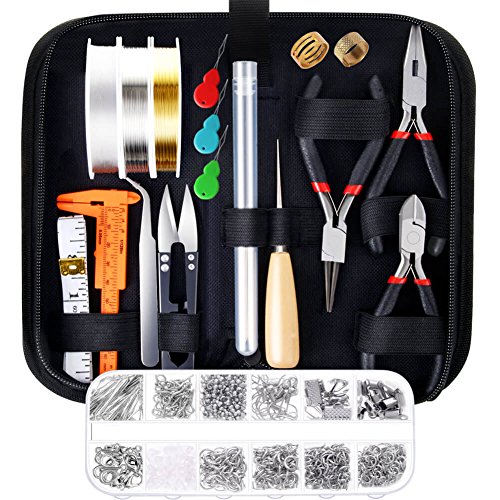

This kit provides a broad assortment of sizes and colors, functioning much like a starter set of interchangeable needles. It offers the variety necessary to experiment without the steep investment of specialized, high-end components.
For those just beginning to incorporate metal elements into fiber projects, the sheer volume of rings allows for trial and error. If a ring gets misshapen during a learning attempt, there is no need to fret over the cost of a replacement.
However, do not expect the temper or hardness found in jeweler-grade wire. These rings are best suited for costume pieces rather than heirloom-quality items that must withstand daily wear and tear.
Beadsmith Pro Quality Kit: For Serious Jewelers

Consistency in hardware is as crucial as consistency in gauge when working with fine lace weight yarns. The Beadsmith kit focuses on higher-grade metals that hold their shape under tension, preventing the dreaded “gapping” that occurs when a ring fails to spring back.
These rings are designed for makers who prioritize longevity and professional finishing. Because the wire gauge is standardized and reliable, these rings are ideal for creating structural connections in pieces that combine heavy gemstone beads or metallic findings.
While the price point is higher, the quality control minimizes the waste associated with bent or uneven rings. Investing in these ensures that the final assembly feels as intentional as the finished knitting.
Modda Deluxe Set: Best for Mixed Metal Finishes

The ability to blend textures and colors is a skill highly valued in both knitting—think mohair paired with wool—and jewelry design. This set excels by providing a spectrum of metallic finishes, from antique brass to bright silver, in one organized container.
Mixed metal projects require hardware that can bridge the gap between different tones without looking chaotic. This kit allows for subtle transitions, ensuring that the findings match the specific aesthetic of the piece being crafted.
These are versatile components, though the variety sometimes means a smaller quantity of each individual size. Keep this set for custom designs where specific color matching is the primary design goal.
Benecreat Stainless Steel Rings: For Delicate Work
Stainless steel is the workhorse of the jewelry world, much like a robust, non-superwash wool that stands up to heavy friction. These rings are exceptionally strong, making them perfect for jewelry that will be worn continuously.
The inherent hardness of stainless steel means these rings resist scratching and accidental opening during wear. While they require a bit more manual pressure to close properly, the security they offer is unmatched.
Be aware that these are less malleable than copper or sterling silver. Ensure the use of sturdy pliers to avoid marring the finish while coaxing the ring into a perfect circle.
Caydo All-In-One Kit: Best for Beginners w/ Tools
A beginner kit without the necessary pliers is like receiving a pattern without a needle recommendation. This collection includes the essential cutters and flat-nose pliers, providing a complete ecosystem for those starting from scratch.
Having the right tools is half the battle in any craft, whether it is picking the right hook for Tunisian crochet or selecting the proper pliers for jewelry. These tools are ergonomically designed for entry-level use, making the mechanical process of manipulating metal rings intuitive.
While these tools may eventually be upgraded as technical skills improve, the kit serves its purpose by eliminating barriers to entry. It is an excellent choice for a knitter looking to add custom project markers or decorative tassels to their work.
PandaHall Elite Kit: Best for Chainmaille Projects
Chainmaille requires an immense number of uniform rings to create the desired drape, similar to the way the number of repeats determines the width of a scarf. This kit provides the consistent diameter and wire thickness required to create seamless, interlocking patterns.
Precision is the hallmark of a successful chainmaille project, and any variance in the ring size will create an uneven fabric. These rings are manufactured with tight tolerances, allowing for a smooth flow in the finished weave.
Because chainmaille is labor-intensive, the bulk packaging found here is a logistical necessity. Stock up on these when undertaking large-scale, intricate assembly work.
How to Properly Open and Close a Jump Ring
A jump ring should never be pulled apart like a drawstring; this destroys the integrity of the metal. Always use two pairs of pliers to twist the ends away from each other in opposite directions.
This lateral motion preserves the circular shape of the ring, ensuring the ends align perfectly when you twist them back together. If the ring is bent into an oval, it will never close with a flush seam, leaving a snag point that will ruin your yarn.
Practice this motion until the two ends meet with a crisp ‘click’ and no gap. A well-closed ring is invisible, just like a well-executed kitchener stitch seam.
Choosing Your Jump Ring Size and Wire Gauge
The relationship between ring diameter and wire gauge dictates how much weight the ring can carry. A larger diameter ring made with a thin wire will be flimsy, much like knitting a bulky sweater on size 2mm needles.
Always match the wire thickness to the weight of the objects being connected. If you are attaching a heavy pendant to a chain, opt for a thicker gauge (lower number) to prevent the ring from stretching open.
Consult a standard conversion chart to understand how wire gauges translate into millimeters. Start by selecting the smallest diameter that allows your components to move freely without binding.
A Guide to Jump Ring Metals and Finishes
Different metals interact with the environment in ways that mirror how fibers interact with moisture and wear. Copper and brass will naturally patina over time, while silver-plated items may lose their luster if not stored properly.
Stainless steel remains stable and hypoallergenic, making it the safest choice for skin contact. If your project involves expensive gemstones or sentimental materials, choose high-quality metals to avoid unsightly corrosion or skin reactions.
Consider the intended recipient of the piece when selecting your metal. A piece intended for a child or someone with sensitive skin requires hypoallergenic materials regardless of the aesthetic goals.
Plated vs. Solid Metal Rings: Which to Choose?
Plated rings offer a budget-friendly way to achieve a specific look, such as rose gold or oxidized silver, without the cost of solid precious metals. However, the plating will eventually wear off, exposing the base metal beneath.
Solid metals, while more expensive, are an investment in the long-term quality of the piece. They can be polished, filed, and repaired, making them suitable for items intended to last for decades.
For practice pieces or items that will only be worn occasionally, plating is perfectly acceptable. For high-wear pieces that will be gifted or sold, prioritize solid metals to ensure the craftsmanship endures.
Selecting the right jump ring kit is the final step in ensuring your hard work stays together securely. By understanding the mechanical requirements of your jewelry, you can transition from simple assembly to creating complex, long-lasting designs. Take your time to test the quality of your materials, and treat your metalwork with the same care you afford your finest hand-knit garments.