7 Best Craft Journals For Project Tracking To Organize
Struggling to keep your DIY plans in order? Discover the 7 best craft journals for project tracking to organize your creative work. Shop our top picks today!
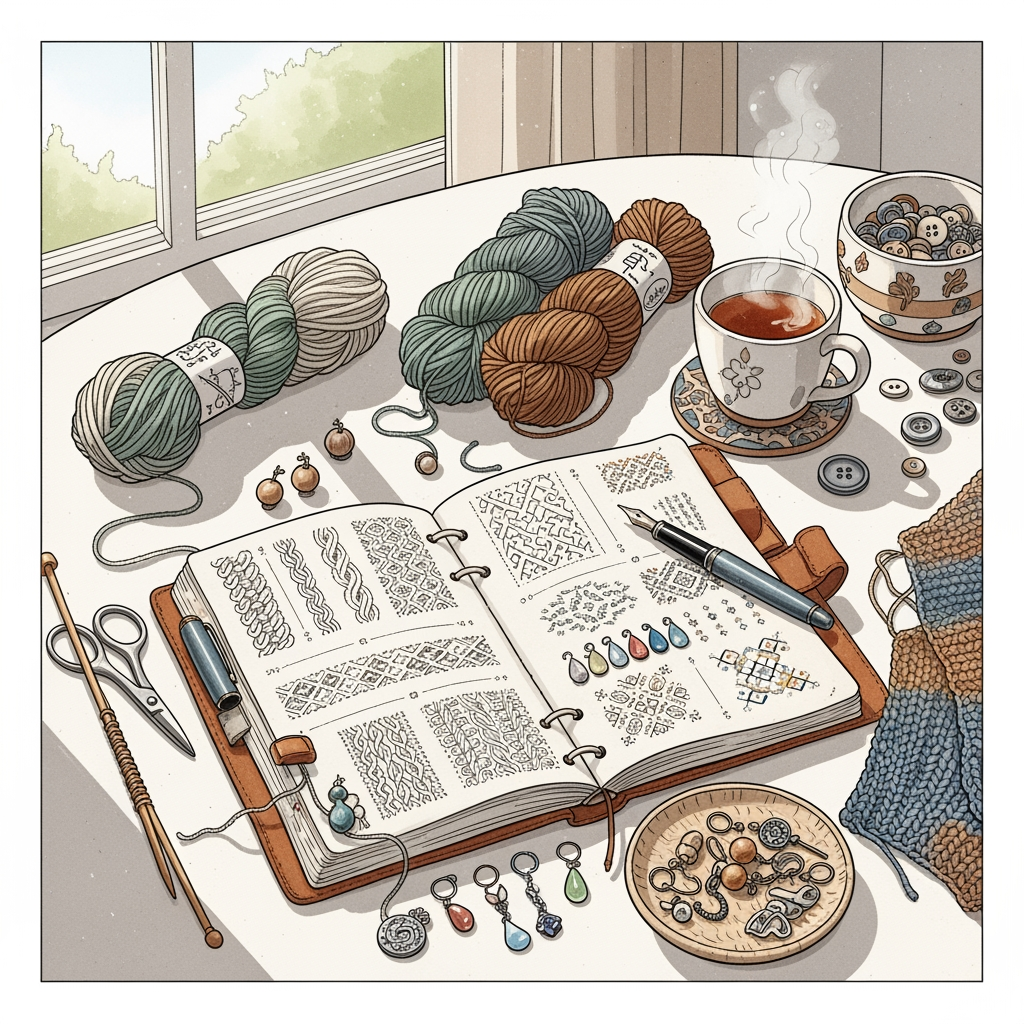
Keeping track of a complex lace project or a stash of various wool weights requires more than just memory. A dedicated knitting journal transforms scattered notes and tangled yarn labels into a cohesive record of technical growth. Choosing the right tool ensures that gauge swatches, needle sizes, and pattern modifications remain accessible for years to come. These seven options cater to different organizational styles, helping to turn every completed project into a reference guide for future success.
Lochby Field Journal: Best for Durability


Rugged canvas construction and a wax-treated finish make this the ideal companion for the knitter who carries projects into the field. Unlike delicate paper covers, this journal withstands the friction of being tossed into a heavy project bag alongside metal needles and sharp stitch markers.
The internal refillable system allows for the seamless swapping of notebook inserts. One insert can house knitting calculations, while another preserves hand-drawn schematics or lace charts.
The primary trade-off is the initial investment and the lack of pre-printed project templates. Choose this if you prioritize long-term utility and protection for your notes over guided prompts.
The Knitter’s Journal: Best Purpose-Built Option

Guided journals provide a structured framework, which is invaluable when balancing multiple works-in-progress (WIPs). These books often include dedicated fields for yarn brand, dye lot numbers, and specific needle materials.
Recording dye lot information is critical, as even subtle variations between batches can lead to visible color pooling in larger garments. By standardizing the input process, the risk of losing vital metadata—like the size of the needle used for a project—drops significantly.
Opt for a purpose-built journal if the blank page is intimidating. It creates a professional archival record without requiring advanced organizational skills.
Moleskine Classic Notebook: Best Customizable

A blank or grid-lined Moleskine offers total creative freedom for those who prefer to sketch lace patterns or diagram complex colorwork transitions. The paper quality holds ink well, which is essential if you use color-coded pens to map out stranded knitting motifs.
Because there are no pre-defined templates, the layout depends entirely on individual preference. Some knitters use the first few pages for an index of projects, followed by detailed sections for yarn stash inventories and needle collections.
This is the ultimate choice for the knitter who wants a minimalist, high-quality canvas. It requires more effort to set up but offers unparalleled flexibility.
Leuchtturm1917 Dotted: Best for Bullet Journaling
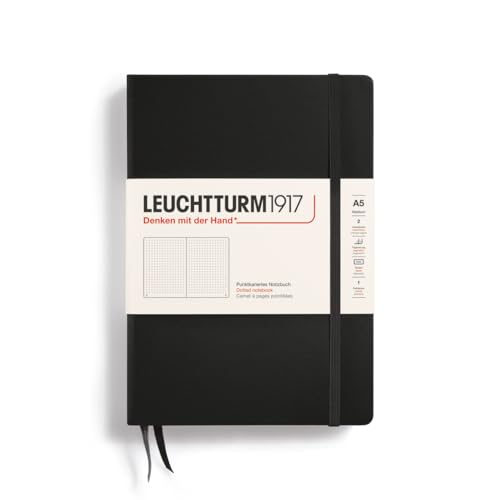
The subtle dot-grid pattern strikes the perfect balance between the structure of lines and the freedom of a blank page. It is specifically favored for bullet journaling, a method that uses symbols and rapid logging to manage tasks, yarn requirements, and deadlines.
The numbered pages and table of contents are major advantages for tracking long-term projects. You can easily reference back to the exact page where a complex cable repeat was modified or where a final stitch count was recorded.
If you enjoy creating your own tracking systems, the Leuchtturm1917 is the gold standard. Its archival paper quality ensures that your notes stay crisp even after decades in a knitting library.
Knitters-Knotions Project Journal: Most Detailed

This style of journal focuses on the granular data that often eludes the casual record-keeper. It includes specific prompts for yarn weight, fiber content, gauge swatches, and even the final blocked dimensions of the finished piece.
Tracking these details is essential for advanced makers who need to replicate or adjust patterns later. If a sweater shrinks or grows after washing, the recorded notes on fiber content—such as the difference between a high-twist superwash merino and a rustic, untreated wool—provide the context needed to prevent future errors.
Use this journal if your primary goal is to master technical knitting. It forces a level of precision that leads to better-fitting garments and improved craft.
Erin Condren LifePlanner: Best for Goal Setters
Many knitters approach their craft with a schedule, aiming to complete sweaters for specific deadlines or events. An Erin Condren planner offers a hybrid approach, combining calendar functionality with dedicated space for project milestones.
Integrating project timelines with daily life allows for realistic goal setting. You can map out how many inches of ribbing need to be finished each week to meet a holiday gift deadline.
This is ideal for the maker who treats knitting as a managed project rather than a spontaneous hobby. It bridges the gap between lifestyle organization and craft production.
Ravelry Digital Journal: Best Free Online Tool
Ravelry remains the most comprehensive database for patterns, yarns, and user-generated project logs. The platform allows for the uploading of photos, detailed linking to pattern pages, and the ability to search for specific yarn combinations used by others.
Digital logs offer the immense benefit of searchability and easy updates. If a project is sitting idle in a bag for three months, the digital entry is easily found and updated without flipping through physical pages.
Use Ravelry if you want a searchable archive linked to a global community. It is a powerful resource for learning from the successes and mistakes of fellow knitters.
How to Set Up Your New Knitting Project Journal
Start by establishing a clear index system that tracks projects by type or date. Dedicated sections for yarn inventory and needle sizes are essential, as these represent the core resources used in every project.
When logging a project, always include the following: * Pattern Name and Designer * Yarn Brand, Fiber Content, and Dye Lot * Needle Size and Material Used (e.g., carbon fiber vs. wood) * Stitch Gauge before and after blocking * Any intentional modifications to the pattern
Consistency is the key to a functional journal. Take five minutes immediately after casting off a project to summarize the experience, noting what went well and what felt challenging.
Physical vs. Digital: Which Journal is Right?
Physical journals offer a tactile experience that connects the creator to the work, serving as a legacy piece that can be passed down. They require no batteries and work in any environment, whether at a craft retreat or on a commute.
Digital journals offer speed, cloud-based backups, and the ability to include high-resolution photos of every stage of the process. They are superior for those who frequently modify patterns and need to perform quick calculations or searches across their entire portfolio.
Choose physical if the act of writing helps you retain information. Choose digital if your workflow depends on constant iteration and accessibility.
What to Track in Your Knitting Journal (Beyond WIPs)
A great journal goes beyond the current project to track the evolution of a knitter’s skill set. Include a “Technique Reference” section where you note how to execute difficult stitches, such as specific increases or complex bind-offs encountered in past work.
Also, maintain a “Stash Analysis” page to monitor the fiber content and weight of yarn on hand. Understanding how your stash relates to your future goals prevents the impulse purchase of yarn that doesn’t align with your project interests.
Recording your learning curve is just as important as recording your stitches. Over time, these notes will identify patterns in your preferences, such as a consistent tendency to knit tighter on bamboo needles compared to nickel-plated options.
Investing in a knitting journal is the single most effective way to elevate the craft from a series of disjointed projects into a structured, evolving practice. Whether you choose a rugged physical notebook or a robust digital platform, the value lies in the habit of documentation. Start small, stay consistent, and watch as these recorded details turn into the most valuable tools in your knitting kit.