6 Best Specialty Threads For Sewing Cork Textiles
Master your next cork project with our guide to the 6 best specialty threads for sewing cork textiles. Choose the right match for professional results today.
Sewing with cork textile requires a departure from standard garment-weight threads. Cork is a dense, non-woven substrate that demands high-tensile strength and a smooth finish to prevent thread breakage during needle penetration. Understanding the interplay between needle friction and thread diameter is essential for achieving a professional finish on bags, wallets, and accessories. Selecting the correct thread ensures that seams remain secure and aesthetic under the natural tension of a structured project.
Mettler Extra Stark: Best Overall Thread Choice
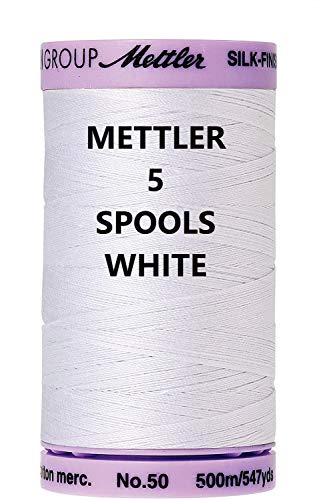

Mettler Extra Stark strikes a near-perfect balance between robustness and manageability for most home sewing machines. It is a polyester thread specifically engineered for heavy-duty tasks where standard cotton-wrapped threads would snap under pressure.
Because it possesses a slightly higher sheen and a smooth, consistent ply, it feeds through tension discs without erratic behavior. It functions similarly to a high-quality wool-silk blend in knitting, where the fiber consistency dictates the quality of the final stitch pattern.
This thread is the standard recommendation for those transitioning from light quilting cottons to heavier cork projects. It provides enough structural integrity to hold thick layers of cork together without the bulk that often leads to skipped stitches.
Gütermann Tera 40: Best for Maximum Durability

Gütermann Tera 40 is a continuous filament polyester thread that excels in scenarios demanding industrial-level longevity. Unlike spun threads that can fray when passing through dense materials, Tera 40 is remarkably smooth and maintains its integrity even under heavy friction.
Think of this thread as the “high-twist” variety of the sewing world. Just as high-twist yarns resist pilling in high-friction areas like sweater underarms, Tera 40 resists abrasion when sewing through multiple layers of dense, abrasive cork.
It is ideal for high-stress points like bag handles or box bottoms where seams undergo constant physical strain. The slight trade-off is its thickness; ensure the machine’s tension is calibrated properly to accommodate this more substantial thread.
Aurifil 40wt Polyester: Best for Topstitching
When the goal is a clean, visible, and decorative stitch, Aurifil 40wt polyester is the preferred choice. While many associate Aurifil with fine quilting threads, the 40wt weight has just enough presence to define a seam beautifully against the texture of cork.
It mimics the look of a traditional saddle stitch without the massive thickness of industrial upholstery thread. It provides the same visual satisfaction as selecting a perfectly round, well-defined yarn for a cable-knit project to make the pattern pop.
Use this thread when the design calls for emphasis on the construction lines rather than camouflaging them. It is refined, consistent, and provides a polished, boutique-quality finish to any accessory.
Serafil 40: The Ultimate Professional-Grade Pick
Serafil 40 is a high-performance, bonded, continuous filament thread favored by leatherworkers and professional bag makers. The bonding process seals the filaments together, creating a thread that does not fray and resists the heat generated by high-speed needle movement through cork.
This is the equivalent of reaching for a luxury, plying-perfect cashmere; it behaves exactly as intended, every single time. It provides a level of seam security that is virtually unmatched in the home sewing market.
While it is the premier choice for professional results, it may require an adjustment to the machine’s top tension. It is a significant step up in quality and is worth the investment for heirloom-quality pieces.
Coats & Clark Extra Strong: Best Budget Option
Coats & Clark Extra Strong is widely accessible and provides a reliable solution for makers who are just beginning to work with cork. It is readily available in local stores and offers enough strength to handle the resistance of cork fabric without major mechanical issues.
It serves as a functional entry point, much like a reliable acrylic-wool blend helps a beginner practice tension before moving to luxury fibers. It provides the necessary strength, though it may lack the advanced abrasion resistance of more expensive bonded threads.
Be mindful that because it is a bit more textured than professional-grade threads, the machine settings may need slightly more frequent monitoring. It is a pragmatic choice for practice pieces or projects where a high-end finish is not the primary requirement.
Tex 70 Bonded Polyester: For Heavy-Duty Bags
Tex 70 represents the “sweet spot” for structural sewing. The “Tex” system measures the weight of 1,000 meters of thread in grams; 70 is a mid-weight, heavy-duty size that occupies the space between standard sewing and industrial upholstery work.
Bonded polyester at this weight behaves with excellent stability. Just as using a steady, worsted-weight yarn creates a predictable, firm gauge, Tex 70 creates a reliable, tight stitch that remains secure even when cork fabric is bent or folded.
This is the recommended weight for joining base panels and side gussets. It provides sufficient tension to prevent gaps, ensuring the seam is both durable and visually clean.
Choosing Needles: Microtex vs. Leather Needles

The needle is the most critical tool for managing the physical density of cork. Microtex needles, sometimes called sharps, have a very thin, acute point that pierces cork cleanly without creating large, unsightly puncture wounds.
Leather needles, by contrast, have a wedge-shaped point designed to cut through material. This is beneficial for very thick or layered cork, as it slices the fiber rather than pushing it aside, reducing the risk of needle heat buildup and breakage.
- Microtex: Best for decorative stitching, topstitching, and thinner cork sheets.
- Leather/Chisel point: Essential for heavy-duty seams and multiple layers of backing material.
Always start with a fresh needle for every project. A dull point on a needle when sewing cork will lead to skipping, just as a splintered knitting needle will cause snagging and uneven tension in delicate lace work.
Nylon vs. Polyester Thread for Cork: The Verdict
Polyester is the superior choice for sewing cork textiles in almost every scenario. Polyester possesses excellent UV resistance, high tensile strength, and minimal stretch, which keeps the cork pieces held firmly in their intended shape over time.
Nylon thread, while strong, tends to stretch more than polyester. Over time, that stretch can lead to sagging seams, particularly on bags that carry weight. Furthermore, nylon is susceptible to degradation from ultraviolet light, which can weaken seams exposed to the sun.
Treat thread selection with the same scrutiny used when choosing between wool and cotton for a long-term garment project. Polyester’s stability and longevity make it the clear winner for the unique requirements of cork.
Machine Settings for Sewing Cork Fabric Smoothly
Cork fabric is non-porous and can cause the presser foot to “stick” during feeding. To mitigate this, increase the stitch length to 3.0mm or 3.5mm; longer stitches mean fewer punctures in the material, which maintains the structural integrity of the cork.
Reducing the presser foot pressure is often necessary to allow the feed dogs to move the material smoothly without leaving deep, permanent impressions. If the machine struggles to feed, consider using a Teflon or walking foot to minimize friction between the foot and the cork surface.
Maintain a slow, consistent speed rather than trying to power through with high momentum. Much like maintaining an even rhythm while casting on or picking up stitches, consistent speed prevents the machine from catching or stalling on thicker spots.
Troubleshooting Skipped Stitches on Cork Textiles
Skipped stitches generally occur when the needle thread loop is not being caught by the bobbin hook in time. This is almost always exacerbated by the density of the cork, which can cause the needle to flex slightly during penetration.
If you encounter skipping, switch to a larger gauge needle first, such as a 100/16 or 110/18. A thicker needle is more rigid and experiences less deflection when it hits the cork, ensuring the hook can reliably grab the thread loop.
Additionally, ensure the thread path is completely free of obstructions and that the bobbin case is seated firmly. When the needle is fresh and the thread is appropriate for the weight of the fabric, most skipping issues resolve instantly.
Selecting the right thread and needle combination transforms the experience of sewing with cork from a battle against the machine into a fluid, creative process. By matching the strength of a bonded polyester or high-quality specialty thread to the density of the material, you ensure that every project is both durable and expertly crafted.