6 Best Rotating Mats For Easy Cutting To Try
Upgrade your quilting and craft projects with our top 6 picks for rotating mats. Browse our expert reviews and choose the perfect mat for easier, precise cutting.
Precision in cutting fabric is just as vital as achieving consistent tension when working with delicate lace or complex cabling. A rotating mat eliminates the need to awkwardly shift bulky yardage or maneuver around a static workspace while squaring up quilt blocks or cutting garment pieces. These tools turn with a simple flick, ensuring blade angles remain consistent and ergonomic strain is kept to a minimum. Choosing the right surface transforms a tedious preparation task into a seamless, rhythmic part of the creative process.
Olfa Rotating Mat: The Reliable All-Rounder


The Olfa rotating mat serves as the industry benchmark, prized for a self-healing surface that effectively seals over repeated rotary blade passes. Its dual-layer construction provides enough heft to stay stationary while the top layer glides smoothly on ball bearings.
For those frequently cutting long strips for binding or managing large blocks, this mat offers consistent reliability. It stands up well to the pressure of heavy-duty cutters without leaving deep grooves that could snag fabric threads later.
The trade-off is its size and weight. It is not designed for portability, making it best suited for a permanent dedicated crafting station rather than a shared dining table.
Fiskars Rotating Mat: Best for Small Spaces
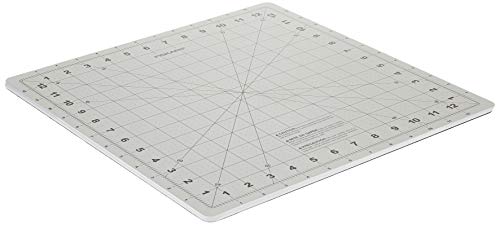
Fiskars prioritizes space efficiency by offering a compact footprint without sacrificing rotation quality. The design is lightweight and portable, ideal for makers who reclaim their kitchen table after a long day of pattern drafting.
Its smaller diameter is perfect for squaring up finished blocks or trimming appliqué pieces where wide reaching is unnecessary. The grip-friendly base keeps the mat from sliding during high-intensity sessions.
However, the smaller surface area creates a limitation for projects involving large garment panels. If the goal is to cut full-length strips for quilts, the mat size might require constant repositioning of the fabric.
Martelli Round-About: The Ultimate Cutting System

The Martelli Round-About is a professional-grade system featuring a unique, textured top that grips fabric exceptionally well. Unlike standard mats, the base and top components are engineered to prevent any accidental shifting during the cut.
This system is particularly effective for those working with slicker materials, such as silk or thin rayon, which often slide under standard blades. The rotation is remarkably smooth, allowing for precise control when cutting curves or intricate shapes.
The investment cost is higher than a basic rotating mat, representing a long-term commitment to a specialized workspace. It is an ideal choice for the dedicated quilter who values ergonomic longevity and absolute stability.
Omnigrid Rotating Mat: The Quilter’s Top Choice

Omnigrid mats are favored for their clear, high-contrast grid markings that make alignment effortless. In fiber arts, where even a fraction of an inch error can result in misaligned pattern repeats, these markings provide a necessary visual anchor.
The rotating mechanism is designed for heavy usage, maintaining smooth movement even after months of intensive block squaring. The surface texture is medium-firm, offering a good balance between blade resistance and protection.
A common misconception is that all mats are equally “self-healing.” The Omnigrid performs exceptionally well, but consistent pressure and sharp blade changes remain the primary factors in surface longevity.
Sullivans Rotating Mat: Most Stable and Colorful
Sullivans offers a rotating mat that prioritizes a stable base and a vibrant visual layout. The high-friction backing ensures that even on smooth surfaces, the mat remains locked in place while the inner disc rotates fluidly.
The grid lines are distinct, which is a major advantage when working in low-light conditions or dealing with eye fatigue after hours of complex assembly. The aesthetic appeal of the mat often pairs well with modern crafting studios.
Because the colors are bold, users must ensure they remain diligent about cleaning off thread ends and lint. Debris can sometimes obscure the markings, making precise cuts harder to verify at a glance.
Calibre Art Mat: The Best Budget-Friendly Pick
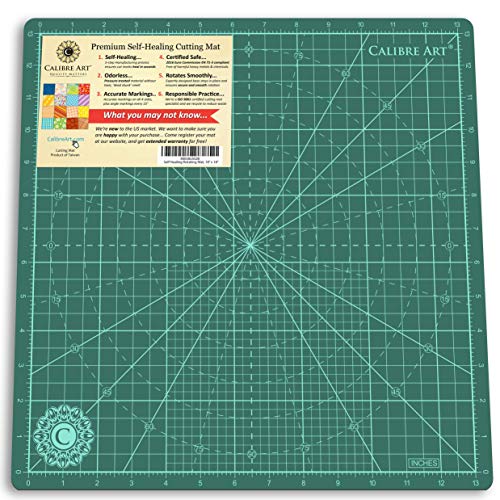
The Calibre Art mat provides a functional, entry-level option for those who are just beginning to build a professional-grade tool collection. It features a solid, smooth rotation that satisfies the requirements of most standard quilting and sewing tasks.
While it lacks some of the heavy-duty ball-bearing complexity of premium models, it is surprisingly durable for its price point. It works well for small to medium projects and is easy to store vertically in a cupboard.
The trade-off is a slightly thinner profile and a surface that may show wear faster if high-pressure blades are used. For beginners, it is an excellent way to determine if a rotating mat fits into their workflow before investing in high-end equipment.
How to Choose the Right Rotating Mat Size for You
Selecting a mat size starts with measuring the largest block or piece of fabric typically handled. A 12-inch mat is generally sufficient for standard quilt blocks, whereas 14-inch or larger sizes are necessary for cutting long strips of fabric.
Consider the physical space available on the cutting table. A mat that is too large for the surface will cause the edges to overhang, potentially leading to instability and warping over time.
Think about ergonomics as well. Reaching across an oversized mat to square up a small piece causes unnecessary strain on the shoulders and back. Matching the mat size to the project scale keeps the cutting action centered and effortless.
Care Tips to Keep Your Self-Healing Mat Lasting
Self-healing mats are not indestructible, and their lifespan depends heavily on proper maintenance. Rotate the cutting position frequently to avoid wearing out a single “well-traveled” path on the mat surface.
Keep the mat away from direct heat sources, such as radiators or sunny windows, which can warp the material. Heat is the natural enemy of precision tools and will cause the edges to curl and lose their flatness.
Avoid using dull rotary blades, as they require more downward pressure to cut, which leaves deeper, permanent gashes in the mat. Replace blades as soon as the edge begins to drag or skip, preserving the smooth surface of the mat.
Rotating vs. Static Mats: When to Make the Switch
Static mats are essential for long, straight cuts across wide pieces of fabric that cannot be safely maneuvered. They offer a stable, expansive surface that provides total security when using rulers to guide long passes.
Rotating mats excel when the focus shifts to squaring, trimming, or working with intricate shapes that require a 360-degree range of motion. They save time and physical effort, especially when processing dozens of identical blocks.
Most professional studios eventually integrate both options. Use a large static mat for the initial cuts of yardage and transition to a rotating mat for the detailed refinement and finishing work.
Rotary Cutter Safety: Protect Your Fingers & Mat
Safety begins with the understanding that a rotary cutter is essentially an open, circular blade. Always engage the safety lock immediately after each cut, regardless of how brief the pause in activity might be.
Position the ruler so that the cutting hand is always at least several inches away from the path of the blade. If the ruler slips, the hand should be naturally pulled away from the cutting line, not toward it.
Finally, keep blades sharp. A dull blade is more dangerous than a sharp one because it requires excessive force to operate, which increases the likelihood of a slip. Keep a disposal container nearby for old blades and never leave them loose in a notions bin.
With the right equipment in hand, the barrier between a vision and a finished project diminishes significantly. Precision tools like these rotating mats reduce the margin for error, allowing for a more enjoyable and rewarding crafting journey. Choose the model that best fits the scale and frequency of your work to ensure your tools serve you for many years to come.