6 Best Shuttle Bobbins For High Speed Weaving
Boost your loom’s efficiency with our top 6 picks for high-speed weaving shuttle bobbins. Discover durable, precision-engineered tools and upgrade your gear today.
High-speed weaving demands equipment that can withstand the repetitive, high-impact nature of throwing a shuttle across the warp. A poorly balanced bobbin can lead to uneven tension, frequent thread breakage, and a frustratingly slow production pace. Choosing the right tool for your loom is the difference between a seamless rhythm and constant manual intervention. This guide breaks down the best shuttle bobbins to help keep your shed clear and your production steady.
Schacht Plastic Bobbins: The Durable Workhorse
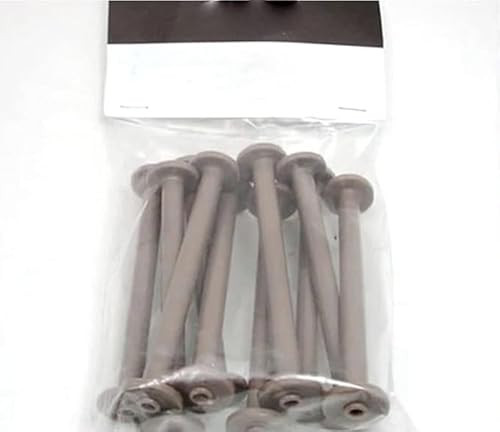

Schacht plastic bobbins are the industry standard for a reason: they are virtually indestructible. When working on long warps with high-tension wool or cotton, these bobbins hold their shape under pressure without warping or cracking.
These bobbins are excellent for beginners because they are forgiving and easy to wind consistently. Their slick surface ensures that even slightly irregular handspun yarn releases smoothly, minimizing the risk of snagging during the pick.
The trade-off is the weight; plastic is heavier than paper or wood, which can affect the feel of your shuttle throw over long sessions. If you are weaving delicate, lightweight silk, this added mass might cause more drag than desired.
Leclerc Styrene Bobbins: Best Lightweight Option

Leclerc’s styrene bobbins offer a mid-point between the durability of industrial plastic and the feather-light feel of natural materials. They are a superior choice when working with fine, low-tensile yarns that require a light touch.
The material is exceptionally smooth, which is critical when working with slippery fibers like rayon or tencel that tend to “jump” off the bobbin if not wound perfectly. They maintain their diameter well, preventing the common issue where yarn nests and creates a tangled mess in the shuttle.
Because they are so lightweight, these bobbins require a bit more attention during the winding process. If you wind too loosely, the yarn can expand and jam against the shuttle side, so maintaining firm, even tension on the winder is mandatory.
Glimåkra Wood Bobbins: The Traditional Standard

Wood bobbins bring a classic weight and balance to the shuttle that many experienced weavers find irreplaceable. The natural grain provides just enough “grip” to prevent yarn from sliding off the ends, which is a major advantage when weaving slippery synthetic fibers.
These bobbins are prized for their longevity and the way they age; over time, the wood can be lightly sanded if it develops any roughness. They feel substantial in the hand, providing a satisfying rhythm to the throw that plastic options often lack.
However, wood can be susceptible to environmental changes. In high-humidity environments, wood can swell slightly, and in very dry conditions, it may shrink or crack, potentially changing how it sits on the shuttle spindle.
Ashford Nylon Bobbins: For a Snag-Free Weave

Ashford nylon bobbins are engineered for high-performance friction reduction. Their construction is incredibly uniform, ensuring that the yarn pays out with consistent tension from the first yard to the last.
These are particularly effective when weaving with “sticky” yarns like mohair or high-twist wool blends. Because the nylon surface is so incredibly slick, the yarn releases without the micro-snags that can cause uneven edges or “drag-in” at the selvedges.

The downside is that they can be prone to static build-up, especially in dry winter months or in climate-controlled studios. A quick swipe with an anti-static cloth before loading your shuttle is usually all that is needed to resolve this.
End-Feed Shuttle Pirns: Ultimate Tension Control
End-feed shuttles use pirns rather than traditional bobbins, representing a significant shift in weaving mechanics. Instead of the bobbin rotating as the yarn pulls off, the yarn is pulled off the end of the stationary pirn, much like a spinning wheel bobbin.
This method provides the most consistent tension available, which is vital for professional-quality textiles where the selvedge must be perfectly straight. It effectively eliminates the “surge” of tension that occurs when a rotating bobbin suddenly speeds up or slows down.
Using pirns requires a learning curve, as the winding process must be precise to create a cone-shaped package that allows the yarn to release without tangling. It is an investment in quality that pays off for complex, long-yardage projects.
Bluster Bay Paper Quills: Best for Fine Threads
Paper quills are the secret weapon of weavers working with the finest threads, such as 60/2 cotton or delicate silk. Because they are incredibly thin-walled, they allow for a higher volume of yarn to be wound onto the shuttle without increasing the overall size of the package.
Their weight is negligible, which prevents the shuttle from feeling heavy or sluggish in the hand. They are also remarkably gentle on delicate fibers, as the paper surface lacks the microscopic imperfections sometimes found in molded plastic.
The primary drawback is durability; paper quills will eventually crush or bend after extensive use. They should be considered a consumable item rather than a permanent tool, but for fine work, their performance is unmatched.
How to Choose the Right Bobbin For Your Shuttle
Matching your bobbin to your specific shuttle is more important than the material itself. A bobbin that is too long will cause the shuttle to bind, while one that is too short will wobble on the spindle, leading to uneven thread release.
Consider these factors when selecting your next set: * Shuttle Throat Opening: Ensure the bobbin diameter allows the yarn to clear the shuttle opening without rubbing. * Spindle Diameter: Verify the hole size matches your shuttle spindle to prevent vibration. * Yarn Texture: Use wood for slippery fibers and nylon or plastic for sticky or high-friction fibers.
Always prioritize a snug fit on the spindle. Any play in the bobbin leads to tension fluctuations that show up as visible stripes in your final fabric.
Bobbin Materials Compared: Plastic, Wood, & Paper
| Material | Best For | Trade-offs |
|---|---|---|
| Plastic | General use, beginners | Heavier, prone to static |
| Wood | Slippery fibers, traditionalists | Sensitive to humidity |
| Paper | Ultra-fine threads | Not permanent, fragile |
Plastic is the reliable, no-fuss choice for high-speed production. Wood offers superior grip and a premium feel but requires a more stable environment. Paper is the specialist’s choice for precision where bulk must be kept to an absolute minimum.
Does Your Bobbin Winder Fit Your New Bobbins?
A common mistake is assuming all bobbins are compatible with a standard bobbin winder. If your winder has a tapered shaft, it may not accommodate the straight-bore hole of certain industrial-style bobbins.
Before committing to a brand, check the internal diameter of the bobbin and the diameter of your winder’s spindle. If there is a mismatch, the bobbin will spin off-center, causing an uneven winding pattern that will inevitably lead to tension problems during weaving.
If you find your bobbins are loose, a small wrap of masking tape around the winder shaft can create a temporary, snug fit. However, for long-term production, replacing the winder or the bobbins to ensure a perfect mechanical match is the only path to consistency.
FAQ: Storing and Organizing Your Bobbin Stash
Keeping your bobbins organized is essential for managing multiple colors or different warp weights simultaneously. A dedicated rack or a set of wooden pegs is the best way to prevent damage to the ends of the bobbins.
Never store bobbins with the yarn under high tension for long periods. Over months or years, the tension can deform the bobbin or stretch the yarn, leading to uneven results when you finally get to the loom.
When storing, ensure the bobbins are in a dust-free environment. Dust and lint trapped in the yarn package can cause “hiccups” in the shed, leading to broken ends and unnecessary frustration during an otherwise smooth weaving session.
Success in weaving is often found in the small details, and the humble bobbin is a primary driver of your project’s outcome. By selecting a material that suits your fiber and ensuring a mechanical fit that eliminates wobble, you set the foundation for a professional, efficient weave. Whether you choose the rugged reliability of plastic or the delicate precision of paper, the goal remains the same: a steady, rhythmic shed that lets you focus entirely on your design.