6 Best Decorative Pearls For Embellishing Lace To Try
Elevate your lace projects with our guide to the 6 best decorative pearls. Discover the perfect embellishments for your designs and start crafting today.
Adding pearls to lace transforms a simple knitted accessory into a sophisticated heirloom piece. The weight, luster, and movement of a bead can elevate a standard stockinette or lace project into something truly remarkable. Choosing the right decorative element requires balancing the structural integrity of the yarn with the finish of the pearl. This guide breaks down the best options for embellishing delicate lace work.
Swarovski Crystal Pearls: Best for Luxury Heirlooms


Swarovski pearls are constructed with a crystal core coated in an innovative pearl-like finish. They possess a substantial weight and a consistent, high-gloss luster that refuses to fade or peel over time.
For wedding veils, baptismal gowns, or heirloom shawls, these represent the gold standard. The finish is remarkably resistant to perspiration and light, ensuring the piece maintains its brilliance through decades of storage.
Be aware that these pearls are significantly heavier than their glass or plastic counterparts. If incorporating them into a fine lace-weight yarn, ensure the lace structure is stable enough to support the added mass without sagging or distorting the stitch definition.
Preciosa Nacre Pearls: Top Value for Quality

Preciosa offers a highly consistent Czech-made pearl that serves as the workhorse for many professional designers. The coating is durable, and the color palette is extensive enough to match almost any natural or synthetic fiber.
These are an excellent middle-ground choice for projects where a high-end look is desired without the premium price tag of Swarovski. They bridge the gap between mass-produced craft beads and luxury crystals perfectly.
The main advantage here is reliability in sizing and hole diameter. When working with delicate lace, a consistent hole size means the beads will sit uniformly on the yarn, preventing the “lumpy” appearance that occurs when bead sizes fluctuate within a single strand.
The Beadery Craft Pearls: Great for Bulk Projects
The Beadery provides plastic-based pearls that are exceptionally lightweight and cost-effective. These are ideal for projects requiring hundreds of beads, such as a fully beaded lace edge or a massive, heavily embellished shawl.
Because they are made of lightweight plastic, they won’t pull or distort the drape of delicate lacework. If knitting with very thin cobweb-weight yarn, these are often the safest choice to prevent the knitting from becoming overly heavy or stretching out of shape during blocking.
The tradeoff is a lower-quality finish that may eventually show signs of wear or chipping. Reserve these for costume pieces or items not intended to be handed down as heirlooms.
Toho Glass Seed Pearls: Ideal for Delicate Detail
Toho glass seed pearls, often referred to as “pearlized” seed beads, offer a tiny, refined touch that mimics the look of a pearl without the bulk. They are perfect for placing within the eyelets of a lace pattern.
These beads are light enough to be knitted directly into the fabric using the “crochet hook method” without altering the gauge of the surrounding stitches. They provide a subtle shimmer that catches the light without overpowering the intricate lace design.
When choosing these, look for silver-lined finishes to add an extra layer of luminosity. These beads are very small, so verify the hole size against the weight of the knitting yarn to ensure it slides on easily during the knitting process.
Czech Glass Teardrop Pearls: Perfect for Edgings
Czech glass teardrops provide a unique, elongated shape that hangs beautifully from a lace picot or a scalloped edging. They offer a more organic, sophisticated look compared to perfectly round beads.
The teardrop shape creates movement, which is essential for items like shawls or cowls. As the garment shifts, the beads sway, adding an elegant dynamic quality that round beads lack.
Be mindful that the pointed ends can sometimes catch on loose fibers or adjacent stitches. When sewing these onto a finished lace edge, ensure they are anchored with a secure, reinforced knot to prevent the delicate glass from snagging during regular wear.
Akoya Style Faux Pearls: Classic Round Elegance
Akoya style faux pearls are designed to mimic the high-luster, cream-colored aesthetic of genuine saltwater pearls. They feature a smooth, high-sheen coating that pairs beautifully with silk, wool, and alpaca blends.
These are the quintessential choice for vintage-inspired projects. The classic round shape is versatile enough to be used in floral lace patterns or simply scattered across a plain stocking stitch background.
Because these are generally glass-based, they strike a good balance between weight and durability. They are sturdier than plastic but lack the extreme, heavy density of leaded crystal.
Choosing Your Pearl: Glass vs. Plastic vs. Crystal
Selecting the material of the pearl is the most critical decision for the longevity of the garment. Each material interacts differently with the environment and the yarn itself.
- Plastic: Best for lightweight garments and bulk, but susceptible to scratching.
- Glass: The industry standard for a balance of weight, price, and durability.
- Crystal: Heavy, high-luster, and expensive; reserved for items that need to withstand heavy use or historical preservation.
Avoid using heavy beads on fragile, high-twist luxury fibers like mohair or cashmere. These fibers can be cut or abraded by the weight of a bead over time, leading to premature thinning or holes in the knitting.
How to Securely Attach Pearls to Delicate Lace
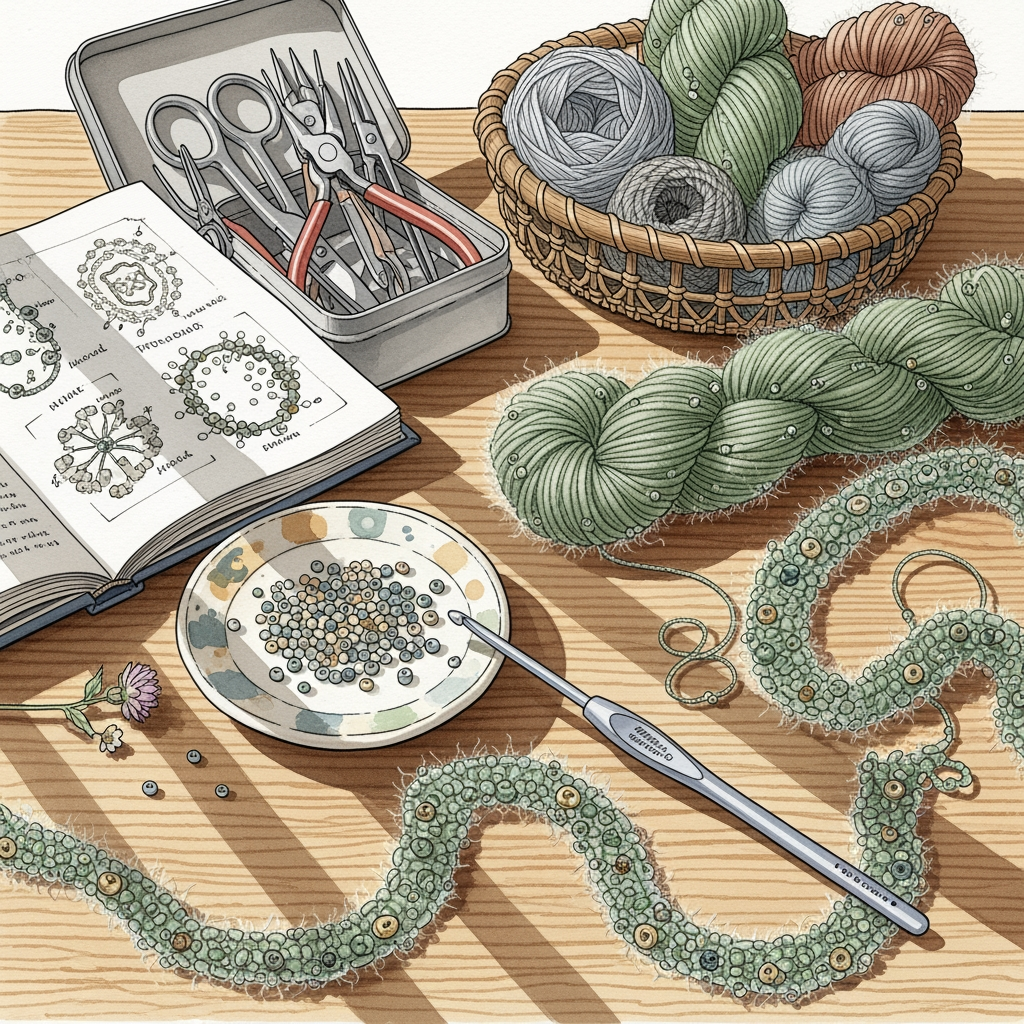
For knitting directly into the work, the crochet hook method remains the most efficient. This involves sliding the bead onto a tiny crochet hook, pulling the live stitch through the bead, and returning it to the needle.
If sewing pearls on after the lace is blocked, use a fine silk thread or a high-quality monofilament, provided the monofilament is soft enough not to fray the yarn. Always double-check that the thread color matches the yarn perfectly to hide the anchoring stitches.
Avoid using excessive tension when attaching beads. Tight stitches can cause the lace to pucker around the pearl, ruining the clean, airy look characteristic of fine lace.
Matching Pearl Size to Your Lace Weight
A common error involves using beads that are too large for the yarn, which results in the bead sliding down the stitch and making the lace appear loose. Conversely, beads that are too small will disappear into the stitch definition.
As a rule of thumb, the bead hole should be slightly larger than the diameter of two strands of the yarn being used. This allows the bead to be threaded easily without needing to force the yarn, which could weaken or break the fiber.
If in doubt, perform a test swatch. Work a small 2-inch square of the lace pattern and incorporate a few beads to see how the weight and size affect the final drape.
Caring for Your Embellished Lace Garments
Beaded lace items must be hand-washed with extreme caution. Avoid soaking the piece for extended periods, as some pearl coatings—especially on plastic or lower-quality glass—may react to prolonged moisture or harsh soaps.
Always use a gentle, pH-neutral wool wash. Lay the garment perfectly flat on a blocking mat, and avoid hanging the item to dry, as the added weight of the pearls will inevitably cause the lace to stretch and lose its intended shape.
When storing, keep the item folded in acid-free tissue paper to prevent the beads from snagging on other clothes or being crushed. A well-cared-for embellished piece will retain its luster and structural beauty for many years to come.
Adding pearls to your lace knitting is a rewarding way to inject personality and luxury into your craft. By selecting materials that respect the integrity of your yarn and applying them with care, you ensure that every stitch remains a testament to your technical skill. Explore these options, swatch your favorites, and enjoy the transformative power of a well-placed pearl.