
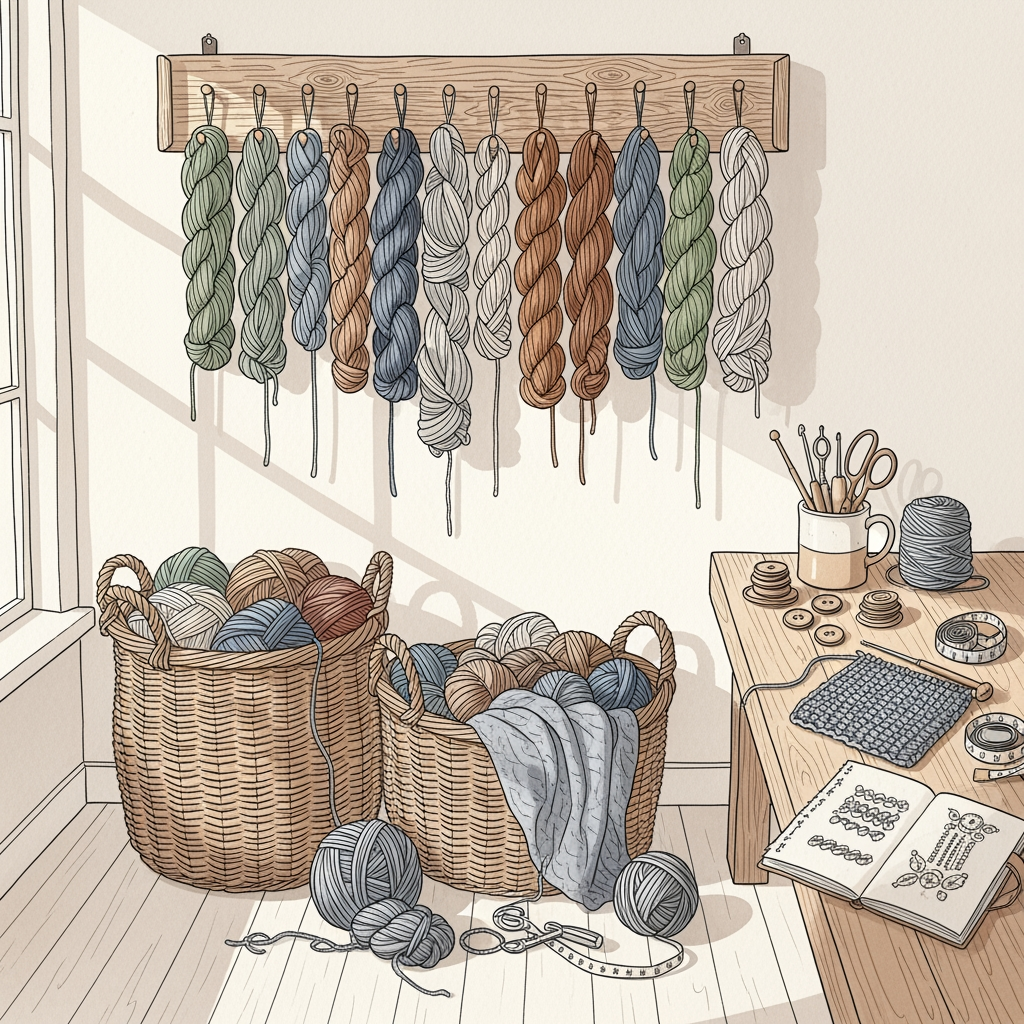
6 Best Craft Storage Cabinets For Organized Supplies
Stop struggling with clutter and find the perfect fit for your space. Explore our top 6 craft storage cabinets to organize your supplies effectively today.
Every fiber artist understands the slow accumulation of stash: those stray skeins of hand-dyed merino, the essential collection of circular needles, and the growing library of pattern books. A disorganized workspace often leads to tangled yarn, misplaced cable needles, and the frustration of losing a project mid-row. Proper storage is not just about aesthetics; it is about protecting delicate fibers from light damage and dust while ensuring tools remain accessible for the next cast-on. Investing in dedicated cabinetry transforms a chaotic pile of supplies into a functional studio where creativity can thrive.
Create-A-Cube Modular System: Best for Versatility


Modular cube systems offer the ultimate flexibility for knitters who frequently shift between project types. By stacking individual cubes, a storage setup can grow from a small corner unit to a full-wall library as a stash expands.
Because these units often feature open shelving, they are perfect for displaying yarn in clear, airtight bins to prevent moth intrusion. If a collection includes a mix of bulky wool rovings and fine lace-weight cones, the ability to customize shelving heights is invaluable.
The trade-off with modularity is stability; heavy weight from stored yarn can cause sagging if the structure is overloaded. Always secure these units to the wall, especially when storing heavy stash items like cotton or linen on higher shelves.
Honey-Can-Do Rolling Cart: Best for Mobile Storage

A rolling cart serves as the ultimate “project station,” allowing a knitter to migrate from a dedicated craft room to a comfortable armchair without leaving essential tools behind. These carts typically feature wire basket drawers, which are ideal for keeping current work-in-progress (WIP) bags and notions pouches in constant rotation.
Wire-mesh surfaces are excellent for airflow, preventing humidity from trapping against natural fibers like alpaca or cashmere. However, these surfaces can be rough on delicate items, so placing a smooth liner or a fabric tray inside the baskets is recommended for fine accessories.
Carts are best suited for smaller, active supplies rather than long-term archival storage. Utilize the top surface as a dedicated space for swatching or a temporary home for a ball winder and swift.
The Crafter’s Dream Armoire: For Huge Collections
For the serious stash-builder, the full-scale armoire is the gold standard of dedicated fiber arts storage. These units are designed to swallow massive inventories of yarn, needle sets, and notions in a single, concealable footprint.
These armoires often include specialized racking systems that prevent yarn from crushing under its own weight. This is critical for delicate, high-loft fibers that can lose their structure if packed too tightly into bins for extended periods.
Be mindful that these pieces occupy a significant amount of floor space and often carry a premium price tag. For the knitter with a permanent, dedicated space, this investment pays off by keeping an entire collection visible and organized at a glance.
Best Craft Wall Cabinet: Ideal for Small Spaces
When floor space is at a premium, mounting cabinets directly to the wall is the most effective way to utilize vertical real estate. Wall cabinets keep expensive circular needle sets and delicate tools well out of reach of children or pets while keeping them at eye level.
Look for cabinets with shallow depths to avoid bumping into them while navigating a room. A depth of six to eight inches is usually sufficient to hold standard yarn cakes and most accessory organizers.
Always verify the weight capacity of wall-mounted options before loading them with heavy skeins. Use anchors appropriate for the wall material to ensure the cabinet remains secure even when fully stocked.
Sauder Sewing & Craft Armoire: Blends with Decor
A craft armoire that functions as furniture allows a workspace to reside in a living room without clashing with the home’s interior design. These units are ideal for knitters who want to tuck their projects away entirely when guests arrive.
The interior layout often prioritizes function, featuring doors that swing open to reveal bins for yarn and hooks for scissors or stitch markers. These cabinets often feature fold-out desks, which provide a dedicated space for blocking small pieces or calculating gauge swatches.
While aesthetically pleasing, these units can be more difficult to reconfigure than modular systems. Ensure the interior shelving layout suits the specific sizing of the storage bins or yarn organization system you prefer before committing.
IRIS USA 6-Drawer Cart: Top Budget-Friendly Pick

Plastic drawer carts offer a practical, lightweight solution for organizing notions, small tools, and accessories by category. Sorting stitch markers, tapestry needles, and measuring tapes into clear drawers eliminates the frustration of hunting for a specific tool during the binding-off process.
Because the drawers are clear, it is easy to identify what is inside without opening them, speeding up project prep. Keep in mind that plastic bins offer no protection against sunlight; if a craft room receives direct light, ensure the cart is kept in a shaded area to prevent fiber fading or plastic degradation.
These carts are perfect for “per-project” organization. Dedicate a single drawer to a specific project to house the needles, pattern, and extra yarn, keeping the workspace clutter-free.
Choosing a Cabinet: Match It to Your Craft Stash
The primary goal of selecting storage is matching the equipment to the specific nature of the fiber arts practiced. If a stash consists primarily of bulky, hand-spun wool, prioritize deep drawers or wide shelves that can hold large volumes without compression.
For a collection heavy on fine needles and small notions, seek out cabinets with shallow drawers or built-in dividers. Organization is the best defense against “stash drift,” where projects become buried and forgotten.
Always leave room for growth. A cabinet that is perfectly filled today will struggle to hold a new yarn purchase or a new set of interchangeable needles tomorrow.
Wood vs. Plastic vs. Metal: Which is Best?
Wood cabinets offer durability and are often the most aesthetically pleasing, though they can be heavy and difficult to move. Hardwoods like oak or pine are sturdy, but ensure they are finished properly to prevent rough edges from snagging delicate wool.
Plastic is the ultimate for moisture resistance and visibility. It is lightweight and easy to clean, making it a reliable choice for long-term storage in environments like basements or garages where temperature fluctuations might occur.
Metal, such as powder-coated steel, provides the most robust support for heavy items. It is non-porous and highly durable, making it an excellent long-term storage choice that is immune to the pests that sometimes plague natural fiber collections.
A Crafter’s Guide to Assembling Your New Cabinet
Many craft cabinets arrive flat-packed, requiring assembly before they can hold a single skein. A sturdy screwdriver and a level are essential tools to ensure the frame is square; an unbalanced cabinet can cause drawers to stick or doors to hang unevenly.
Use a wood glue during assembly for MDF or particle board furniture to reinforce the joints. This creates a much stronger structure that will better withstand the weight of heavy yarn collections over many years.
Always follow the manufacturer’s instructions for wall-mounting or anchoring. Even if a cabinet seems stable, the weight of a full stash can shift the center of gravity significantly.
How to Maximize Space Inside Your Craft Cabinet
The most effective way to maximize space is through vertical stacking and modular inserts. Use acrylic or mesh risers to double the surface area on shelves, allowing for yarn storage below and tool storage above.
Implement a labeling system for bins and drawers to keep the stash inventory clear. Whether organizing by fiber content, weight, or project status, a consistent system ensures that finding the right material takes seconds rather than minutes.
Keep frequently used tools in the most accessible spots. Reserve the lower or harder-to-reach shelves for long-term archival items like bulk yarn storage or seasonal fiber projects that are not currently in rotation.
Careful selection of a storage cabinet is the foundation of a sustainable and enjoyable knitting practice. By matching the cabinet’s structural strengths to the specific requirements of a yarn and tool collection, it is possible to create an environment that encourages consistent creativity. A well-organized studio protects valuable supplies, speeds up project starts, and keeps the focus where it belongs: on the craft itself.


