6 Best Cable Adapters For Mixing Needle Brands
Mixing needle brands can be tricky. Discover the 6 best cable adapters to ensure seamless compatibility and reliable performance for your knitting projects.
Every knitter eventually finds themselves with a mismatched collection of favorite needle tips and cables. While brands often design their systems to be exclusive, the reality of long-term knitting means you will inevitably want to cross-pollinate your tools. Using the right adapter can save you from buying an entirely new set of cables when you just want to finish that last sleeve. This guide explores the best adapters to bridge the gap between your favorite components.
ChiaoGoo TWIST & SPIN Universal Cable Connectors
ChiaoGoo has mastered the art of the precision-engineered connection. Their stainless steel connectors are renowned for their seamless transitions, which is vital when you are working with delicate lace weight yarns that tend to snag on even the smallest burr.
These connectors are specifically designed to bridge the gap between different screw sizes within the ChiaoGoo ecosystem. If you are moving from a small lace tip to a larger gauge needle, these ensure your yarn travels over the join without catching.
The bottom line here is consistency. Because they are machined to such tight tolerances, you rarely have to worry about them unscrewing mid-row, provided you use your tightening key properly.
Knitter’s Pride Mindful Collection Cable Adapter


The Mindful Collection focuses on a smooth, meditative knitting experience, and their adapters reflect that philosophy. These pieces are designed to be unobtrusive, maintaining the ergonomic flow of the needle and cable assembly.
These adapters are particularly useful if you have accumulated various cables from the Knitter’s Pride or KnitPro lines. They act as a universal bridge, allowing you to pair your favorite Mindful tips with older, perhaps more flexible, cables you already own.
Keep in mind that while these are excellent for connecting, they add a small amount of length to your needle assembly. If you are knitting a tight circumference, such as a small sleeve, make sure the added length doesn’t force your stitches to stretch too far.
HiyaHiya Interchangeable Needle Cable Connectors

HiyaHiya is famous for their swivel cables, and their adapters are built to maintain that same fluidity. If you find your yarn twisting as you knit, these connectors are a lifesaver for keeping your work moving in a natural arc.
These are essential if you are working with multi-colored projects or stranded colorwork where tension is everything. A smooth connection ensures that your yarn doesn’t hang up, which helps maintain an even gauge across your entire row.
Be aware that HiyaHiya threads are quite fine and delicate. Always thread them by hand first to ensure they are seated correctly before using the tightening tool, as forcing them can lead to stripped threads.
Lykke Interchangeable Needle Cable Connectors

Lykke needles are beloved for their beautiful, warm aesthetic and smooth finish. Their adapters are designed to match this high-quality construction, ensuring that your wooden tips don’t get damaged by misaligned metal components.
These adapters are best for knitters who prefer the feel of natural fibers but need the versatility of an interchangeable system. They provide a sturdy, reliable bridge that doesn’t feel cold or industrial against your skin during long knitting sessions.
Because these are often used with wooden tips, take care not to over-tighten. Wood can be more forgiving than metal, but the threads in the adapter are metal; let the threads do the work rather than brute force.
Addi Click System Needle Cable Connectors

The Addi Click system is unique because it uses a spring-loaded, push-and-twist mechanism rather than traditional screw-in threads. This means their "adapter" is essentially a way to extend your cable length or join two cables together seamlessly.
If you are working on a large project like a blanket or a shawl with hundreds of stitches, this system is a game-changer. You can join multiple cables together to accommodate the massive stitch count without the risk of the join unscrewing.
The main tradeoff is that this system is largely proprietary. You aren’t mixing and matching brands here, but you are gaining immense flexibility within the Addi ecosystem, which is often enough for the serious knitter.
Seeknit Koshitsu Interchangeable Cable Adapters
Seeknit offers a traditional, high-quality Japanese approach to knitting tools. Their Koshitsu process involves a high-pressure treatment that makes bamboo incredibly durable and smooth, and their adapters are built to complement this precision.
These are perfect for knitters who suffer from hand fatigue. Because bamboo is lighter than metal, using these adapters to extend your cable length keeps the overall weight of your project down, allowing for hours of comfortable knitting.
The key with Seeknit is the finish. The adapters are polished to match the bamboo tips, ensuring that the yarn glides over the join with the same ease as it does over the needle itself.
Why You Need Adapters for Mixing Needle Brands
The primary reason to use adapters is economic and logistical efficiency. As your collection grows, you will inevitably end up with "orphan" cables that don’t match your favorite tips.
Adapters allow you to utilize your existing inventory rather than purchasing new, branded cables for every single project. This is especially helpful when you need a specific cable length that isn’t currently in your main set.
Furthermore, they provide a bridge for experimentation. You might find that a specific yarn fiber, like a sticky mohair or a slippery silk, performs better with a different tip material; an adapter lets you test this without buying a whole new kit.
How to Ensure a Secure Fit Between Components
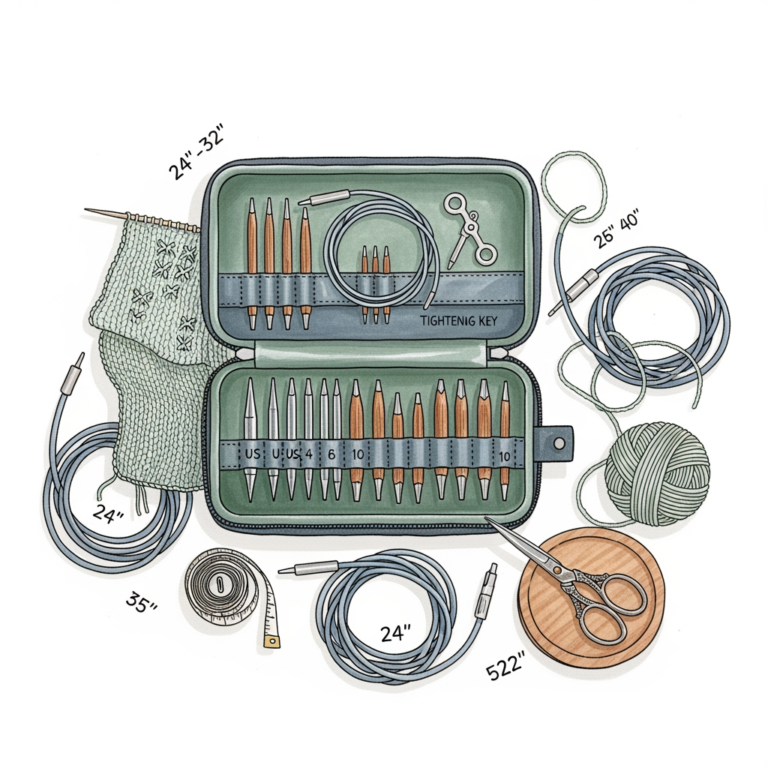
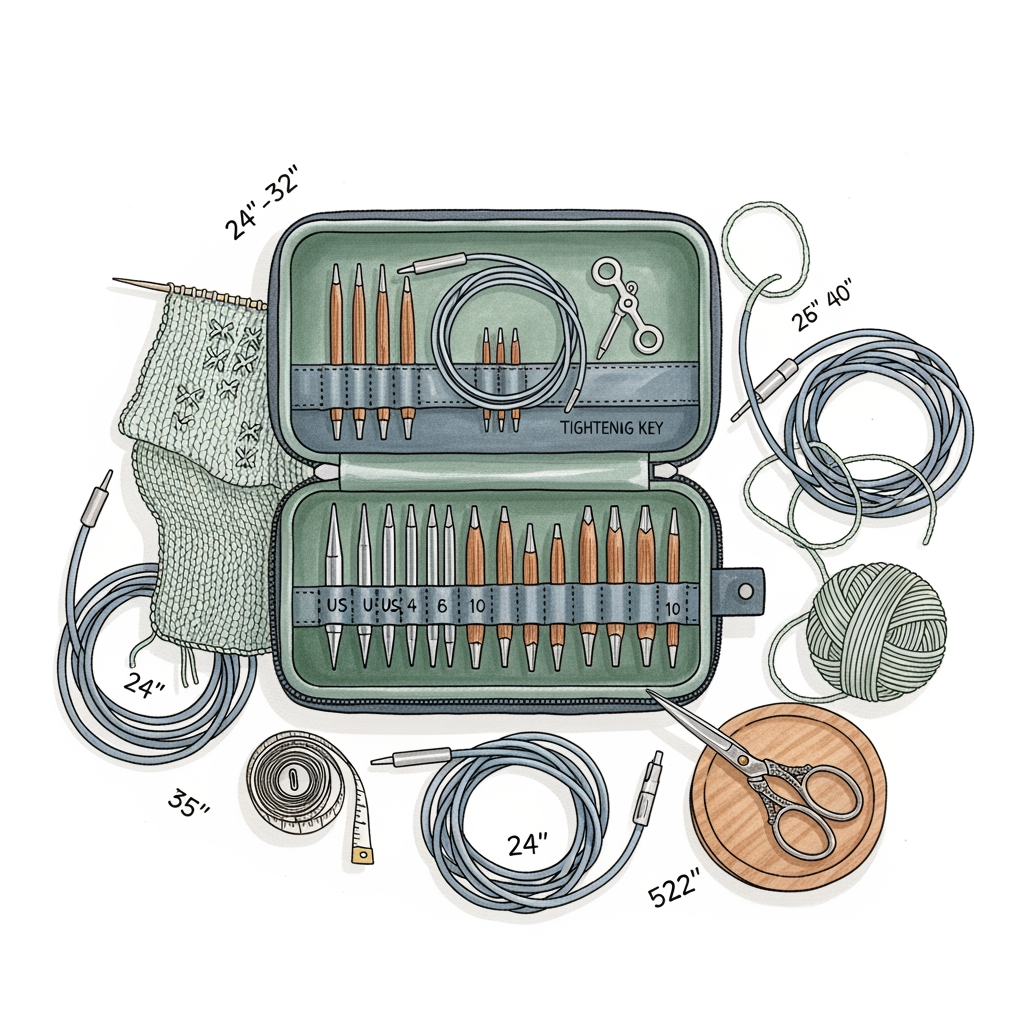
A secure fit is non-negotiable when you are working on a project with hundreds of dollars of yarn. Always use the provided tightening key or grip pad to ensure the connection is fully seated.
- Check the threads: Before joining, look for any stray fibers or debris in the threads.
- Hand-tighten first: Always start the connection by hand to feel for resistance.
- Use the tool: Never rely on hand-tightening alone; the torque of your knitting will eventually loosen the join.
If you feel the needle "wobbling" or catching the yarn, stop immediately. A loose connection is the primary cause of dropped stitches and snagged fibers, which can be catastrophic in lace or complex cable patterns.
Avoiding Common Issues With Threading Mismatches
The most common mistake knitters make is forcing a connection between two incompatible thread pitches. If you feel significant resistance while twisting, stop—you are likely damaging the internal threading of your needle or adapter.
Many brands use similar-looking threads, but the pitch (the distance between the thread grooves) can vary by fractions of a millimeter. Forcing these will strip the threads, rendering the tool permanently useless.
If you are unsure if two pieces are compatible, do not force them. Check the manufacturer’s compatibility charts, which are usually available online, to confirm whether your specific tip and cable can be safely joined.
Essential Tips for Maintaining Your Connectors
Treat your adapters like the precision tools they are. After finishing a project, unscrew your adapters and store them in a dry, cool place to prevent oxidation or moisture damage.
Periodically inspect the join area for any signs of wear or burrs. If you notice a rough spot, a very fine-grit emery board can sometimes smooth it out, but if the damage is significant, it is safer to replace the piece.
Finally, keep your tightening keys organized. It is frustrating to have the perfect adapter for your project but be unable to secure it properly because your tool has gone missing in your knitting bag.
Mastering the use of cable adapters opens up a new world of flexibility for your knitting projects. By understanding the mechanics of your specific tools and the importance of a secure, smooth join, you can mix and match with confidence. Remember that the goal is to keep the yarn moving freely and your hands comfortable. Happy knitting, and may your joins always be as smooth as your stitches.