7 Best Craft Scissors For Cutting Yarn For Precision
Discover the top 7 craft scissors for precise yarn cutting. Our guide compares blades and ergonomics to help you achieve clean, effortless snips every time.
Every knitter knows the frustration of a dull pair of scissors fraying a delicate strand of mohair or struggling through a thick, plied wool. Achieving a clean, precise cut is not just about aesthetics; it ensures your ends are easy to weave in and your color changes look seamless. After two decades at the craft, I have learned that your choice of cutting tool is just as vital as your choice of needles. Here are the top tools that will elevate your finishing work from a chore to a satisfying detail.
Gingher 4-Inch Featherweight Embroidery Scissors


These scissors are a staple in many knitting bags for a reason. Their lightweight construction means they won’t weigh down your notions pouch, making them perfect for on-the-go knitting sessions in the park or on the train.
The blades are incredibly sharp and tapered, allowing you to get right up against your work. Whether you are snipping a loose end on a finished sock or trimming a yarn tail during a complex intarsia project, the precision is unmatched.
Be aware that these are precision tools, not utility shears. Do not use them on anything other than fiber, or you will quickly ruin that delicate edge.
Kai N5100 4-Inch Precision Needlework Scissors

Kai is renowned for their steel quality, and these scissors feel substantial in the hand without being cumbersome. The blades are hardened and ground to a professional edge that makes cutting through even the finest lace-weight silk feel effortless.
If you struggle with hand fatigue during long finishing sessions, the ergonomic handle design is a game changer. It provides just enough leverage to make clean cuts without requiring a tight, uncomfortable grip.
These are an investment piece for the dedicated maker. If you find yourself constantly frustrated by "chewing" rather than cutting your yarn, this is the upgrade you need.
LDH Scissors Midnight Edition Thread Snips
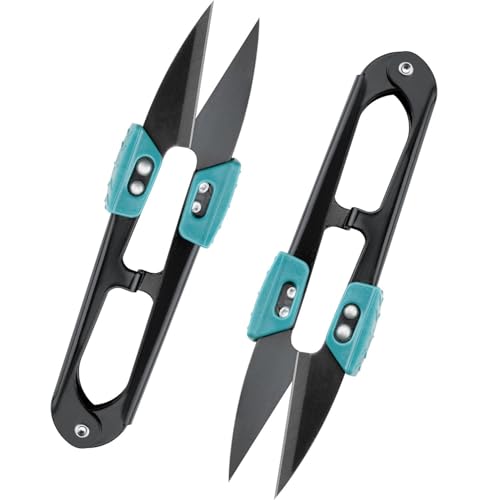
These snips offer a different mechanism than traditional finger-loop scissors. They are spring-loaded, meaning they pop back open after every cut, which is a massive advantage when you have a dozen ends to weave in after finishing a stranded colorwork sweater.
The matte black finish isn’t just for style; it’s a high-quality coating that resists rust and corrosion. If you live in a humid climate, this durability is a significant practical benefit.
They are compact enough to fit into the smallest project bag side-pocket. However, because they lack finger loops, they take a little bit of practice to get used to the "squeeze" motion.
Havel’s Sewing 4.5-Inch Precision Snip Scissors

Havel’s is a favorite among those who prioritize a sharp point. The blades are exceptionally thin, which is ideal if you need to snip a single strand of yarn in the middle of a delicate project without disturbing the surrounding stitches.
The blades are made from high-grade stainless steel, ensuring they stay sharp through years of regular use. I often recommend these to knitters who work primarily with slippery fibers like bamboo or silk, where a clean cut is essential to prevent the yarn from fraying.
The handles are comfortable, though they are slightly larger than typical embroidery scissors. They provide a secure grip, which is helpful if you have larger hands or find smaller scissors difficult to maneuver.
Merchant & Mills Wide Bow Embroidery Scissors
There is an undeniable elegance to these scissors, but they are far more than just a pretty tool. The wide bow design allows for a very natural grip, which helps with control when you are working on intricate finishing tasks.
Because they are made from carbon steel, they possess a level of sharpness that is hard to replicate with cheaper alloys. They slice through wool, alpaca, and cotton with a satisfying "snip" that tells you the blade is doing the work, not your fingers.
Keep in mind that carbon steel requires a bit of care. Keep them dry and store them in a protective sheath to prevent surface oxidation, especially if you store them near your blocked projects.
Fiskars 5-Inch Precision Micro-Tip Craft Scissors

Fiskars is a household name for a reason, and these micro-tip scissors are a workhorse in the fiber arts world. They are accessible, durable, and offer a level of precision that punches well above their price point.
The micro-tip is specifically designed for tight spaces. If you are working on a project with a very small gauge—like socks knit on 2.0mm needles—these scissors allow you to trim yarn tails with surgical accuracy.
They are a fantastic "everyday" pair of scissors. Keep a pair in your main knitting kit and another in your travel bag so you are never caught without a sharp edge.
Westcott 4-Inch Titanium Bonded Snippers

Titanium bonding makes these blades three times harder than standard steel. This means they hold their edge significantly longer, even if you accidentally cut through a stray piece of nylon or a bit of metallic thread.
The snipper design is excellent for quick, repetitive cuts. If you are preparing a large batch of fringe for a shawl or cutting yarn for a multi-color project, the spring action will save your hands from cramping.
They are incredibly lightweight and durable. While they may not have the "heirloom" feel of carbon steel, they are a practical, high-performance tool for the modern knitter.
Key Factors for Selecting Your Knitting Scissors
When choosing your tool, consider the weight and the handle size first. You want something that feels like an extension of your hand rather than a clunky implement you have to wrestle with.
Think about the type of projects you prioritize. If you mostly knit chunky blankets, a large pair of snips is fine; if you specialize in fine lace, you need a needle-thin tip.
- Portability: Can it fit in your notions tin?
- Handle Ergonomics: Does it cause strain over time?
- Blade Shape: Is it curved (good for appliqué) or straight (best for general yarn)?
Ultimately, the best scissors are the ones you actually enjoy using. Don’t be afraid to try a few different styles to see what feels right for your specific grip and project needs.
Why Blade Material Matters for Clean Yarn Cuts
The material of your blade dictates how long your scissors will stay sharp and how they handle different fiber types. Carbon steel is famous for its razor-sharp edge, but it needs to be kept dry to prevent rust.
Stainless steel is the standard for a reason: it’s resistant to corrosion and generally holds a good edge for fiber work. Titanium-bonded blades take that a step further, offering extra hardness that resists dulling from friction.
Avoid using "craft" scissors that are meant for paper or cardboard on your yarn. Paper is abrasive and will dull a blade’s edge much faster than soft wool ever could.
Essential Tips for Maintaining Sharp Yarn Shears
The most important rule is simple: yarn scissors are for yarn only. Even a single cut on a piece of paper or a stray thread of wire can create microscopic nicks in the blade that will cause your scissors to snag your fiber later.
Store your scissors in a leather or felt sheath. This protects the delicate tips from bending and keeps the blades away from moisture.
If your scissors start to feel "gritty" or stiff, a tiny drop of sewing machine oil at the pivot point can work wonders. Keep them clean, keep them dry, and they will serve you faithfully for decades.
Investing in a high-quality pair of scissors is an act of respect for your own knitting process. A clean cut makes the finishing work easier, resulting in a more professional and polished final garment. Choose the tool that fits your hand and your project, and you will find that the final steps of your knitting journey become just as enjoyable as the first cast-on. Happy knitting, and may your ends always be perfectly trimmed.