7 Best Wooden Peg Looms For Children To Try
Discover the 7 best wooden peg looms for children. Our guide highlights durable, easy-to-use tools that spark creativity and teach essential weaving skills.
Weaving is the rhythmic, meditative cousin to knitting, offering a tactile way to explore color and texture without the complexity of purling or complex stitch patterns. Introducing children to a wooden peg loom can spark a lifelong love for fiber arts by providing immediate, tangible results. Choosing the right tool is the difference between a frustrating tangle and a joyful afternoon of creation. Here are seven excellent options to help your young maker find their rhythm at the loom.

Melissa & Doug Multi-Craft Weaving Loom Review
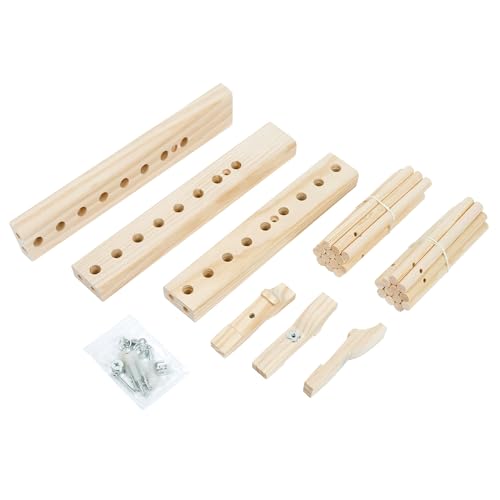
This loom is a staple in many craft rooms for a reason: it is approachable, sturdy, and designed specifically for smaller hands. It features an adjustable frame that allows children to experiment with different project sizes, from small wall hangings to longer strips.
The wooden pegs are spaced widely enough that children won’t struggle with the fine motor precision required for high-density weaving. It’s an excellent "first step" tool that removes the intimidation factor often associated with traditional, more complex looms.
However, keep in mind that the plastic components can feel a bit light if a child pulls their tension too tight. If your child tends to be a "tight weaver," encourage them to use soft, bulky-weight yarns that have a bit of "give" to prevent the frame from bowing.
Ashford SampleIt Loom for Young Beginners
The SampleIt loom is a fantastic bridge between a toy and a professional-grade weaving tool. It functions as a rigid heddle loom, which means it allows for much more sophisticated patterns than a basic peg frame.
For a child ready to move beyond simple over-under weaving, this provides a clear introduction to the mechanics of a shed—the opening between warp threads. It is compact enough to sit comfortably on a kitchen table but robust enough to last for years.
Because it uses a heddle, you will need to teach your child about warping, which is the process of setting up the vertical threads. It’s a great bonding activity that mirrors the patience required for winding a knitting bobbin or organizing a stash.
Schacht Cricket Loom: The Durable Choice
If you want a loom that will survive a decade of heavy use, the Schacht Cricket is the gold standard. It is constructed from high-quality birch ply and is incredibly rigid, meaning it won’t warp or twist even when under high tension.
This durability is vital if your child is interested in weaving with more challenging fibers like linen or cotton, which require a firm, consistent pull. It feels like a "real" piece of equipment, which can be highly motivating for a child who wants to emulate their parents’ crafting space.
The trade-off here is weight and complexity; it is heavier than plastic or lightweight wooden frames. It is best suited for a child who has already shown a sustained interest in crafts and is ready to handle a more substantial piece of equipment.
Beka 20-Inch Weaving Loom for Kids
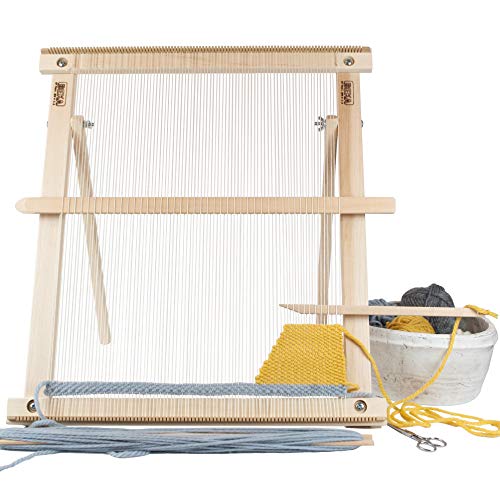
Beka looms are classic, no-nonsense wooden frames that prioritize simplicity and function. The 20-inch width is generous, allowing for wider scarves or table runners, which gives children a wider "canvas" for their color play.
The wooden pegs are fixed and sturdy, making it easy for a child to keep their warp threads organized. This is an excellent choice for children who find the setup of a rigid heddle loom overwhelming and just want to get straight to the weaving.
The only downside is that it lacks the shed-making mechanism of more expensive looms. You will find that your child spends more time manually passing the shuttle over and under, which is a great lesson in basic weave structure but can be slower for large projects.
Harrisville Designs Lap Loom for Students

Harrisville Designs has a long history in the American textile industry, and their lap loom reflects that professional heritage. It is perfectly sized for a child’s lap, making it the ideal "take-along" loom for long car rides or quiet afternoons in the garden.
The loom is made from solid hardwood, offering a tactile experience that plastic alternatives simply cannot match. It feels smooth in the hands, which is important when a child is spending hours manipulating yarn.
Because this is a smaller frame, it is best for smaller projects like coasters, ornaments, or small pouches. It is an excellent tool for teaching the concept of "finishability"—the satisfaction of completing a project in a single sitting.
Ashford Knitters Loom for Easy Storage

As the name suggests, this loom is designed for the knitter who wants to branch out into weaving. It folds in half, even while warped, which is a game-changer for families with limited storage space.
If your child is prone to starting projects and then needing to clear the table for dinner, this is your best friend. You can simply fold it up, tuck it into a cupboard, and pull it back out when the inspiration strikes again.
It is a more advanced piece of equipment, so I recommend it for children aged 10 and up. It provides a smooth, professional weaving experience that scales perfectly as their skills grow from simple stripes to more complex textures.
Ashford Rigid Heddle Loom for Creativity
This is the ultimate loom for the child who wants to treat weaving as a serious art form. It offers the most versatility, allowing for the use of various reeds to change the "sett," or how many threads fit in an inch of fabric.
This level of control allows a child to weave anything from delicate silk scarves to thick, cozy wool blankets. It is a tool that grows with the crafter, offering enough complexity to remain interesting through the teenage years and beyond.
Be prepared for a steeper learning curve; you will need to spend time together learning how to warp the loom correctly. The effort is worth it, as it allows for a level of creative freedom that no peg loom can match.
How to Choose a Peg Loom for Your Child
When selecting a loom, consider your child’s current attention span and fine motor development. A child who is easily frustrated by tangles will benefit from a loom with wider peg spacing and fewer warp threads.
- Age and Dexterity: Younger children (under 8) do best with simple frames.
- Project Goals: Are they making doll scarves or wall hangings?
- Space: Do you have a permanent spot for a loom, or does it need to be portable?
- Long-term Interest: Is this a one-off craft or a new hobby?
Don’t feel pressured to buy the most expensive model immediately. A simple wooden frame is often enough to determine if the "weaving bug" has bitten.
Essential Weaving Tools for Young Crafters
Beyond the loom itself, you need a few basic tools to make the experience successful. A good weaving shuttle is essential—look for one that is smooth and free of splinters so it doesn’t snag the yarn.
- Tapestry Needles: Large-eyed, blunt needles are perfect for finishing ends.
- Comb: A simple wooden comb helps beat the weft threads down to keep the weave consistent.
- Measuring Tape: Essential for teaching the importance of tension and length.
- Yarn Scissors: Keep a pair of sharp, dedicated scissors handy for clean cuts.
Avoid using cheap, fuzzy acrylic yarns for the warp, as they tend to pill and break under tension. Stick to smooth, plied wool or cotton yarns for the vertical threads to ensure a smooth weaving process.
Tips for Starting Your First Weaving Project
Start with a simple "plain weave" project where the shuttle goes over one thread and under the next. This creates a balanced, sturdy fabric and helps the child understand the fundamental "interlacement" of weaving.
Encourage them to experiment with different textures by mixing yarn weights. Adding a bit of ribbon, roving, or even dried grass can turn a simple project into a mixed-media masterpiece.
Most importantly, keep the sessions short and fun. If the tension gets too tight or the yarn starts to tangle, take a break and come back to it later. Weaving, much like knitting, should be a joy, not a chore.
Whether you choose a simple wooden frame or a sophisticated rigid heddle loom, the most important element is the time you spend creating together. Weaving teaches patience, color theory, and the immense satisfaction of creating something functional from a simple length of thread. Start small, keep your tension consistent, and enjoy the rhythmic magic of the loom. Your child’s journey into the world of fiber arts begins with that very first pass of the shuttle.