7 Best Waxed Threads For Heavy Duty Bag Assembly
Selecting the right waxed thread is vital for durable bags. We review the 7 best options, focusing on strength, abrasion resistance, and stitch quality.
Selecting the right thread for bag making is much like choosing the perfect yarn weight for a complex cabled sweater; the structural integrity of your project depends entirely on the fiber’s tension and durability. Whether you are crafting a rugged leather tote or a heavy-duty canvas duffel, the thread must withstand constant friction and load-bearing stress. This guide breaks down the industry’s most reliable options to ensure your stitches remain as strong as the day you set them. By understanding the intersection of fiber composition and stitch mechanics, you can elevate your bag-making from a hobby to a craft built to last for decades.
Ritza Tiger Thread: The Gold Standard for Bags
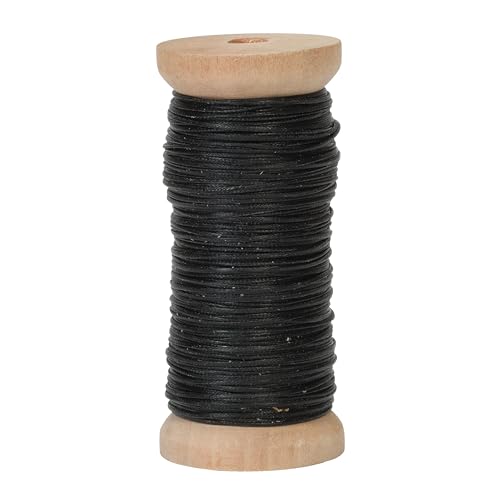

If you’ve spent time in high-end leatherworking circles, you’ve heard the name Ritza Tiger. It is a flat, braided polyester thread that is exceptionally strong and virtually impossible to snap by hand.
The flat profile of this thread allows it to sit beautifully in the stitch channel, mimicking the refined look of hand-stitched luxury goods. Because it is pre-waxed, it glides through leather or heavy fabric without dragging, much like how a slick nickel-plated needle helps a tight knitter maintain an even gauge.
The primary trade-off is the cost and the slight learning curve in managing the flat braid during the stitch. However, for a bag that will see daily use, the longevity provided by its abrasion resistance is unmatched.
Maine Thread Company Waxed Poly: Best Value Pick

Maine Thread Company offers a classic, round, waxed polyester cord that feels familiar to anyone who has worked with traditional craft supplies. It is a workhorse thread that provides a consistent, reliable stitch every single time.
This thread is slightly more "grippy" than flat braided options, which can be an advantage if you are a beginner struggling to keep your tension consistent. It behaves similarly to a standard wool-acrylic blend in knitting—it’s forgiving, easy to handle, and does exactly what you expect it to do.
While it lacks the ultra-refined aesthetic of a flat thread, it is incredibly cost-effective for large projects. If you are assembling a massive canvas bag where you need hundreds of yards of thread, this is the practical choice.
Vinymo MBT Thread: Premium Japanese Bonded Nylon

Vinymo MBT is a bonded nylon thread that is frequently sought after for its luxurious, silky finish and vibrant color retention. Unlike braided threads, this is a twisted, bonded fiber that offers a very distinct, professional look.
The "MBT" stands for "Mono-Bonded Thread," which means it resists fraying significantly better than standard twisted nylons. It feels like high-quality silk yarn—smooth, supple, and a delight to work with, though it requires a steady hand to prevent tangles.
This is the thread to choose if you are making a high-end accessory where the aesthetic of the stitch is just as important as the strength. It is less abrasive than polyester, making it a dream to pull through dense materials.
Tandy Leather Waxed Braided Cord: Reliable Choice

Tandy’s waxed braided cord is the quintessential "go-to" for many hobbyists starting their journey into heavy-duty assembly. It is widely available and provides a solid, medium-weight stitch that works well for basic leather goods.
Think of this as your standard worsted-weight wool; it isn’t fancy, but it is the baseline against which all other threads are measured. It has enough wax to keep the thread from fraying, but not so much that it leaves a waxy residue on your finished project.
The downside is that it can sometimes be inconsistent in thickness compared to premium brands. For a beginner, this is a perfect, low-stakes way to practice your stitching technique without investing in expensive materials.
Fil Au Chinois Lin Câblé: The Traditional Option

Fil Au Chinois is a linen thread that carries a deep, historical prestige in the world of leathercraft. Using this thread is akin to knitting with hand-spun, heritage-breed wool; it connects you to a long tradition of master craftsmanship.
Linen is a natural fiber, meaning it has a beautiful, matte texture that synthetic threads simply cannot replicate. Because it is a natural material, it is incredibly strong and does not stretch, which is vital for maintaining the shape of a structured bag.
However, linen is not as elastic as polyester, and it can be more prone to snapping if you are too aggressive with your tension. It is best suited for experienced makers who have developed a delicate, consistent hand.
WUTA Waxed Polyester Thread: Best Color Variety

WUTA has gained significant popularity for offering a massive spectrum of colors in a very user-friendly, round, waxed polyester format. If you need to match a specific fabric or leather shade, this is usually where you will find your match.
The thread is tightly braided, which gives it a satisfying, sturdy feel. It behaves much like a high-twist cotton yarn—it holds its shape well and shows off the detail of your stitch patterns with great clarity.
Because it is so widely available and affordable, it is a fantastic option for those who like to experiment with color blocking. Keep in mind that the wax coating can vary between batches, so always test a small swatch before committing to a large bag.
COATS Waxed Heavy Duty Thread: Widely Available
COATS is a household name for a reason: their threads are engineered for industrial reliability. You can find this in almost any local craft or hardware store, making it the most accessible option on this list.
This thread is designed to withstand the heat and friction of high-speed sewing machines, so it is exceptionally robust when used for hand-stitching. It is the "acrylic yarn" of the thread world—highly functional, durable, and ready for heavy-duty abuse.
While it might not have the "boutique" feel of linen or bonded nylon, its consistent performance under stress makes it a smart choice for utilitarian bags like tool rolls or shop aprons.
How to Select the Correct Thread Thickness for Bags
Choosing the right thread thickness is exactly like choosing the right needle size for your yarn weight. If the thread is too thick for your stitch length, your bag will look bulky and the seams may pucker.
- Under 0.5mm: Best for delicate, small leather goods or fine wallet assembly.
- 0.6mm to 0.8mm: The "sweet spot" for most medium-to-large bags, offering a balance of strength and visibility.
- Above 1.0mm: Reserved for heavy-duty upholstery, thick saddlery, or decorative top-stitching where you want the thread to be a focal point.
Always consider the "perceived gauge" of your project. A heavy canvas requires a thicker thread to match the visual weight of the fabric, while a soft garment leather will look overwhelmed by anything over 0.6mm.
Understanding Bonded Nylon vs. Braided Polyester
The debate between bonded nylon and braided polyester often comes down to the fiber’s "memory" and elasticity. Nylon is generally more elastic, which can be an advantage if the bag is expected to expand or take a beating.
Braided polyester, conversely, is essentially non-stretch. This makes it ideal for bags that must maintain a very rigid, structured shape, such as a briefcase or a stiff tote.
Think of it like choosing between a wool-nylon blend for socks (durable and stretchy) and a pure cotton yarn for a dishcloth (rigid and non-elastic). Choose polyester for structure and nylon for flexibility.
Essential Tips for Stitching Heavy Duty Materials
When stitching heavy-duty materials, your hands take as much of a beating as the thread. Always use a stitching pony or a clamp to hold your work; trying to hold thick leather while pulling a needle through is a recipe for hand fatigue.
Use a beeswax block to add extra wax to your thread as you work. This reduces friction, prevents the thread from tangling (much like preventing yarn knots), and helps the thread slide through the material without leaving unsightly marks.
Finally, remember that your stitch length should be proportional to your thread thickness. A long, beautiful stitch is only possible if the thread has enough "room" to sit correctly in the hole—never force a thick thread through a hole that is too small, or you will weaken the fiber.
Mastering the art of bag assembly is a journey that rewards patience and precise tool selection. By treating your thread choices with the same care you apply to selecting the perfect yarn for a heirloom garment, you ensure your work stands the test of time. Whether you choose the traditional appeal of linen or the modern reliability of braided polyester, your final stitch will reflect the quality of your materials. Happy crafting, and may your seams always be straight and your tension perfectly balanced.