7 Best Stitch Holders for Managing Large Color Blocks
Managing large color blocks requires the right tools. We review the 7 best stitch holders to keep your yarn organized and prevent tangles in complex projects.
Managing large color blocks in intarsia or stranded knitting often feels like wrestling a nest of vipers. When you set your project down, those long, trailing yarns are prone to tangling and stretching your delicate tension. Using the right stitch holders isn’t just about convenience; it’s about preserving the structural integrity of your fabric. This guide explores the best tools to keep your stitches secure and your sanity intact while working through complex colorwork.
CocoKnits Colorful Nylon Stitch Holder Set


These nylon cords are a game-changer for anyone who has ever wrestled with rigid metal pins. You simply push the cord onto the tip of your needle and slide your live stitches onto the flexible tubing.
Because the cord is soft and pliable, it doesn’t distort the fabric while the stitches are resting. This is particularly vital when working with delicate fibers like alpaca or high-twist merino that tend to "grow" or lose their shape when held on stiff hardware.
The vibrant colors also serve a functional purpose beyond aesthetics. You can color-code your blocks, assigning a specific hue to each color section to keep your intarsia bobbins organized during long sessions.
Bottom line: These are the best choice for protecting the drape and tension of your fabric during long-term storage.
Clover Jumbo Locking Stitch Markers for Bulky

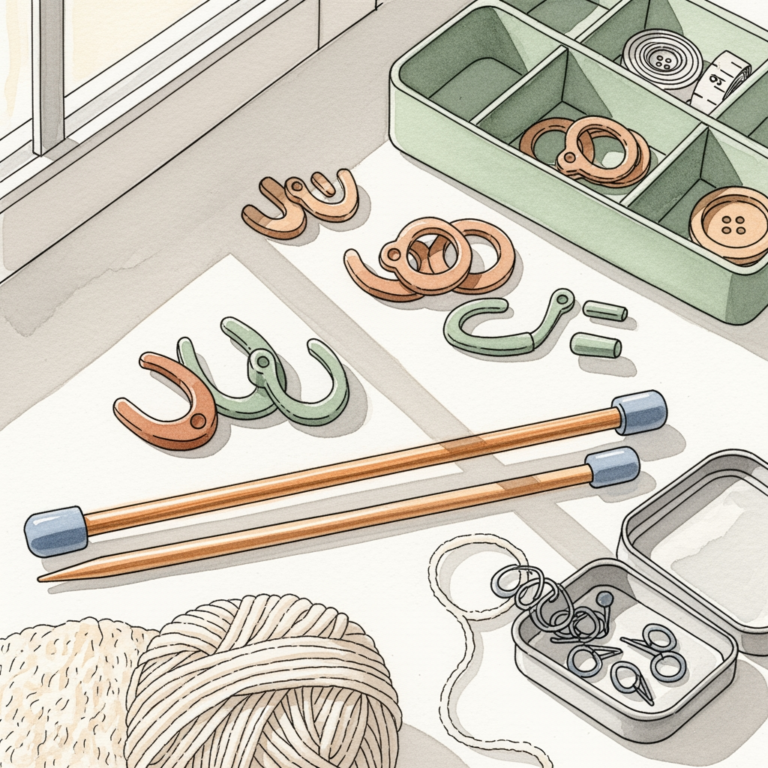
If you are working with chunky, weight-five or weight-six yarns, standard stitch holders often feel flimsy and inadequate. Clover’s jumbo locking markers provide a secure, snap-shut mechanism that won’t pop open under the weight of heavy wool.
The rounded, smooth plastic profile is essential for preventing snags. When you are dealing with single-ply or loosely spun yarns, any sharp edge can cause fiber breakage or unsightly pilling.
These are best used for holding a small number of stitches, such as when you are setting aside a few loops for a pocket or a complex cable transition. They aren’t meant for holding an entire sleeve, but for targeted color blocks, they are incredibly reliable.
Bottom line: Use these when you need durability and a secure lock for heavy-weight yarns that would otherwise strain a thinner holder.
ChiaoGoo Point Protectors as Stitch Holders

Most knitters think of point protectors only for storing needles, but they are surprisingly effective for holding a few stitches in a pinch. By sliding two protectors onto the ends of a small double-pointed needle, you create a makeshift, rigid stitch holder.
This approach is excellent if you are in the middle of a project and don’t want to transfer your live stitches to a new tool. Moving stitches from needle to holder and back again is where most dropped stitches occur, so keeping them on the original needle is a safer bet.
However, keep in mind that this adds weight to your project bag. If you are traveling, this method can make your needles prone to snapping if they get crushed in a luggage compartment.
Bottom line: This is the best "emergency" solution for mid-project pauses when you want to minimize stitch manipulation.
Susan Bates Flexible Plastic Stitch Holders

These classic plastic holders are the workhorses of the knitting world for a reason. They feature a simple, locking cap mechanism that is easy to operate even if you have limited dexterity or cold fingers.
The plastic material is inherently "grippy" compared to metal, which helps prevent the holder from sliding out of your work. If you are working with slippery synthetic fibers or superwash wools that have a tendency to "zipper" off the needle, this extra friction is a major advantage.
The main drawback is that they are rigid; they don’t follow the curve of your body or your project bag. You must be careful not to bend them, as the plastic can become brittle over time and snap at the locking joint.
Bottom line: A reliable, budget-friendly option for knitters who need a secure hold and prefer a tool that won’t accidentally pop open.
Boye Aluminum Stitch Holder Assorted Sizes
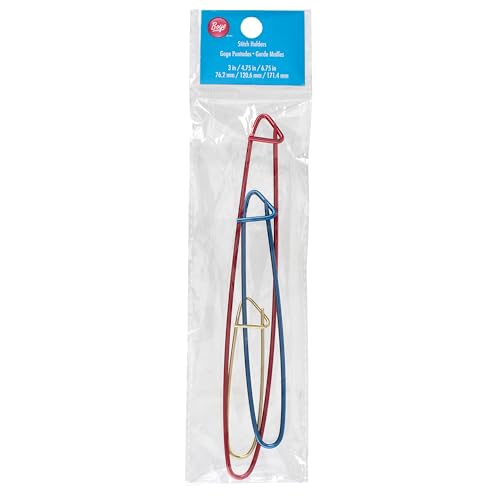
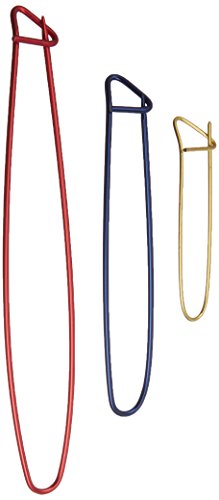
Aluminum holders are the gold standard for those who prioritize structural strength. These are virtually indestructible and provide a firm, unyielding anchor for your color blocks.
They are particularly useful when you are working with very fine, non-elastic fibers like linen or cotton. These fibers have no "memory," so if they are held on a flexible cord, they may sag; a rigid aluminum bar keeps them perfectly aligned.
The trade-off is that they are heavy. If you are holding a large number of stitches for an extended period, the weight can drag on your fabric and cause the stitches immediately adjacent to the holder to stretch out.
Bottom line: Stick to these for non-elastic plant fibers where maintaining a straight line is more important than the weight of the tool.
Katrinkles Wooden Stitch Holder Collection
For the knitter who appreciates the tactile experience of their tools, wooden stitch holders are a beautiful alternative to plastic or metal. They are lightweight, smooth, and warm to the touch, which makes them a joy to handle during long knitting sessions.
Beyond the aesthetic appeal, wood is naturally less slippery than polished aluminum. This provides a gentle resistance that keeps your stitches exactly where you left them, without the harshness of plastic locks.
These are best suited for luxury fibers like silk or cashmere. Because they are hand-finished, there is no risk of the "burrs" or seams that can sometimes catch on delicate, high-end yarns.
Bottom line: Choose these for high-end projects where you want a tool that feels as premium as the yarn you are using.
HiyaHiya Puppy Snips and Stitch Holders
HiyaHiya is known for precision engineering, and their stitch holders follow suit. These are often sold as part of gift sets, but they are highly functional tools for managing small, intricate color blocks.
Their small size makes them ideal for stranded colorwork where you might need to isolate a single motif or a specific set of stitches for a later join. They are lightweight and won’t distort the tension of your surrounding stitches.
The only downside is that they are small, meaning they are easily misplaced in a deep project bag. It is worth keeping them in a dedicated notions tin to ensure they don’t vanish into the depths of your yarn stash.
Bottom line: Perfect for the detail-oriented knitter who needs a lightweight, precise tool for complex, small-scale colorwork.
Why Stitch Holders Matter for Colorwork
In colorwork, you are often juggling multiple strands of yarn, which creates a complex web of tension. When you stop knitting, the weight of these hanging bobbins can pull on your live stitches, distorting the pattern before you even finish the row.
Using a stitch holder effectively "resets" the tension of the block. By removing the weight of the needles and the hanging yarn, you allow the fibers to relax in a neutral state, which makes picking up the project again much smoother.
Neglecting to use holders often results in "ladders" or uneven stitches at the transition points between blocks. Taking the extra thirty seconds to secure your stitches is the difference between a professional-looking garment and one that looks handmade in the wrong way.
How to Prevent Stretched Stitches on Holders
The most common mistake knitters make is transferring stitches to a holder that is too small. When you force a large number of stitches onto a narrow pin, you are effectively stretching them out, which leads to permanent distortion.
Always choose a holder that is slightly longer than the width of the stitches you are moving. If the stitches are bunched up, they will lose their elasticity, especially when working with animal fibers that have been processed to be superwash.
Additionally, avoid leaving your project on a holder for months at a time. The weight of the holder itself can cause the yarn to thin out at the point of contact, creating a permanent line in your finished fabric.
Choosing the Right Holder for Your Project
Your choice should be dictated by the fiber content and the weight of your yarn. For delicate, slippery, or luxury fibers, opt for wood or nylon cords that won’t snag or leave permanent creases in the yarn.
If you are working with heavy, sturdy wools or need to hold a large number of stitches for a long duration, go for rigid aluminum or locking plastic. These provide the necessary support to prevent the weight of the project from pulling the stitches out of shape.
Finally, consider your environment; if you are knitting on the go, choose a locking mechanism that won’t pop open in your bag. If you are a homebody, the aesthetic and tactile experience of wood or high-quality nylon might be your best companion.
Investing in a variety of stitch holders allows you to match your tools to the specific demands of your project. Whether you prefer the flexibility of nylon cords or the sturdy reliability of aluminum, the right choice will protect your hard work. Remember that your tools are there to serve your fabric, not the other way around. Keep your stitches secure, your tension consistent, and enjoy the process of watching your colorwork come to life.