6 Best Stitch Markers For Circular Knitting To Try
Discover the 6 best stitch markers for circular knitting. Our guide compares snag-free options to help you track rounds and patterns with ease and precision.
Finding the right stitch marker can be the difference between a meditative knitting rhythm and a frustrating session of constant snagging. When working in the round, these small tools serve as your primary navigation, marking the beginning of a row or the boundary of a complex lace repeat. Choosing the wrong marker can lead to distorted stitches, dropped loops, or unnecessary tension in your hands. This guide explores the best options available to help you keep your project on track and your stitches uniform.
Cocoknits Colorful Nylon Stitch Markers


These markers are a staple for a reason: they are incredibly lightweight and flexible. Because they are made of nylon, they won’t scratch your needles or snag on delicate fibers like mohair or silk.
The primary benefit here is the color-coded system, which allows you to track increases, decreases, or pattern repeats with ease. If you are working on a complex sweater yoke, having a distinct color for your raglan increases prevents those "did I miss a stitch?" moments.
They are designed to sit flush against the needle, meaning they don’t add bulk or create laddering in your fabric. However, because they are so thin, they can sometimes be difficult to pick up if you have limited dexterity or large fingers.
ChiaoGoo Locking Stitch Marker Set

Locking markers are the workhorses of any knitter’s notions bag. ChiaoGoo’s version is particularly reliable because the clasp mechanism is secure without being so stiff that it damages your yarn.
These are essential when you need to mark a specific stitch in the fabric rather than a spot on the needle. If you are working on a long-term project and need to count rows or mark a mistake to be fixed later, these are your best friends.
The tradeoff is that the plastic "hinge" can eventually fatigue after hundreds of uses. Keep a few spares in your project bag, as they are prone to disappearing into the depths of your couch cushions.
Clover Quick Locking Stitch Markers

Clover is the gold standard for consistency, and these locking markers are no exception. They are slightly softer than other brands, which makes them easier to open and close repeatedly.
I recommend these for beginners who are still learning to identify their knit and purl stitches. Because they are a bright, solid color, they stand out against even the darkest navy or black yarn, preventing you from accidentally knitting over them.
Be mindful that these can snag on highly textured yarns like boucle or singles-spun wool. If you are using a delicate fiber, check the clasp area for any tiny plastic burrs before you begin.
Katrinkles Wooden Stitch Marker Sets

If you find that plastic markers feel cheap or slide around too much, wooden markers offer a tactile, grippy experience. Katrinkles creates beautiful, laser-cut markers that feel substantial in the hand.
These are perfect for knitters who prefer natural materials and want their tools to feel as high-quality as their hand-dyed yarn. They add a touch of joy to the knitting process, which shouldn’t be underestimated when you’re working on a massive, repetitive project.
The downside is that wood is inherently thicker than nylon or metal. If you are working with a very tight gauge or tiny needles, these might push your stitches apart and create a slight gap in your fabric.
Tulip Heart Shaped Stitch Markers
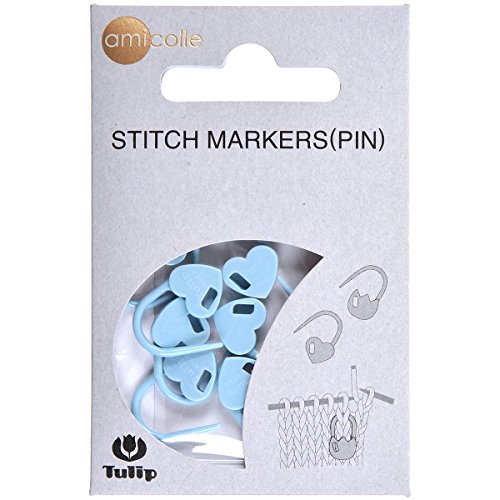
Tulip is a Japanese brand known for precision, and their heart-shaped markers are both functional and elegant. The unique shape isn’t just for aesthetics; it helps the marker sit at a specific angle on the needle.
These are excellent for circular knitting because they glide effortlessly over metal, wood, and carbon fiber needles alike. The smooth, seamless construction ensures that even the thinnest lace-weight yarn won’t get caught in the loop.
They are quite small, which is great for precision, but keep them in a dedicated tin. Their dainty size makes them easy to lose if you are prone to leaving your notions scattered on a coffee table.
DPN-Friendly Ring Markers by Jimmy Beans
Finding a marker that doesn’t get in the way when using Double Pointed Needles (DPNs) is a common struggle. These ring markers are designed to be low-profile enough that they don’t interfere with the needle tips as you transition between needles.
They are particularly useful for sock knitters who are working on small circumferences. When you are maneuvering four or five needles at once, the last thing you need is a bulky marker catching on your needle tips.
Because they are fixed rings, they stay firmly in place. However, remember that you cannot move them easily to a different stitch, so use them strictly for the beginning of the round or fixed pattern markers.
Why Smooth Markers Prevent Snagging in Lace
Lace knitting relies on delicate yarn-overs and precise tension. If your marker has a seam, a sharp edge, or a poorly finished clasp, it will catch on the yarn and potentially ruin your stitch pattern.
Smooth, seamless rings are the only choice for mohair, silk, or high-twist merino. Any friction against the yarn fiber can cause it to fray or "fuzz," which ruins the crisp definition of your lace.
Always inspect your markers under a bright light before starting a project. If you find a rough spot, a quick buff with a fine-grit emery board can save you hours of frustration.
Choosing Between Locking and Ring Markers

The choice between a locking marker and a ring marker comes down to the mechanics of your project. Ring markers are for the needle, while locking markers are for the fabric.
Use ring markers when you need to track a repeating pattern around a circumference, like a cowl or a hat. They stay put and don’t require you to stop and re-attach them every time you pass the marker.
Use locking markers when you are working flat, or when you need to mark a specific point in the fabric, such as the location of a cable twist or a decrease. They offer versatility that a fixed ring simply cannot provide.
How to Manage Stitch Counts in the Round
Managing stitch counts in the round requires a system that doesn’t rely on your memory. Use a "start of round" marker that is a different color or shape from your pattern repeat markers.
If you are working a complex chart, place a marker at the start of every repeat. If you find yourself with an extra stitch at the end of the round, you know exactly which repeat contains the error.
Don’t be afraid to use multiple markers. It is much easier to remove a surplus marker than it is to tink back twenty rows because you lost your place in a chart.
Best Practices for Organizing Your Notions
The best way to keep your stitch markers organized is to have a dedicated, portable container. A small tin with a magnetic bottom is a lifesaver, as it keeps your metal markers from rolling away.
Categorize your markers by type: keep your locking markers in one compartment and your ring markers in another. This saves you from hunting through a pile of plastic rings when you just need a single locking marker for a dropped stitch.
Finally, keep a "travel set" in your project bag at all times. You never know when you’ll need to mark a row while knitting on the go, and having your tools ready prevents the urge to use a scrap of yarn as a makeshift marker.
Investing in high-quality stitch markers is a small price to pay for a smoother, more enjoyable knitting experience. By understanding the differences between materials and shapes, you can select the right tool for every project on your needles. Remember that the best marker is the one that stays out of your way while keeping you perfectly on track. Happy knitting, and may your row counts always be correct.