7 Best Yarn Swift Tools For Skeining Dyed Fibers
Master your yarn prep with our guide to the 7 best swifts. Discover durable, efficient tools designed to make skeining dyed fibers smooth, tangle-free, and easy.
Transitioning a tangled, hand-dyed skein into a neat, manageable cake is a rite of passage for every serious fiber artist. Without the right tool, you risk frustrating knots and uneven tension that can ruin your gauge before you even cast on. A quality yarn swift acts as your extra set of hands, ensuring your yarn flows smoothly during the winding process. Choosing the right model depends on your workspace, your budget, and the volume of fiber you process.
Stanwood Needlecraft Tabletop Swift: Best Overall
The Stanwood tabletop swift is a staple in many studios because it balances mechanical precision with a user-friendly footprint. Its metal-clamp design allows it to attach securely to almost any table edge, providing a stable rotation that prevents the yarn from sagging or tangling.


For the knitter who frequently works with delicate hand-dyed wools or slippery silks, this swift is a dream. The smooth, rounded wooden slats ensure that your yarn doesn’t snag, which is critical when dealing with loosely plied fibers that are prone to fuzzing or breakage.
The primary advantage here is the adjustable speed and tension. It spins freely enough to keep up with a fast ball winder, yet it offers enough resistance to prevent the yarn from "flying off" if you stop winding suddenly. If you want a reliable, daily-use tool that won’t let you down, this is the gold standard.
Amish-Style Wooden Yarn Swift: Best for Stability
Unlike umbrella swifts that collapse, the Amish-style swift is a stationary, peg-based system that sits directly on your table. Because it doesn’t rely on a clamping mechanism, it provides an exceptionally low center of gravity that is nearly impossible to tip over.

This design is perfect for knitters who lack a sturdy table edge or who prefer a tool that can be quickly moved from a coffee table to a kitchen counter. The pegs are adjustable, allowing you to accommodate anything from tiny lace-weight skeins to massive, heavy-worsted hanks.
One minor trade-off is that it requires a bit more manual effort to set up the pegs for each specific skein size. However, the trade-off is worth it for the sheer stability. If you have curious cats or limited workspace, this non-clamping, rock-solid option is your best defense against yarn-winding disasters.
KnitPicks Yarn Swift: Best Budget Selection
If you are just beginning your journey into dyeing your own fiber or buying independent skeins, you don’t necessarily need a professional-grade setup. The KnitPicks swift offers an entry-level price point without sacrificing the essential functionality required to wind a clean cake.
It functions as a standard umbrella-style swift, collapsing down to a slim profile when not in use. This makes it ideal for knitters who live in small apartments or those who keep their supplies tucked away in a closet between projects.
While it lacks the heavy-duty hardware of more expensive models, it handles standard fingering and DK weight yarns with ease. Just be mindful of the weight of your skeins; it performs best with lighter, standard-sized hanks rather than massive, multi-hundred-gram bumps of luxury fiber.
Lacis Wooden Umbrella Swift: Best Professional Pick
The Lacis swift is built for the knitter who treats their fiber stash as a serious investment. Crafted with high-quality, polished wood, this tool is designed to last for decades, maintaining its structural integrity even after thousands of yards of yarn have passed through it.
What sets this apart is the precision of the joints and the smoothness of the rotation. When you are winding a delicate, hand-painted mohair or a high-twist merino, you need a swift that doesn’t create "hiccups" in the yarn flow. Any jerkiness in the rotation can lead to uneven tension in your wound cake, which eventually shows up as inconsistent gauge in your finished fabric.
This is an heirloom-quality tool that feels substantial in your hands. If you are a prolific knitter who winds yarn weekly, the investment in Lacis’s superior craftsmanship will pay for itself in the longevity of your tools and the quality of your yarn cakes.

Strauch Jumbo Ball Winder and Swift: Best Heavy Duty
Sometimes, a standard swift just isn’t enough, especially if you are working with large-scale projects like blankets or oversized sweaters. The Strauch system is built to handle the sheer volume and weight of jumbo skeins that would cause smaller swifts to buckle or wobble.
The heavy-duty construction is designed to withstand the torque produced by high-speed winding. If you use an electric ball winder, you absolutely need a swift that can keep up without vibrating off the table or losing its alignment.

While this setup takes up more space than a standard tabletop model, it is the ultimate solution for the serious producer. If you find yourself constantly wrestling with oversized hanks or heavy cotton cord, look no further than this robust, industrial-strength powerhouse.
Nancy’s Knit Knacks Heavy Duty Swift: Best Durability
Nancy’s Knit Knacks has earned a reputation for creating "buy-it-for-life" knitting tools, and their swift is no exception. It is engineered with a focus on mechanical reliability, featuring high-quality bearings that allow for an incredibly smooth, silent spin.
This is the tool for the knitter who is tired of replacing cheaper plastic or loosely constructed wooden swifts. The materials are chosen specifically to resist warping and wear, ensuring that the swift remains perfectly balanced even in humid climates where wood might otherwise shift.
It is particularly excellent for those who work with sticky fibers like linen or hemp, which require a consistent, smooth pull to avoid tension issues. If you value durability above all else, this is the most reliable investment you can make for your knitting room.
ChiaoGoo Yarn Swift: Best Compact Travel Option
ChiaoGoo is well-known for their excellent needles, and they have applied that same design philosophy to their portable swift. This model is exceptionally lightweight and folds into a very compact form, making it the clear winner for knitters who travel to retreats or workshops.
Despite its small size, it remains surprisingly sturdy. It uses a clever clamping system that fits onto a wide variety of surfaces, from thin folding tables to thick wooden desks. It’s the perfect companion for the knitter who wants to wind yarn on the go without sacrificing the quality of their cakes.
While it may not be the best choice for winding massive, heavy-weight hanks, it is more than capable of handling standard fingering and sport-weight projects. For the mobile knitter, it provides the perfect balance of portability and performance.
How to Properly Set Up Your Swift for Skeined Yarn
Before you even touch your yarn, check your workspace. Ensure your swift is clamped firmly to a surface that is at the same height as your ball winder, as a significant height difference can cause the yarn to jump off the swift or tangle during the winding process.
When placing your skein on the swift, always untwist it completely before opening the loops. Place the loop over the arms of the swift, then gently expand the arms until the yarn is taut, but not stretched. If you stretch the yarn too much, you can actually alter the fiber’s elasticity, which will affect your project’s gauge later on.
Finally, always find the two ends of the yarn and secure them before you start winding. It is a common mistake to leave the ends loose, which almost always results in a "yarn barf" or a tangled mess. Taking thirty seconds to secure your ends will save you twenty minutes of untangling later.
Umbrella vs. Amish Style: Choosing Your Swift Type
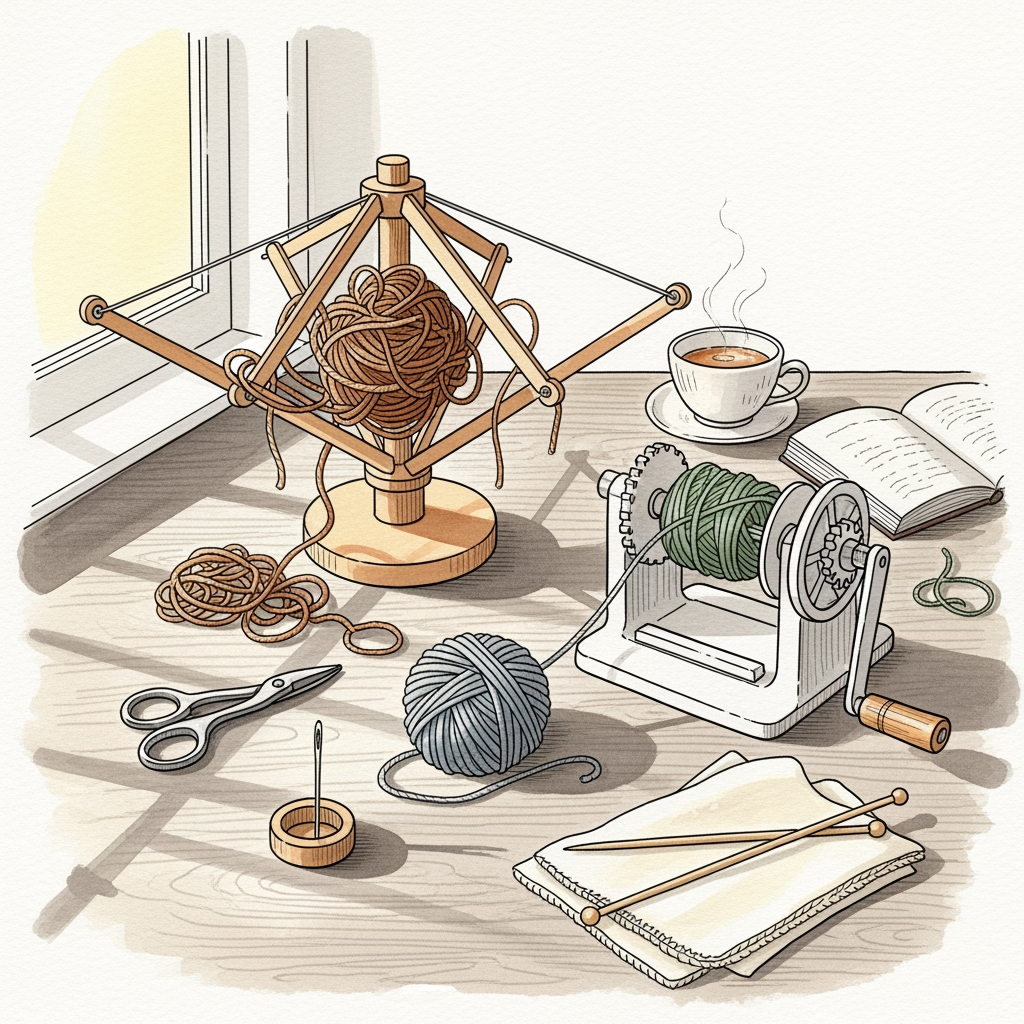
The choice between an umbrella and an Amish-style swift usually comes down to your storage situation and your winding habits. Umbrella swifts are vertical and adjustable, making them incredibly versatile for different skein sizes, but they require a table with a usable edge for clamping.
Amish-style swifts are horizontal, peg-based systems that sit on a flat surface. They are generally more stable and easier to set up for beginners, but they can be bulkier to store since they don’t collapse down as small as an umbrella model.

If you have a dedicated craft room with a large table, an umbrella swift is often more convenient for rapid, high-volume winding. If you work in a shared living space or a small nook, the Amish-style swift offers a lower profile and a more secure, "set it and forget it" experience.
Essential Maintenance Tips for Your Yarn Swift Tool
To keep your swift running smoothly, you should perform a quick inspection before every use. Check the tension screws or wingnuts to ensure they are tight, and verify that the rotation is free of any grit or debris that might have gathered in the joints.
If you have a wooden swift, keep it away from direct sunlight and extreme humidity, as these conditions can cause the wood to warp or crack over time. A light application of furniture wax or a specialized wood conditioner once a year can keep the slats moving effortlessly.
For metal components, a tiny drop of sewing machine oil on the central bearing can do wonders if you notice the swift becoming sluggish. Never force a jammed swift; instead, inspect the joints for stray yarn fibers that may have wrapped around the mechanism, as these are the most common cause of "sticky" rotation.
Investing in a quality yarn swift is one of the smartest decisions you can make to protect your fiber and your sanity. By choosing a tool that fits your specific needs—whether that is portability, stability, or heavy-duty performance—you eliminate the frustration of tangled hanks. Remember that a well-maintained swift is a partner in your creative process, turning raw skeins into perfectly wound cakes. Happy winding, and may your yarn always flow smoothly from your swift to your needles.