6 Best Finishing Needles For Bulky Fibers To Use
Struggling with thick yarn? Discover the 6 best finishing needles for bulky fibers to ensure your projects have a clean, secure, and professional-grade finish.
Finishing a bulky weight project is a triumph, but the real test comes when it is time to secure those thick, stubborn yarn tails. Using the wrong tool can lead to frayed fibers, split stitches, and a finish that looks amateurish rather than professional. After years at the workbench, I have learned that your choice of finishing needle is just as critical as your choice of knitting needles. These six options are the gold standard for taming chunky fibers and ensuring your hard work stays secure.
Clover Chibi Bent Tip Tapestry Needles: Top Pick


The bent tip on these needles is a game-changer for anyone who has struggled to navigate the tight architecture of a finished seam. By angling the tip, Clover allows you to slide under stitches without piercing the yarn, which is essential when working with delicate or high-twist bulky wools.
I find these particularly effective for mattress stitch, where precision is paramount. Because the tip is slightly rounded, it glides through the fabric rather than catching on the fiber’s ply, preventing that dreaded "fuzzing" that happens when you accidentally split your yarn.
The included carrying case is a small but vital feature. Losing a needle inside a chunky knit is far too easy, and having a dedicated, bright-colored home for your tools saves you from unnecessary frustration. The bent tip is the standout feature here, making them my top recommendation for all-around finishing.
Dritz Extra Large Steel Yarn Needles: Best Value

If you are a knitter who tends to lose needles in the couch cushions, the Dritz Extra Large Steel needles offer the best bang for your buck. They are straightforward, no-nonsense tools that get the job done without any unnecessary bells or whistles.
While they lack the specialized bent tip of higher-end options, their sturdy construction handles heavy-weight yarns with ease. They are rigid enough to push through dense felted fabrics or heavy-gauge garter stitch without bending, which is a common failure point for cheaper plastic alternatives.
Because they come in a multi-pack, you can keep one in your project bag, one in your notions tin, and one on your coffee table. For the budget-conscious maker who needs a reliable, workhorse needle, these are the clear winner.
CocoKnits Steel Tapestry Needle Set: Best Design

CocoKnits has mastered the art of combining form and function, and their steel needle set is no exception. These needles feature a nylon cord loop rather than a traditional metal eye, which makes threading bulky, unevenly spun art yarns incredibly simple.
The steel construction gives them a satisfying weight in the hand, allowing for better control when you are weaving through heavy, dense stitches. They also come in a variety of sizes, ensuring you have the right tool for everything from super-bulky roving to a heavy worsted weight.
The design is sleek and minimalist, but the true brilliance lies in the flexibility of the nylon loop. If you frequently struggle to thread thick yarn through a rigid metal eye, these needles will completely change your workflow.
Susan Bates Finishing Needles: Best for Bulky
Susan Bates has been a staple in knitting bags for decades, and their finishing needles are specifically engineered for thick, heavy-weight fibers. The eyes are exceptionally generous, accommodating even the fluffiest mohair-blend bulky yarns without requiring a struggle.
These needles are often made of a lightweight, polished metal that feels smooth against the skin. They don’t have the "drag" that some plastic needles exhibit, which is helpful when you are pulling a long, thick tail through a tight seam.
I recommend these for beginners who are still learning how to manage tension while weaving in ends. The large, easy-to-load eye takes the stress out of the finishing process, allowing you to focus on the technique rather than the equipment.
Boye Aluminum Finishing Needles: Best Durability
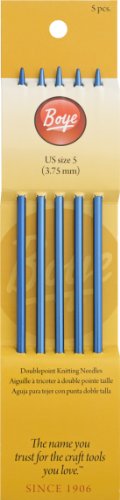
Aluminum is the material of choice if you are working with heavy, abrasive fibers like thick cotton or jute. These Boye needles are virtually indestructible, resisting the bending and warping that can plague thinner steel or plastic tools.
They are lightweight, which prevents hand fatigue when you have a large project like a heavy blanket with dozens of ends to weave in. The finish is smooth and consistent, ensuring that the needle passes through your fabric cleanly every time.
Because they are so sturdy, they are excellent for heavy-duty tasks like joining thick panels together. If you want a tool that you will only have to buy once, the Boye aluminum set is the most durable investment you can make.
Tulip Tapestry Needle Set: Best Smooth Finish

Tulip needles are renowned for their impeccable manufacturing, and their tapestry set is arguably the smoothest tool on the market. The surface treatment is so refined that it feels like it is greased, allowing it to slide through dense, bulky stitches with zero friction.
This smoothness is a massive advantage when working with sticky fibers like high-wool-content bulky yarns. When you weave in ends, you want the needle to move through the fabric without pulling or distorting the surrounding stitches, and Tulip excels at this.
They also feature a slightly sharper point than most tapestry needles, which can be helpful if you need to split a stitch for extra security. For the knitter who values precision and a premium tactile experience, the Tulip set is well worth the higher price point.
Why Eye Size Matters for Chunky Weight Yarns
The eye of the needle is the primary bottleneck when working with bulky fibers. If the eye is too small, you have to force the yarn through, which can cause it to fray and lose its structural integrity before you even begin weaving.
A properly sized eye should hold the yarn snugly without crushing it. If you find yourself having to trim the ends of your yarn to get it through the eye, your needle is too small, and you are likely creating a weak point in your finish.
Always match the eye size to the WPI (wraps per inch) of your yarn. A larger eye is always better than a tight one when dealing with chunky weights; it preserves the loft and texture of the fiber.
Metal vs Plastic Needles for Bulky Projects
Metal needles are my preference for bulky projects because they offer superior rigidity. When you are pulling a thick, heavy tail through a dense seam, a plastic needle can flex or even snap under the tension, whereas steel or aluminum will hold its shape.
However, plastic needles have their place, especially if you are working with slippery synthetic yarns that might slide off a smooth metal surface. Plastic provides a bit of "grip" that can help keep the yarn in place as you weave.
Consider the fiber content of your project before choosing your material. Use metal for natural, high-friction fibers like wool, and consider plastic for smooth, slippery synthetic or silk-blend bulky yarns.
How to Properly Weave in Ends for Heavy Fibers
Weaving in ends on bulky projects requires a different approach than on fine-gauge lace. You cannot simply hide the tail in a single column of stitches; the yarn is too thick and will create an unsightly bump in the fabric.
Instead, split the plies of your yarn tail if possible, or weave the tail horizontally through the back of the stitches across a wider area. By distributing the bulk of the tail across several inches, you ensure the finish remains flat and invisible.
Always follow the path of the existing stitches. By mimicking the natural direction of the knit, you make the tail disappear into the fabric rather than sitting on top of it.
Essential Tips for Securing Bulky Yarn Tails
The most common mistake is failing to secure the tail firmly enough, leading to ends popping out after the first wash. When working with bulky yarns, I always recommend a "locking" stitch where you weave in one direction, then double back on yourself for a few stitches.
If your yarn is a superwash wool, it may be prone to slipping, so be extra diligent with your weaving. A small drop of fabric glue or a tiny knot hidden on the inside of the work can provide extra insurance if you are worried about longevity.
Check your work after blocking, as the yarn will expand and settle. A well-secured end is the difference between a project that lasts for years and one that begins to unravel after the first wear.
Selecting the right finishing needle is a small detail that yields massive results in the longevity and appearance of your knitwear. By prioritizing tools with large eyes, appropriate material stiffness, and smooth finishes, you can eliminate the frustration often associated with bulky-weight projects. Take the time to test these options and find the one that feels most natural in your hand. With the right needle, you will find that weaving in ends is not a chore, but the final, satisfying step of your creative journey.