7 Best Scissors For Precision Trimming To Own
Achieve perfect cuts with our guide to the 7 best precision scissors. Discover top-rated tools designed for intricate trimming, durability, and control.
Precision trimming is the unsung hero of a polished finished project, whether you are weaving in ends on a delicate lace shawl or snipping yarn tails on a complex stranded colorwork sweater. Using the wrong tool can lead to frayed edges, accidental snips into your hard-earned stitches, or hand fatigue that cuts your knitting session short. After two decades at the needles, I have learned that your scissors are just as vital as your chosen yarn or needle material. Here are the seven best tools to ensure every cut is clean, intentional, and perfectly placed.
Gingher 4-Inch Featherweight Embroidery Scissors


These scissors are a classic for a reason, offering a level of precision that feels almost surgical when you are working with fine-gauge wool or silk blends. The lightweight design ensures that your hand doesn’t cramp during long finishing sessions, which is essential when you have dozens of ends to weave in on a pair of socks.
The blades are incredibly sharp and tapered, allowing you to get right up against the fabric without risking a snag on your stitches. I find them particularly useful for trimming yarn tails on projects where the fiber is prone to splitting, like high-twist merino.
While they are excellent for precision, they are not meant for heavy-duty cutting. Keep these away from thick cotton twine or bulky wool roving, as the fine tips can be easily misaligned if pushed beyond their intended use.
LDH Scissors Midnight Edition Thread Snips
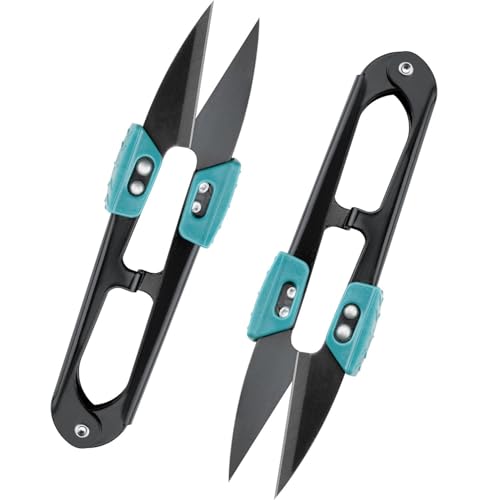
If you prefer a spring-loaded tool, these snips are a game-changer for high-volume trimming. The ergonomic design allows you to make quick, repetitive cuts without the strain of opening and closing traditional finger loops.
The matte black finish isn’t just for aesthetics; it provides a non-slip grip that is incredibly helpful when your hands are tired after a long day of knitting. The blades are exceptionally sharp, slicing through everything from cobweb-weight lace yarn to sturdy superwash worsted with zero resistance.
The trade-off here is the lack of finger control compared to traditional scissors. They are perfect for sitting in your project bag for quick snips, but they may feel less intuitive if you are used to the tactile feedback of a ring-handled tool.
Kai 4-Inch Precision Needlework Scissors

Kai blades are legendary in the sewing world for their hardness and edge retention, and these needlework scissors are no exception. They possess a unique balance that makes them feel like an extension of your hand, which is vital when you are trimming ends inside a tight cable or intricate bobble.
The blades are ground to a very fine point, making them ideal for "nicking" yarn tails that are buried deep within a garment. Because they are so sharp, they reduce the "chewing" effect that duller scissors often leave on softer, single-ply yarns.
Be mindful that these are precision instruments. If you drop them on a hard floor, the delicate tips can bend, which will ruin that perfect, flush-cut capability you bought them for.
Havel’s Sewing 4.5-Inch Curved Tip Snips

Curved tips are a specialized tool, but once you use them for trimming ends on a finished sweater, you will never go back to straight blades. The curve allows you to slide the scissor underneath your yarn tail while keeping the points safely away from your actual knitted fabric.
This design is a lifesaver when you are working on projects with a loose gauge or delicate mohair, where a stray snip could create a hole that is nearly impossible to repair. The curve acts as a natural guide, keeping your cutting angle consistent.
Because of the angle, they take a little bit of practice to master. If you are used to straight blades, start by using them on a swatch before tackling your main project to get a feel for how the curve interacts with your fabric.
Merchant & Mills Wide Bow Embroidery Scissors
These scissors offer a touch of old-world charm combined with high-quality steel, making them a favorite for those who value both form and function. The wide bow design is particularly comfortable if you have larger hands or find that standard scissor loops pinch your fingers.
The blades are robust enough to handle slightly heavier yarn weights without feeling flimsy. They offer a very satisfying "snap" when they close, which gives you confidence that the yarn has been fully severed in a single motion.
They are slightly heavier than other options on this list, which adds to their durability. However, if you are looking for an ultra-lightweight travel pair, you might find these a bit substantial for a minimalist project bag.
Fiskars Micro-Tip Easy Action Craft Scissors

Fiskars is a household name, and their micro-tip scissors are a fantastic, accessible entry point for any knitter. The spring-action mechanism is similar to the LDH snips, reducing the need for fine motor effort and making them a great choice for knitters with arthritis.
The micro-tip is specifically designed for intricate work, allowing you to reach into tight spaces with ease. They are surprisingly resilient, holding their edge well even after months of daily use on various fiber types.
One thing to note is that the plastic construction feels less "precious" than steel-forged scissors. While they perform perfectly, they lack the heirloom quality of some of the other options, making them a better "workhorse" tool than a centerpiece of your collection.
Westcott Titanium Bonded Embroidery Scissors

Titanium-bonded blades are incredibly resistant to corrosion and wear, which is a major plus if you live in a humid climate or frequently carry your tools in a bag with other items. These scissors stay sharp for a long time, even when used on abrasive fibers like linen or hemp.
The blades are quite thin, which allows for excellent visibility while you are trimming. This is especially helpful when you are working with dark-colored yarns where it can be difficult to see exactly where the yarn tail ends and your stitch begins.
While titanium is durable, the coating can eventually wear down if you are constantly cutting through thick, grimy fibers. Keep these clean and dry to ensure they last for years of knitting adventures.
How to Select the Perfect Blade for Yarn Trimming
When choosing your scissors, consider the weight and ply of the yarn you use most often. Fine lace yarns require thin, needle-sharp points, while chunky, multi-ply wools benefit from a slightly sturdier blade that won’t flex under pressure.
- Fine/Lace Weight: Look for thin, tapered tips to avoid snagging delicate fibers.
- Worsted/Bulky: Seek out blades with a bit more "heft" to ensure a clean cut in one go.
- Abrasive Fibers (Linen/Hemp): Prioritize titanium or high-carbon steel for better edge retention.
Don’t be afraid to have a "rotation." I keep a pair of spring-loaded snips in my active project bag and a pair of high-precision steel scissors at my desk for finishing and blocking.
Essential Maintenance Tips for Your Needlework Tools
Your scissors will only be as good as you treat them. The golden rule is simple: never cut anything other than yarn or thread with your needlework scissors. Paper, plastic, and even thick cardboard can dull the blades instantly, turning a precision tool into a frustrating, snag-prone liability.
Wipe your blades down occasionally with a soft cloth to remove fiber dust and natural oils from your hands. If you feel the blades getting "sticky," a tiny drop of sewing machine oil at the pivot point will keep the action smooth and effortless.
Store them in a protective sheath when not in use. Not only does this protect the tips from damage, but it also protects your fingers when you are digging through your project bag for that extra stitch marker.
Why Quality Scissors Matter for Your Fiber Projects
We spend dozens, sometimes hundreds, of hours on a single garment; using a cheap, dull pair of scissors to finish that work is like putting cheap tires on a luxury car. A clean cut ensures that your ends are easier to weave in and less likely to work their way out of your fabric over time.
Beyond the technical aspect, there is a tactile joy in using a tool that functions perfectly. When your scissors snip through a strand of hand-dyed wool with zero resistance, it provides a sense of completion that makes the final step of a project feel like a celebration rather than a chore.
Invest in at least one high-quality pair of scissors that feels right in your hand. Your projects—and your hands—will thank you for the extra care.
Finding the right scissors is a deeply personal part of your knitting journey, much like finding your favorite needle material or yarn brand. Take the time to test the weight, grip, and tip style that makes your finishing work feel effortless and precise. Remember that the best tool is the one that encourages you to finish your projects with pride and confidence. Happy knitting, and may your ends always be perfectly trimmed.