7 Best Knitting Journals For Stash Tracking To Try
Organize your yarn collection with these 7 top knitting journals. Track your stash, plan future projects, and keep your creative inventory perfectly managed.
Every knitter eventually reaches the point where their yarn stash grows faster than their needles can keep up. Without a system to track your fiber inventory, you risk buying duplicate skeins or forgetting the exact yardage needed for that dream sweater. These seven journals offer diverse ways to organize your stash, ensuring your precious materials are always ready for the perfect project. Finding the right tracking method transforms your stash from a chaotic pile into a curated library of fiber potential.
The Knitter’s Planner: Best for Project Tracking
The Knitter’s Planner is essentially the command center for your knitting life. It bridges the gap between a standard calendar and a specialized project log.
This tool is perfect if you struggle with project management, such as juggling multiple works-in-progress (WIPs) while trying to plan future casts-on. It provides dedicated space to map out your year, ensuring you don’t start a complex lace shawl when you’re already swamped with three other projects.
The layout is structured for those who value accountability. You can track your daily knitting time, which is a fantastic way to realize how long a complex cable pattern actually takes to complete.
KnitNote App: Best Digital Tool for Stash Records
If you prefer carrying your entire stash in your pocket rather than a physical book, KnitNote is a robust digital solution. It removes the physical weight of a notebook while providing searchable, filterable data.
Digital tracking is superior for the knitter who frequently buys yarn on impulse at fiber festivals. You can pull up your phone right in the aisle to check if you already have the required yardage for that pattern in your stash.
The trade-off is the lack of tactile satisfaction found in paper journals. However, for sheer efficiency and the ability to attach photos of your yarn labels directly to the entry, it is unmatched.


Moleskine Passion Journal: Best for Organization

The Moleskine Passion Journal offers a sophisticated, minimalist approach to tracking. It is a blank canvas that appeals to knitters who want to customize their record-keeping without being confined by pre-printed forms.
This journal is ideal for the maker who loves to include swatches alongside their notes. You can tape a small square of your yarn to the page, allowing you to feel the texture and see the color in natural light years later.
Because it lacks rigid templates, you must be disciplined enough to create your own system. If you aren’t consistent with your handwriting, your stash records might quickly become disorganized.
Fringe Association Field Guide: Best for Details

The Fringe Association Field Guide is designed for the knitter who treats their craft like a science. It encourages deep dives into the technical specifications of every skein you purchase.
It is particularly useful for tracking the "why" behind your purchases. You can record the fiber content, the twist, and even your thoughts on how the yarn behaved during the blocking process.
This level of detail is invaluable when you are trying to replicate a successful project. Knowing exactly how a specific merino-nylon blend reacted to a wet block can save you from future heartache.
Cocoknits Maker’s Journal: Best for Customizing
The Cocoknits Maker’s Journal is built on the philosophy that every knitter works differently. It uses a binder system, allowing you to add, subtract, or rearrange pages as your stash evolves.
This modularity is the ultimate solution for the knitter whose needs change by the season. You can keep your sock yarn inventory in one section and your bulky sweater quantities in another, swapping them out as you finish projects.
The trade-off is the physical bulk of the binder. It is not the most portable option, but for home-based stash management, it offers unparalleled flexibility.
KnitIQ Blocking and Stash Log: Best for Planning
KnitIQ focuses heavily on the technical preparation phase of knitting. It excels at helping you log the "before and after" of your yarn, specifically how it handles washing and blocking.
Tracking how a yarn blooms after blocking is a critical skill for any serious knitter. This journal forces you to record these changes, which helps you predict how future projects will look once they leave your needles.
It is a fantastic tool for those who knit with high-end, delicate fibers. By tracking the wash instructions and the final dimensions, you ensure your hand-knits last for decades.
Meadow Yarn Knitting Journal: Best for Aesthetics
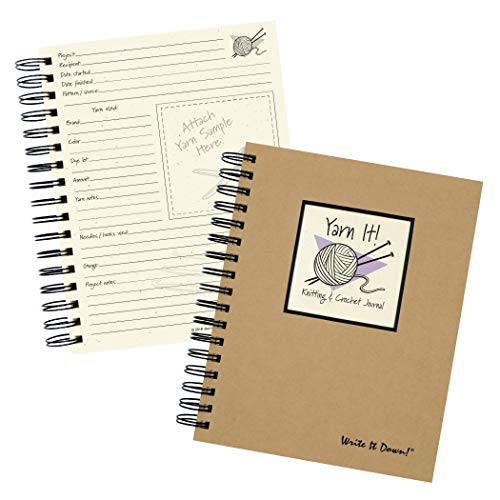
The Meadow Yarn Knitting Journal is for the knitter who views their stash as a source of creative inspiration. It is beautifully designed, making the act of recording your stash feel like a luxury rather than a chore.
If you find that a beautiful notebook encourages you to actually use your tools, this is the one for you. It turns the mundane task of logging yardage into a meditative practice.
While it is visually stunning, it may lack the complex technical data fields found in more utilitarian guides. It is best suited for the knitter who wants to document their journey rather than just track inventory.
Why You Should Track Your Yarn Stash Effectively
Tracking your stash prevents the "yarn graveyard" phenomenon, where beautiful skeins sit unused because you’ve forgotten their yardage or fiber content. It also helps you identify gaps in your collection.
If you know you have exactly 400 yards of fingering weight wool, you know you have a pair of socks ready to go. Without that knowledge, you might buy more yarn, contributing to a stash that feels overwhelming rather than inspiring.

Effective tracking also helps you understand your own shopping habits. You might discover you have a tendency to buy too much alpaca, which is notoriously difficult to maintain if you have pets or allergies.
Essential Details to Record for Every Yarn Skein
When you sit down to log your yarn, don’t just write down the brand name. The following details are the difference between a useful record and a vague note:
- Fiber Content: Note the specific blend, such as 80% superwash wool and 20% nylon.
- Yardage and Weight: Always record the total yardage per skein, not just the weight in grams.
- Dye Lot: This is non-negotiable for colorwork; if you don’t track the dye lot, you risk visible color shifts in your final garment.
- WPI (Wraps Per Inch): If the label is missing, use a WPI tool to determine the yarn’s weight category.
- Purchase Date and Source: Useful if you ever need to track down more of the same yarn for a project that ran short.
How to Choose the Perfect Journal for Your Needs
Start by asking yourself if you prefer tactile paper or digital convenience. If you enjoy the ritual of writing and swatching, a physical notebook will keep you more engaged than an app.
Consider your storage space and where you do most of your knitting. If you are a "travel knitter," a pocket-sized field guide is far more practical than a large, heavy binder.
Finally, be honest about your organizational style. If you are a minimalist, don’t buy a complex, multi-page layout that you will abandon after two weeks; stick to a simple, clean log that you will actually maintain.
Keeping a record of your stash is one of the most effective ways to transition from a casual hobbyist to a confident, intentional knitter. Whether you choose a digital app for its speed or a physical journal for its beauty, the goal is to make your materials work for you. Pick the method that feels most natural, stay consistent with your entries, and watch your creative process flourish. Happy knitting, and may your stash always be perfectly organized for your next project.