6 Best Silk Pins For Blocking Lightweight Lace
Blocking delicate lace requires precision. Discover our top six silk pins that prevent fabric damage and ensure perfect tension for your lightweight projects.
Blocking is the final, transformative step that turns a crumpled, uneven piece of lace into a professional-looking masterpiece. When working with fine, delicate fibers, the quality of your pins becomes just as important as the yarn itself. Using the wrong tools can leave permanent holes or rust marks, undoing hours of careful knitting. This guide breaks down the best silk pins to ensure your lace projects are blocked to perfection.
Clover Silk Pins: The Industry Gold Standard


Clover silk pins are widely considered the benchmark for fine-fiber blocking. Their ultra-thin, hardened steel construction allows them to glide through delicate lace stitches without snagging or distorting the yarn.
The primary advantage here is the combination of sharpness and strength. Unlike cheaper pins that bend under the tension of a stretched shawl, these maintain their shape even when you are pulling lace taut on a blocking board.
If you are working with a high-twist lace weight yarn, these pins are your best insurance policy. They minimize the "pin hole" effect that occurs when thicker pins force fibers apart.
Bohin Extra Fine Silk Pins for Delicate Lace

Bohin pins are celebrated for their exceptional finish and incredibly fine gauge. If you have ever struggled with a pin being too thick for a tiny lace eyelet, these are the solution.
These pins are exceptionally smooth, which is vital when working with fragile fibers like silk or mohair. A rough pin can catch on the halo of a mohair lace, causing unsightly fuzzing or breakage.
Because they are so fine, they are not meant for heavy-duty anchoring. Use them for the final, delicate shaping of your lace points rather than for holding the initial tension of a large, heavy blanket.
Dritz Quilting Pins for Secure Blocking

Dritz quilting pins offer a bit more "heft" than traditional silk pins, making them excellent for projects that require significant tension. If you are blocking a dense lace or a project with a lot of "memory," these provide the necessary grip.
While they are slightly thicker than specialized silk pins, they are still fine enough for most lace work. The longer length is particularly helpful when you need to pin through multiple layers of a folded lace edge.
They are a workhorse tool. If you find yourself frequently blocking heavier lace weights or even fingering weight shawls, these are a reliable, cost-effective choice.
Singer Silk Pins: Precision for Fine Fibers

Singer silk pins are a classic staple that many knitters reach for when working with light, airy lace. They are consistent, reliable, and widely available in most local craft shops.
The nickel-plated finish is designed to resist corrosion, which is a critical feature for long-term blocking. When you leave a project on the boards for several days to dry, you need a pin that won’t react with the humidity in the air.
These are an excellent "middle of the road" option. They offer a good balance between flexibility and stiffness, making them versatile enough for a variety of lace weights.
Hemline Glass Head Pins for Easy Visibility
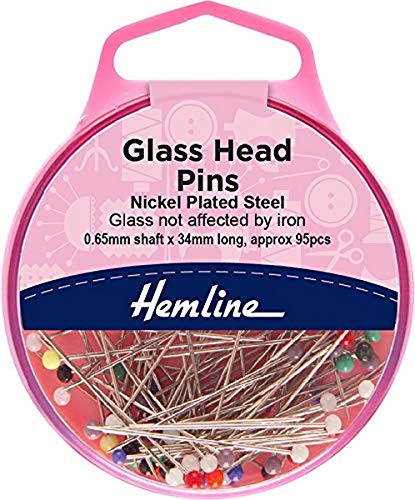
Visibility is often overlooked until you are crawling on the floor trying to find a dropped pin. Hemline glass head pins are perfect for those who want to see exactly where their pins are placed.
The glass heads are heat-resistant, which is a minor benefit if you ever use a steam iron near your blocking board. More importantly, they are easy to grip, making the repetitive process of pinning out a complex lace border much faster.
Be aware that the heads add a little bit of weight. For very delicate, cobweb-weight lace, the extra mass might pull on the fabric, so use them sparingly on the outer edges.
Prym Extra Fine Pins for Minimal Distortion

Prym is known for precision engineering, and their extra fine pins are no exception. These pins are designed specifically to avoid leaving marks in sensitive materials.
The tip of the pin is extremely sharp, which allows for precise placement. This is essential when you are trying to align specific lace motifs or geometric patterns on a blocking mat.
They are perhaps the most "delicate" pins on this list. Treat them with care, as the thin shaft can bend if forced into a very dense blocking board.
Why Silk Pins are Essential for Lace Blocking
Lace blocking is all about opening up the stitch pattern to reveal the true beauty of the design. Standard sewing pins are often too thick and can cause permanent distortion in the yarn.
Silk pins are specifically engineered to be thinner than standard pins. This allows them to slip between the plies of your yarn rather than piercing them, which preserves the structural integrity of your stitches.
- Prevents distortion: Thinner pins keep the lace holes uniform.
- Reduces snagging: A smooth finish prevents damage to delicate fibers.
- Maintains tension: Hardened steel resists bending under pressure.
How to Prevent Rust Marks on Your Lace Projects
Rust is the enemy of every knitter. Even high-quality pins can rust if they are left in a damp environment or if the protective coating is scratched.
Always ensure your lace is damp—not soaking wet—before pinning. Excessive moisture lingering on the pins for days is the fastest way to invite oxidation.
- Dry thoroughly: Remove pins as soon as the project is fully dry.
- Check for damage: Discard any pin that has a dull tip or a scratched shaft.
- Use stainless steel: When in doubt, prioritize stainless steel over plated options.
Proper Storage Tips for Your Blocking Notions
A pincushion is fine for daily use, but it is not ideal for long-term storage of your blocking pins. Pincushions can hold moisture, which encourages rust over time.
Instead, store your pins in a dry, airtight container. A small tin or a plastic case with a silica gel packet is an excellent way to keep them moisture-free.
Never store your pins while they are still damp from a blocking session. Let them air dry on a paper towel for an hour before putting them away in their storage container.
Choosing the Right Pin for Different Lace Weights
Not all lace is created equal. A heavy wool lace shawl requires different pinning dynamics than a delicate silk-mohair scarf.
If you are working with a heavier yarn, you can afford to use a slightly thicker pin for better holding power. Conversely, cobweb lace demands the finest silk pins you can find to prevent the fabric from sagging or tearing.
- Cobweb/Lace weight: Use extra-fine silk pins.
- Fingering weight: Standard silk pins or quilting pins are appropriate.
- Dense lace patterns: Use longer pins to ensure they reach deep into the blocking mat.
Investing in high-quality silk pins is a small price to pay for the professional results you deserve after weeks of knitting. By choosing the right tool for your specific fiber and lace weight, you ensure your hard work remains pristine. Remember that proper care and storage are just as important as the initial purchase to keep your pins working for years. Happy blocking, and may your points always be perfectly sharp.