6 Best Yarn Scales For Measuring Exact Yardage
Accurately measuring yarn weight is essential for projects. We review the 6 best scales to help you calculate exact yardage and avoid running out of supplies.
Every knitter knows the heart-stopping moment when the yarn ball starts looking dangerously small near the end of a project. Having a reliable scale in your knitting bag is the best insurance policy against the dreaded game of "yarn chicken." By measuring weight, you can mathematically determine exactly how much yardage remains on your needles or in your stash. These six scales provide the precision needed to ensure your next sweater doesn’t end in a frantic, mismatched bind-off.
My Weigh iBalance 201: Best for Precision Work


When you are working with luxury fibers like hand-dyed cashmere or delicate lace-weight silk, every fraction of a gram counts. The iBalance 201 offers the high-resolution sensitivity required to weigh small swatches or partial skeins with absolute confidence.
Its ability to measure in increments as small as 0.01 grams makes it the gold standard for technical knitters. If you are calculating the exact yardage of a precious, limited-edition mini-skein, this scale eliminates the rounding errors that cheaper models often introduce.
While it is more expensive than standard kitchen scales, its precision is unmatched. For those who frequently design their own patterns or perform detailed gauge math, this is an essential investment.
Etekcity Digital Kitchen Scale: Best Value Pick

Reliability doesn’t always have to come with a premium price tag. The Etekcity scale is a staple in many knitting rooms because it is simple, accurate enough for most worsted-weight projects, and incredibly affordable.
If you are just starting to track your yarn usage, you don’t need laboratory-grade equipment. This scale handles the weight of a full 100g skein of wool or alpaca with ease, giving you the peace of mind you need to start your next colorwork project.
It features a thin, space-saving design that slides easily into a project bag or a drawer between knitting sessions. It is the perfect entry-level tool for the knitter who wants to manage their stash without overcomplicating their budget.
American Weigh Scales AMW-1KG: Best Compact Tool

Portability is a huge factor when you attend knitting retreats or local guild meetings. The AMW-1KG is small enough to fit in the palm of your hand, yet it provides enough capacity to weigh a full-sized sweater quantity of yarn.
Because it is so compact, it is less likely to get in the way of your knitting needles, patterns, and notions pouches. It’s the ideal choice for the traveling knitter who needs to weigh a skein at a shop before committing to a purchase.
Keep in mind that its small surface area can sometimes make it difficult to balance a large, bulky ball of yarn. You may need to place a small bowl or a lightweight project bag on the scale first to stabilize your yarn while weighing.
Ozeri Pronto Digital Scale: Best User Interface

The Ozeri Pronto stands out because it is incredibly intuitive and easy to read, even when your hands are tired after a long knitting session. The buttons are responsive, and the display is large enough to see without squinting at your workbench.
Its "tare" function—which resets the scale to zero after you place a container on it—is exceptionally quick and reliable. This is vital when you are weighing yarn inside a project bag or a bowl to keep your delicate fibers clean and contained.
If you struggle with technology or just want a tool that works the moment you turn it on, this is your best bet. It removes the friction from the weighing process, making you more likely to actually track your yarn usage.
GreaterGoods Digital Scale: Best Durable Choice

Knitting rooms can be chaotic environments filled with sharp needles and spilled tea. The GreaterGoods scale is built to handle the occasional bump or drop, making it a rugged addition to your crafting station.
Beyond its physical durability, it offers a clean, minimalist design that looks great on a desk. It is consistently accurate, which is the most important factor when you are trying to determine if you have enough yarn to finish a long-tail cast-on.
This scale is an excellent "set it and forget it" tool. It doesn’t have unnecessary bells and whistles, just a solid, dependable platform that will serve you for years of knitting projects.
Escali Primo Digital Scale: Best for Reliability
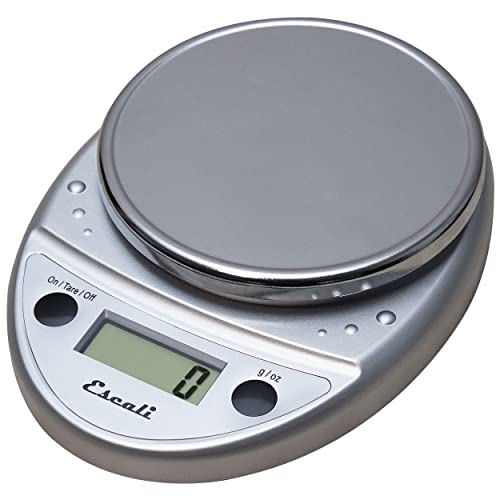
The Escali Primo is widely considered the industry standard for a reason: it is virtually indestructible and consistently accurate. Many professional knitwear designers rely on this specific model to calculate yardage for their pattern releases.
The controls are protected from accidental spills, which is a common hazard if you enjoy a drink while you knit. It handles everything from heavy, bulky-weight wool to light, airy mohair blends with equal precision.
If you want a scale that will last through decades of knitting, this is the one to buy. It is a true workhorse that won’t let you down when you are halfway through a complex lace shawl.
Why Accuracy Matters for Calculating Yarn Yardage
Accuracy is the difference between finishing a project and having to rip back three rows because you ran out of yarn. When you know exactly how many grams of yarn you have, you can use the manufacturer’s yardage-to-weight ratio to calculate your remaining length.
- Weight vs. Length: Yarn is sold by weight, but patterns are written by length.
- The Math: Total Yardage = (Remaining Weight / Total Weight) * Total Yardage.
- Fiber Density: Remember that different fibers (like cotton vs. wool) have different densities, so never assume two 100g skeins of different materials have the same yardage.
Without an accurate scale, you are essentially guessing. Developing the habit of weighing your yarn before and after a project will make you a much more confident and efficient knitter.
How to Calculate Remaining Yarn Using Your Scale
To calculate remaining yardage, first weigh your full, unused skein to establish a baseline. Then, weigh your project or your remaining yarn ball as you work.
Use the formula mentioned above to estimate how much length you have left. If you are working on a project where yardage is tight, repeat this process every few inches to track your consumption rate.
This is especially helpful for projects like socks, where you want to ensure the second sock matches the first. By weighing your yarn mid-project, you can adjust your tension or pattern repeats to ensure you don’t run out.
Essential Tips for Weighing Skeins and Swatches
Always weigh your yarn in the same environment to ensure consistency. If you are weighing a swatch, make sure it is fully dry and blocked, as moisture significantly increases the weight of natural fibers like wool.
- Use a Container: Always use a lightweight bowl or bag to hold the yarn.
- Zero the Scale: Remember to "tare" the scale with the container on it before adding the yarn.
- Consistent Units: Stick to grams, as they are the industry standard for yarn labels and are much easier to work with than ounces.
If you are weighing a large project, make sure the entire weight of the fabric is supported by the scale. If the fabric hangs off the edge, it will create leverage and give you an inaccurate reading.
Common Mistakes When Measuring Yarn for Projects
The most common mistake is forgetting to account for the weight of the labels, tags, or the project bag itself. Always remove these items before placing your yarn on the scale to get a true reading.
Another frequent error is assuming that all yarn of the same weight class (like DK or Worsted) has the same yardage. Always check the specific label for the exact weight-to-yardage ratio, as ply structure and fiber content change everything.
Finally, don’t forget that your gauge affects your yarn consumption. If you knit loosely, you will use more yarn than the pattern suggests, so always weigh your yarn early and often.
Investing in a quality scale is one of the smartest decisions you can make to elevate your knitting practice. By removing the guesswork from your stash management, you gain the freedom to design, modify, and finish your projects without the fear of running short. Choose the scale that fits your knitting style, keep your math handy, and enjoy the peace of mind that comes with knowing exactly what is on your needles. Happy knitting, and may you never lose a game of yarn chicken again!