6 Best Blocking Clips For Securing Edges To Try
Master your knitting projects with these 6 top-rated blocking clips. Discover how these essential tools ensure precise edges and a professional finish every time.
Every knitter knows the heartbreak of finishing a beautiful garment only to have it look slightly "off" due to uneven edges or curled stockinette. Proper blocking is the bridge between a handmade craft and a professional-looking piece of knitwear. By using the right tensioning tools, you can transform your fabric, ensuring your hard work truly shines. Here are the best tools to help you achieve that crisp, polished finish you deserve.
Knitter’s Pride Knit Blockers: The Best Overall Pick


When you are blocking a large shawl or a sweater back, individual T-pins can feel like a tedious exercise in frustration. Knit Blockers solve this by featuring a row of pins on a single plastic base, allowing you to secure several inches of fabric in one motion.
These are particularly effective for projects with long, straight edges where maintaining consistent tension is vital. Because they anchor a larger section of the fabric simultaneously, they prevent the "scalloping" effect that often happens when you pin too far apart.
However, they can be a bit bulky for tight curves or very small items. Keep a set of standard T-pins nearby for those intricate corners where the rigid base of the blocker simply won’t fit.
Clover Patchwork Pins: Best For Delicate Lace Edges

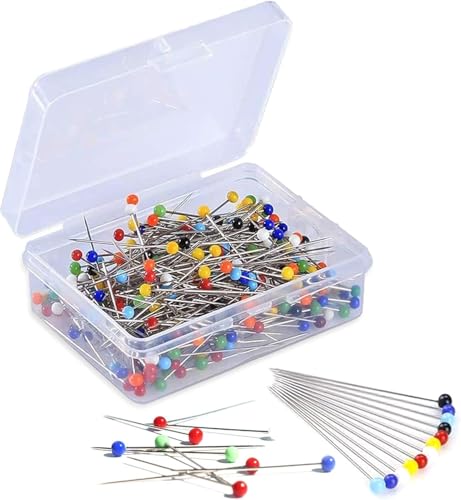
Lace knitting is a labor of love, and the last thing you want is a heavy pin snagging a delicate yarn-over. Clover Patchwork Pins are incredibly fine and smooth, making them perfect for threads like silk, mohair, or fine laceweight wool.
Their sharpness allows them to glide through your blocking mats without distorting the stitches. If you are working on a complex lace pattern, these pins won’t put unnecessary stress on your tensioned loops.
The tradeoff is their size; they are quite thin and can be easy to lose in a carpet or a deep rug. Always count your pins before and after a blocking session to ensure none are left behind.
Cocoknits Maker’s Keep: Best Magnetic Wrist Holder
If you have ever spent ten minutes crawling on the floor searching for a dropped pin, you know the value of organization. The Maker’s Keep is a magnetic slap bracelet that keeps your pins, needles, and stitch markers right on your wrist.
This tool is a game-changer for speed and efficiency during the blocking process. It keeps your workspace clear and ensures that you aren’t wasting time reaching for supplies while trying to hold a damp, heavy sweater in place.
While it is a fantastic organizational tool, it does not replace the pins themselves. It is an investment in your workflow rather than a direct blocking tool, but for busy knitters, it is worth every penny.
Tulip Sashiko Needles: Best For Secure Edge Tacking

While technically designed for Japanese embroidery, these needles are remarkably useful for "tacking" edges during the blocking process. They are strong, slightly longer than standard pins, and have a very sharp point that pierces through heavy layers easily.
If you are blocking a dense, felted, or heavy wool project, standard pins might bend or pop out. These needles provide a sturdy anchor that holds the fabric firmly in place without sliding.
Because they are longer, they provide more leverage for pinning through multiple layers of fabric. Just be careful with delicate fibers, as their thickness can leave a visible hole if you aren’t strategic with placement.
Boye Blocking Combs: Best For Quick Straight Edges

Blocking combs function similarly to Knit Blockers but often come in different configurations that allow for more flexibility. They are excellent for creating perfectly straight edges on scarves or rectangular wraps.
The combs help distribute the tension evenly across the entire edge of the project. If you find your edges are constantly curling, using these combs can force the fabric to lay flat by providing consistent, uniform pressure.
They work best on flat surfaces and are not intended for 3D shapes or garments with complex construction. Use them for your straight-edge projects to save time and ensure a professional, clean line.
Dritz Quilting Clips: Best For Heavy Wool Projects

Sometimes, pinning is not the best approach, especially if you are worried about leaving pinholes in a luxury fiber like cashmere or alpaca. Quilting clips offer a way to secure edges by clamping them to the blocking mat or another piece of fabric.
These are perfect for heavy, dense wools that require a lot of tension to stretch out. By using a clip instead of a pin, you avoid the risk of stretching or breaking the individual plies of your yarn.
They are also incredibly durable and will last for years. The downside is that they can be bulky, so they are better suited for large, heavy items rather than small, delicate accessories.
Understanding Why Blocking Clips Improve Your Finish
Blocking is not just about getting the item wet and letting it dry; it is about "training" the stitches to sit in their final position. Clips and pins provide the necessary resistance to keep the fabric stretched while the fibers relax.
Without proper securing tools, your edges will likely shrink back to their pre-blocked state. By using clips, you ensure that the dimensions you intended are the ones you achieve.
This process is especially important for natural fibers like wool, which have a "memory." When you block them, you are setting that memory to the shape you desire.
How to Choose the Right Clip for Your Fiber Content
Fiber content dictates how much tension your project can handle. For example, delicate silk or mohair blends require very fine, smooth pins to avoid snagging or breaking the fibers.
- Wool: Resilient and forgiving; use sturdy pins or blockers.
- Silk/Mohair: Fragile; use thin, smooth pins and minimal tension.
- Cotton/Linen: Can be heavy; use clips or longer, stronger pins to maintain the stretch.
- Acrylic: Does not hold a block well; use pins to shape, but be aware it may revert over time.
Always test a small, inconspicuous area if you are worried about potential marks. The goal is to provide enough tension to shape the piece without stressing the yarn to the point of distortion.
Essential Tips for Perfect Tension While Blocking
Consistency is the secret to a professional finish. When pinning, start from the center of an edge and work your way out toward the corners. This prevents the fabric from bunching up in one direction.
Don’t over-stretch your project. While you want to open up the stitches, pulling too hard can make the fabric look transparent or "gapped."
Use a measuring tape as you go. It is easy to get carried away and stretch a sweater body longer than you intended. Consistent measurements are what make a handmade garment look like it came from a boutique.
Frequently Asked Questions About Blocking Tools
Q: Do I really need specific blocking tools, or can I just use sewing pins? A: You can use sewing pins, but they are often too short and can rust if they aren’t stainless steel. Proper blocking tools are designed to be rust-proof and long enough to hold deep layers of fabric securely.
Q: How long should I leave the clips in place? A: Leave the clips in until the garment is 100% dry. If you remove them while the piece is still damp, the fibers will immediately begin to contract, undoing all your hard work.
Q: Will blocking fix my uneven tension? A: Blocking can help even out minor tension irregularities caused by switching needles or changing your grip. However, it cannot fix major mistakes like dropped stitches or significant gauge errors.
Investing in the right blocking tools is a commitment to the longevity and beauty of your knitting. Whether you choose the efficiency of blockers or the precision of delicate pins, your choice will reflect in the final drape and fit of your project. Take your time, treat your fibers with care, and enjoy the transformative magic of a well-blocked edge. Happy knitting!