7 Best Blocking Mats For Heavy Sweaters To Use
Discover the 7 best blocking mats for heavy sweaters. This guide compares durability and thickness to help you achieve a perfect, professional finish every time.
Blocking is the final, transformative step that turns a collection of stitches into a professional-grade garment. For those of us who knit heavy, oversized sweaters, the right surface is the difference between a crisp finish and a distorted, uneven mess. Finding the perfect mat requires balancing durability, pin-holding power, and the sheer footprint needed to accommodate massive wool sweaters. These seven options represent the gold standard for managing the weight and tension of substantial knitwear.
Knitter’s Pride Knit Blockers: Best Overall Pick


These blockers are a game-changer for anyone tired of wrestling with individual T-pins. By combining a sturdy plastic base with multiple stainless steel pins, they allow you to secure long, straight edges of a sweater in one swift motion.
The real beauty here lies in the tension control. Because the pins are anchored in a solid bar, you can apply even pressure across a sweater’s hem or side seam without the "wavy" look that often happens when pins are spaced inconsistently.
If you are blocking a dense, heavy-gauge wool sweater, these are essential. They provide the structural integrity needed to hold the weight of water-logged fibers while they dry, ensuring your edges stay perfectly straight.
Boye Interlocking Foam Mats: Best Budget Option

Sometimes, you don’t need a premium surface to get the job done. These standard interlocking foam tiles are the workhorses of the knitting world, offering a large, customizable workspace for a fraction of the cost of boutique brands.
The grid pattern printed on many of these sets is incredibly useful for symmetry. When you are blocking a sweater back or front, having a visual guide helps you ensure that both armholes are identical in width and depth.
The main trade-off is density. Because these are often softer than professional-grade mats, they can sometimes "bow" if you are using extremely long, heavy pins under high tension. For most sweaters, however, they are more than sufficient.
Cocoknits Blocking Mats: Best Modular Design

Cocoknits has mastered the art of the intentional workspace. These mats are made from a high-density, heat-resistant foam that feels significantly more premium than standard craft-store tiles.
What sets them apart is the thoughtful design of the edges. They lock together seamlessly, creating a smooth surface that won’t snag delicate yarns like mohair or lace-weight alpaca.
If you have limited space, the modular nature is a massive benefit. You can assemble only the surface area you need for a sweater, then tuck the tiles away in a drawer when you’re finished.
Exerpeutic Puzzle Mats: Best Heavy Duty Surface
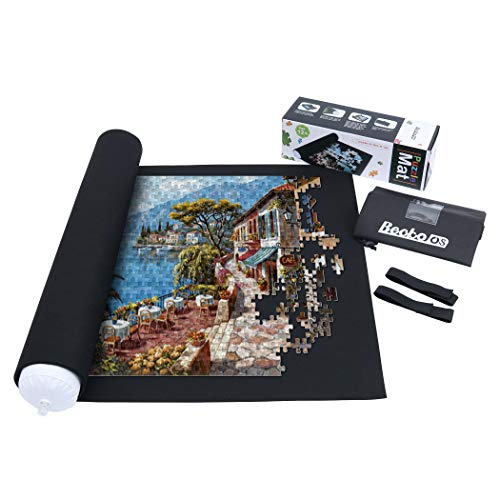
If your knitting habit leans toward heavy, cabled sweaters or oversized fisherman-style knits, you need a surface that can take a beating. These exercise-grade mats are thicker and firmer than anything designed specifically for crafting.
The extra thickness allows you to drive pins in deep, which is crucial for heavy garments that want to pull and shift as they dry. You won’t have to worry about the mats sliding or warping under the weight of a damp, heavy wool sweater.
While they lack the pretty grid lines of craft mats, their durability is unmatched. They are an investment in the long-term health of your finished projects, providing a stable foundation that won’t degrade over years of use.
Lacis Blocking Board: Best for Precision Work
When you are working on a sweater with intricate lace panels or complex geometric colorwork, precision is non-negotiable. The Lacis board offers a rigid, non-slip surface that keeps every stitch exactly where you placed it.
These boards are often made from materials that allow for very fine pinning. If you are blocking a thin, delicate yarn that tends to slip, the surface texture provides just enough "bite" to hold your work securely.
They are less portable than foam tiles, but the trade-off is absolute stability. For the knitter who demands perfection in their stitch definition, this is the gold standard for ensuring every motif is perfectly aligned.
Mindful Collection Mats: Best Eco-Friendly Choice

Sustainability is increasingly important to knitters, and the Mindful Collection offers a conscious alternative. These mats are designed to be durable enough to last a lifetime, reducing the need for cheap, disposable foam alternatives.
The surface is designed to be gentle on your hands and your yarn. If you are prone to blocking sweaters with sensitive fibers like silk or bamboo, the smooth finish prevents unwanted friction and pilling during the pinning process.
They are a beautiful, functional addition to any knitting room. While they come at a higher price point, the focus on longevity and non-toxic materials makes them a solid choice for the ethically-minded maker.
Clover Blocking Mats: Best for Small Projects
While this article focuses on heavy sweaters, sometimes you need to block a swatch or a smaller sweater component before committing to the full garment. Clover mats are reliable, lightweight, and incredibly easy to store.
They offer a consistent, medium-density foam that is perfect for most wool and acrylic blends. The grid lines are crisp and easy to read, which is vital when you are trying to match your blocked gauge to your pattern’s requirements.
They are the perfect entry point for a new knitter. If you aren’t ready to invest in a massive blocking station, starting with a set of these will teach you the importance of proper tension without breaking your budget.
Why Heavy Sweaters Need Dedicated Blocking Mats
Heavy sweaters are notorious for their "memory." If you block a heavy wool garment on a flimsy or uneven surface, the weight of the water-saturated fibers will pull the piece out of shape before it even begins to set.
Dedicated mats provide the necessary resistance. You need a surface that can handle the vertical pull of pins without flexing, ensuring that the sweater dries in the exact shape you intended.
Furthermore, these mats allow for better airflow. Because they aren’t made of absorbent materials like cardboard or towels, they prevent the "musty" smell that can occur when a heavy sweater takes too long to dry.
Essential Features for Blocking Large Garments
When shopping for mats, look for high-density foam that resists compression. If you can easily press your finger into the foam and it leaves a permanent dent, it won’t hold the weight of a heavy sweater.
Grid lines are a non-negotiable feature for garment knitters. You need to be able to measure armhole depth, sleeve length, and body width against a standardized scale to ensure your final sweater fits as designed.
Finally, consider the total surface area. A good blocking system should be expandable, allowing you to add more tiles as your projects grow from simple scarves to large, complex sweaters.
How to Properly Maintain Your Blocking Surfaces
After you finish blocking a sweater, always remove all pins before disassembling the mats. Leaving pins in can cause the foam to tear or lose its ability to hold tension over time.
Wipe your mats down with a damp cloth if they get dusty or accumulate stray fibers. Avoid using harsh chemicals, which can break down the foam and potentially transfer residues to your next project.
Store your mats flat in a cool, dry place. If you stack them vertically, they can bow or warp, which will make it difficult to get a perfectly flat surface the next time you need to block a sweater.
Investing in quality blocking mats is one of the smartest decisions a dedicated sweater knitter can make. By providing a stable, grid-lined foundation, you ensure that your hours of hard work are rewarded with a professional, well-shaped final piece. Choose the option that best fits your space and the weight of your favorite yarns, and enjoy the satisfaction of a perfectly blocked sweater. Happy knitting, and may your edges always be straight.