7 Best Tapestry Needles For Heavy Weight Yarn
Choosing the right tapestry needle is vital for heavy yarn. Discover our top 7 picks for durability, smooth stitching, and effortless weaving in this guide.
Finishing a chunky knit project is a massive accomplishment, but the real work often begins once you bind off that final stitch. Weaving in heavy-weight yarn requires tools that can handle significant bulk without distorting your delicate fabric structure. Selecting the right tapestry needle is the difference between a clean, professional finish and a bulky, unsightly knot. These seven recommendations will ensure your hard work stays secure for years to come.
Clover Chibi Bent Tip Tapestry Needle Set


The Clover Chibi set is a staple in almost every serious knitter’s notions bag for a reason. The signature bent tip allows you to slide under stitches with surgical precision, effectively "hooking" the yarn through the back of your work.
These needles are made from a soft, flexible plastic that feels gentle against your hands. While they lack the rigidity of steel, their flexibility is a major advantage when navigating tight cables or complex textured stitches.
Be aware that because they are plastic, they can eventually develop burrs if you frequently snag them on metallic stitch markers or sharp needle tips. Keep them in their signature "Chibi" case to prevent them from getting crushed at the bottom of your project bag.
ChiaoGoo Stainless Steel Large Eye Needles
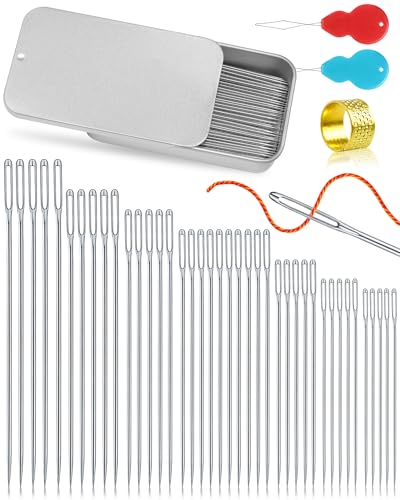
If you prefer the tactile feedback of metal, these ChiaoGoo needles are your best bet. They are incredibly smooth, allowing them to glide through even the most "grabby" wool fibers like mohair or high-twist singles without splitting the yarn.
The stainless steel construction means they are virtually indestructible. They won’t bend or snap, even when you are trying to force a thick, multi-ply yarn through a dense section of a garment.
However, the rigidity can be a double-edged sword. If you are working on a delicate piece, be mindful of your tension so you don’t accidentally pierce the yarn plies themselves.
Susan Bates Finishing Needles with Case

Susan Bates has been a trusted name in the industry for decades, and their finishing needles reflect that longevity. These needles feature a unique, slightly flattened eye that makes threading bulky yarn significantly easier.
The set usually includes a variety of sizes, which is essential when you move between different yarn weights. Having the right diameter needle for your yarn weight prevents the "stretching" effect that occurs when you use a needle that is too large for the yarn.
These are an excellent "workhorse" option for beginners. They are affordable, durable, and come in a convenient case that keeps your workspace organized.
Dritz Yarn Darner Needles for Thick Fiber

Dritz needles are often found in general sewing aisles, but don’t let that fool you—they are excellent for heavy-duty knitting projects. Yarn darners are specifically designed with a long shaft, which is perfect for weaving in ends across a wide span of fabric.
The extra length gives you better leverage when you are working on a heavy sweater or a thick blanket. You can weave through multiple stitches at once, which saves time and ensures your yarn end is thoroughly buried.
One tradeoff is that they are generally straight, lacking the bent tip of specialized knitting needles. If you struggle with maneuvering in tight corners, you might find these slightly less ergonomic than a bent-tip alternative.
Knitter’s Pride Wool Needles with Eyelet

Knitter’s Pride offers a fantastic set of needles specifically designed for the unique needs of wool fibers. They are lightweight and have a smooth finish that won’t catch on the scales of natural animal fibers.
The eyes on these needles are exceptionally large and well-shaped. This is a game-changer if you often struggle with "splitting" your yarn while trying to thread the needle or weave it into your project.
They are a fantastic mid-range option for knitters who want a step up from basic plastic needles but aren’t ready to invest in high-end specialty sets. Their color-coded ends also make it easy to grab the right size at a glance.
Boye Aluminum Tapestry Needles for Bulky

Boye aluminum needles are the classic choice for those who want a lightweight tool that doesn’t sacrifice strength. Because they are made of aluminum, they have a very low profile, which helps when working with bulky yarns that already take up a lot of space.
They are particularly useful for projects involving superwash wool, which can be slippery. The slight "drag" of the aluminum against the yarn can actually help keep your stitches in place while you weave.
Just keep in mind that aluminum can be prone to bending if you accidentally sit on them or keep them loose in a bag. Treat them with care, and they will serve you faithfully for many projects.
Cocoknits Steel Tapestry Needle Collection
These needles are the gold standard for luxury and utility in the knitting world. The steel is finished to a high sheen, and the set includes a range of sizes that covers everything from lace-weight weaving to chunky-weight finishing.
The standout feature here is the quality of the eye; it is perfectly tapered to transition smoothly into the shaft of the needle. This prevents the "snagging" that often happens when the yarn hits the shoulder of the needle eye.
If you are a knitter who values high-quality tools, this collection is an investment. They are durable, beautifully weighted, and feel professional in the hand every time you use them.
How to Select Needles for Chunky Yarn Weaving
Choosing the right needle isn’t just about the eye size; it’s about the diameter of the shaft relative to your yarn’s WPI (Wraps Per Inch). If the needle is too thin, it will pull the yarn through the fabric too easily, potentially causing the end to slip out later.
- For Super Bulky: Look for a needle with a thick shaft to match the yarn’s volume.
- For Textured Yarns: Choose a needle with a blunter tip to avoid splitting the plies.
- For Slippery Fibers: A slightly textured or metal needle provides the best control.
Always test your needle on a swatch before finishing your actual garment. If you find yourself struggling to pull the needle through, you are likely using a needle that is too thick for the density of your fabric.
Why Bent Tips Improve Your Finishing Speed
The bent tip is arguably the most significant innovation in finishing tools. It acts as a guide, allowing the needle to "ride" along the back of the stitches without diving too deep into the fabric and showing through to the right side.
This design is particularly helpful when you are working on the inside of a hat or the sleeve of a sweater. You can easily pick up a stitch without having to manipulate the fabric into an awkward position.
For those with hand fatigue or arthritis, the bent tip also reduces the amount of wrist rotation required to weave in ends. It allows for a more fluid, ergonomic motion that keeps your hands comfortable during long finishing sessions.
Essential Tips for Securing Heavy Yarn Ends
Securing heavy yarn requires more than just weaving back and forth; it requires creating a "lock." Always weave your tail in the direction of the stitch structure, following the path of the yarn as it naturally travels through the fabric.
- Split the ply: For a truly secure finish, split the yarn ply with your needle before pulling it through.
- Change direction: Weave in one direction, then double back on yourself to create a friction lock.
- Avoid knots: Knots create bulk and can eventually work their way to the surface of your project.
If you are working with a very heavy yarn, consider trimming the tail slightly thinner by removing a few plies before weaving it in. This reduces the bulk behind the stitches and makes the finish nearly invisible.
Mastering the art of finishing is what separates a homemade item from a professional-grade garment. By selecting the right needle for your specific yarn weight and fiber type, you ensure that your hard work remains secure and beautiful. Don’t be afraid to keep a variety of these tools on hand, as different projects will always demand different solutions. Happy weaving, and may your ends always be perfectly tucked away.