6 Best Adjustable Blocking Frames For Custom Sizes
Discover the 6 best adjustable blocking frames for custom projects. Learn how these versatile tools ensure precision and perfect tension for your textile crafts.
Achieving a professional finish on your hand-knits depends entirely on how you set your stitches during the final blocking process. Whether you are opening up delicate lace or squaring off a chunky sweater, the right frame makes all the difference in shape retention. This guide breaks down the best adjustable blocking tools to ensure your hard work looks as polished as a store-bought garment. Choosing the right equipment is an investment in the longevity and beauty of every piece you create.
Knitter’s Pride Knit Blockers: Best Overall Pick


These aren’t traditional frames, but they are the industry gold standard for a reason. By combining a long plastic base with multiple stainless steel pins, they allow you to secure long, straight edges in a fraction of the time it takes to place individual T-pins.
If you are blocking a large shawl or a long scarf, the time saved is immense. The pins are sharp enough to grip even the most stubborn wool, yet they don’t leave large, unsightly holes in your fabric.
The tradeoff here is that you need a soft surface, like a foam mat, to use them effectively. They are the best overall pick because they adapt to any project size without requiring a dedicated, bulky frame.
Cocoknits Maker’s Board: Best Modular System
The Cocoknits Maker’s Board is a brilliant solution for those who value organization and versatility. It uses a magnetized board and various accessories to hold your work in place, making it perfect for smaller items like swatches or mittens.
Because it is modular, you can expand your setup as your project grows. It’s particularly useful if you are a multi-crafter who needs a tool that serves as both a blocking surface and a project tracker.
While it isn’t designed for massive blankets, its precision and portability make it a favorite for detail-oriented knitters. It’s the ultimate choice for those who want a clean, professional workspace.
Boye Adjustable Blocking Board: Best for Squares

If you find yourself knitting endless granny squares or modular garments, the Boye board is a lifesaver. It features a grid of holes that allow you to insert pegs, ensuring every single square comes out the exact same size.
Consistency is the biggest challenge in modular knitting, and this board removes the guesswork entirely. You simply place your piece over the pegs, and the grid does the work of keeping everything perfectly aligned.
The main limitation is its size; it is built for specific dimensions rather than large, flowing garments. However, for geometric precision, it remains unmatched in the market.
Laurel Hill Wooden Blocking Frame: Best for Lace
Lace knitting requires tension, and there is something uniquely satisfying about using a wooden frame to stretch a shawl. Laurel Hill frames are crafted from wood, which provides a sturdy, natural anchor for your pins.
Wooden frames are excellent for blocking delicate fibers like silk or mohair. Unlike plastic surfaces, the wood offers a firm resistance that helps you achieve that perfect "open" look in your lace motifs.
These frames are often adjustable, allowing you to tighten the tension across the piece. They are an investment piece for the serious lace knitter who wants to ensure their heirloom projects are blocked with care.
Clover Blocking Mats: Best Portable Solution
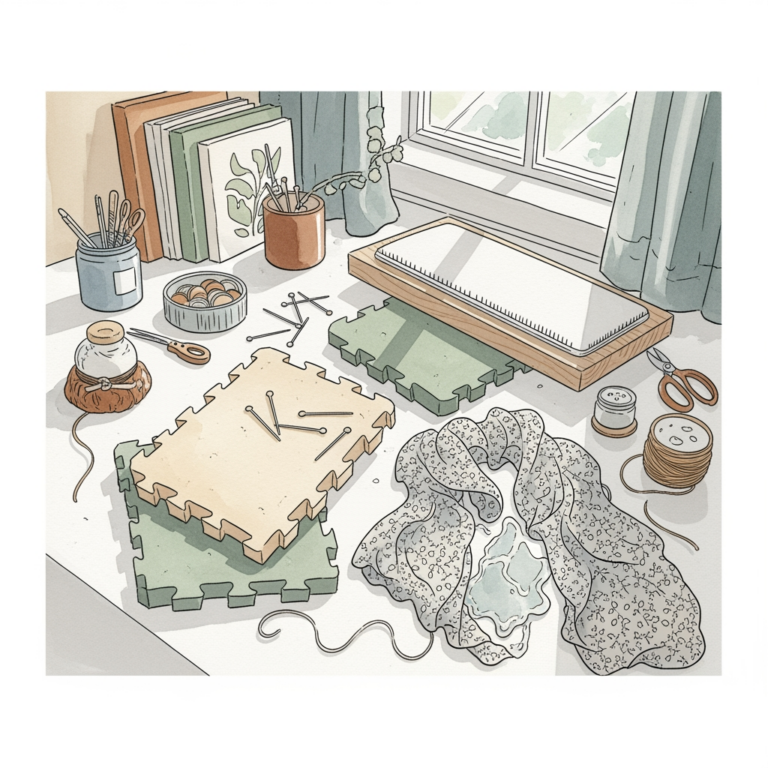
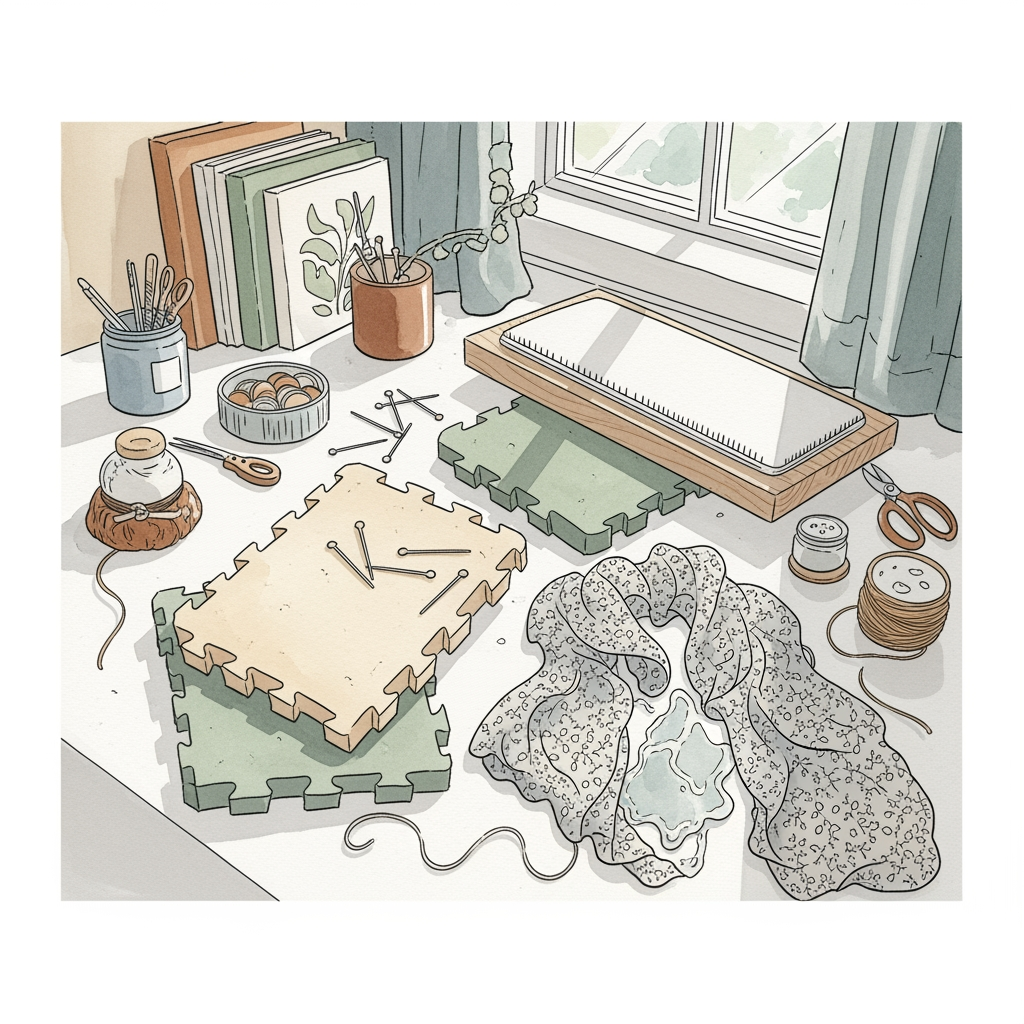
Sometimes the best frame is the one you can tuck away in a project bag. Clover’s interlocking foam mats are lightweight, easy to assemble, and can be configured into any shape you need.
If you live in a small space, these are a godsend. You can block a sweater on your living room floor and break the mats down into a small stack the moment the garment is dry.
While they lack the rigidity of a wooden frame, their flexibility is their greatest strength. They are ideal for knitters who need a blocking solution that doesn’t take up permanent space in their home.
Ashford Knitters Loom Frame: Best for Projects
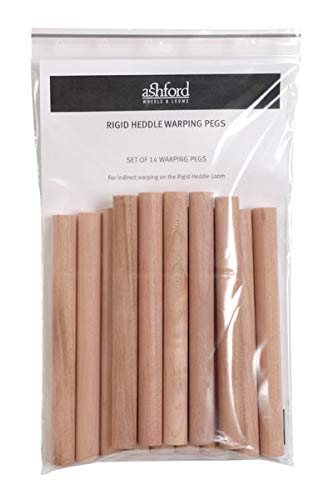
The Ashford frame is designed with the weaver and the serious knitter in mind. It provides a rigid, high-tension environment that is ideal for heavy-duty blocking or even small-scale tapestry work.
This is the tool you reach for when you have a heavy wool sweater that needs to hold its shape perfectly. The structural integrity of the frame prevents the fabric from sagging while it dries.
It is a more robust, permanent solution compared to foam mats. If you have the dedicated space, the stability it provides is worth the footprint it occupies.
How to Choose the Right Blocking Frame for You
Choosing the right tool comes down to the types of projects you tackle most often. If you exclusively knit socks, a massive wooden frame is overkill; if you specialize in wedding shawls, you need something that can handle tension.
Consider your storage space first. A frame that you cannot store easily will eventually stop being used, regardless of how effective it is.
- Project Size: Are you blocking small swatches or full-length blankets?
- Fiber Type: Does your project need heavy tension (lace) or gentle shaping (sweaters)?
- Storage: Do you have a dedicated craft room or are you working on the kitchen table?
Essential Tips for Perfect Blocking Techniques
Always remember that blocking is about shaping, not stretching. Over-stretching a garment can permanently damage the stitch definition and ruin the elasticity of your yarn.
Use a spray bottle to dampen your work rather than soaking it if you are worried about the weight of the water. For delicate fibers, always lay a towel down on your frame to prevent the wood or plastic from leaving marks on the fabric.
- Patience is key: Let the garment dry completely before removing the pins.
- Check your edges: Ensure your seams are aligned correctly before you start pinning.
- Avoid heat: Unless you are working with acrylic, keep irons away from your blocking surface.
Understanding Fiber Memory and Shape Retention
Fiber memory refers to the yarn’s ability to return to its original state after being stretched. Wool has excellent memory, which is why it blocks so beautifully and holds its shape for years.
Synthetic fibers, like acrylic, have very little memory. They often require steam blocking to "set" the shape, as they don’t react to water in the same way natural proteins do.
- Animal Fibers: Respond best to wet blocking and gentle shaping.
- Plant Fibers: Often grow when wet; be careful not to over-stretch cotton or linen.
- Superwash Wool: Can grow significantly when wet; handle with extra care during the drying process.
Maintenance Tips for Your Blocking Equipment
Treat your blocking tools with the same respect you give your needles. After each use, wipe down your pins and boards to remove any residual moisture or yarn fibers that might have snagged.
If you use wooden frames, check them periodically for splinters that could catch on your delicate knits. A light sanding can keep them smooth and safe for your most precious projects.
- Storage: Keep mats in a cool, dry place to prevent warping.
- Organization: Use a dedicated box for pins to avoid losing them in your carpet.
- Inspection: Regularly check your frames for loose joints or worn parts that might affect tension.
Blocking is the final, transformative step that turns a collection of stitches into a professional garment. By selecting the right frame for your specific needs, you ensure that your hard work is showcased in its best possible light. Take the time to understand your fibers, respect the tension, and enjoy the satisfaction of a perfectly finished project. Happy knitting, and may all your blocking be effortless.