6 Best Rotary Cutter Guards For Finger Safety
Protect your hands while quilting with our top 6 rotary cutter guards for finger safety. Read our expert guide to choose the right tool and stay safe today.
Achieving clean, precise fabric cuts is as essential to professional-level quilting and garment sewing as maintaining consistent tension is to sweater knitting. A rotary cutter is a foundational tool, but it carries a distinct risk when focus shifts between the cutting mat and complex patterns. Selecting the right safety guard is not merely a preference; it is a vital step in protecting hands that spend hundreds of hours maneuvering fine-gauge needles and delicate fibers. Understanding the mechanics of these safety features allows for confident, fluid movement during long cutting sessions.
Olfa Ergonomic Rotary Cutter: Best for Auto-Retract


The Olfa Ergonomic Rotary Cutter utilizes an auto-retract mechanism that functions as a natural extension of the hand. The moment pressure is released from the handle, the blade snaps back into the housing, leaving no room for accidental exposure.
This design is particularly advantageous when cutting long strips for binding or patchwork. If hands fatigue during a multi-hour project, the risk of a “slip” increases; this cutter mitigates that risk by ensuring the blade is only active while the user is actively engaged.
The ergonomic, curved handle reduces wrist strain significantly. For those accustomed to the repetitive motion of long-tail casting on or knitting cables, this handle shape mimics a comfortable resting grip, keeping the wrist neutral and safe.
Fiskars Comfort Loop Cutter: Easiest Squeeze Handle

The Fiskars Comfort Loop Cutter features a unique loop-style handle that encourages a relaxed, steady grip. It is widely regarded for its ease of use, as the handle requires significantly less tension to engage the blade compared to rigid alternatives.
This model is a strong candidate for makers dealing with arthritis or general hand fatigue. Because the handle is designed to be squeezed rather than pushed, it utilizes larger muscle groups in the hand and forearm, similar to how an ergonomic crochet hook reduces stress on the joints.
The safety trigger is positioned intuitively, allowing the blade to stay retracted until the moment of contact. This ensures that even when placing the tool down on a crowded craft table, the cutting edge remains shielded from accidental contact with delicate yarns or fingers.
Martelli Ergo 2000 Cutter: Ultimate Ergonomic Grip
The Martelli Ergo 2000 is engineered for those who prioritize extreme comfort and repetitive cutting accuracy. Its hallmark is a specialized handle that allows for various grip positions, which can be altered to prevent repetitive strain.
When cutting heavy-duty fabrics like wool melton or dense canvas for project bags, this cutter provides superior leverage. The weight distribution minimizes the force required to slice through thick layers, ensuring that the hand remains stable throughout the entire length of the cut.
Its internal safety system remains robust even after extensive use. The housing is designed to prevent “wiggle,” which is often a source of accidental nicks in less sturdy models. It is a professional-grade tool for those who treat their fabric prep with as much precision as their knitting gauge.
Havel’s Ultra-Pro Cutter: Best Dual-Safety Lock
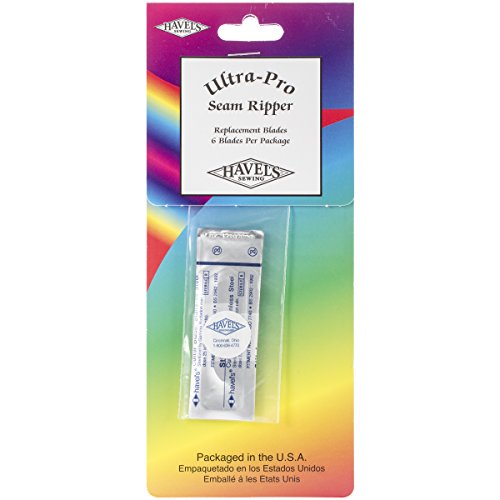
The Havel’s Ultra-Pro integrates a dual-safety lock system, providing a secondary layer of protection that appeals to those who prioritize fail-safe mechanisms. This ensures that the blade remains locked in either the “open” or “closed” position until intentionally shifted.
For studios where curious pets or young children might be present, the added security of a positive lock is indispensable. It removes the possibility of the guard failing if the cutter is bumped or dropped on a hard surface.
The blade stability is exceptional, preventing the wobbling often associated with cheaper plastic casings. This rigidity translates to straighter edges on quilt blocks and more uniform cuts, mirroring the importance of consistent stitch regularity in fine lace knitting.
TrueCut My Comfort Cutter: Guide Rail Safety Champ

The TrueCut My Comfort Cutter is designed specifically to work in tandem with a proprietary guide rail system. This partnership essentially eliminates the risk of the cutter drifting away from the ruler and onto the fingers.
By locking the cutter into a track, the user is physically prevented from veering off-course. This is a game-changer for cutting bias strips or long borders where maintaining a straight line is as critical as keeping a consistent stitch count across a pattern repeat.
The handle is designed for comfort, but the real safety benefit is the mechanical alignment. It removes the variable of human error, making it a highly recommended choice for beginners who have not yet developed the muscle memory required for free-hand rotary cutting.
Olfa Splash Cutter: Best Budget Manual Guard
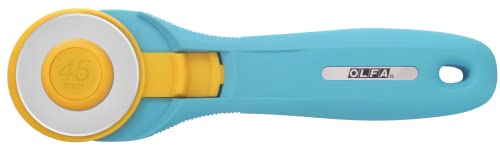
The Olfa Splash offers a reliable manual guard system that is both simple and highly effective. Unlike auto-retract models, this requires the user to manually flip the safety switch, a habit that, once mastered, becomes as reflexive as checking gauge before a project.
The simplicity of the design means there are fewer internal springs or triggers to break. It is an excellent “workhorse” tool that performs consistently over many years, proving that high-tech features are not always necessary for high-level safety.
While it lacks the auto-retract feature, the sturdy guard provides a definitive physical barrier. It is ideal for those who prefer total control over their blade exposure and want a lightweight, portable option for sewing retreats or classes.
Squeeze Handle vs. Manual Guard: Which Is Safer?
Squeeze-handle cutters offer “active” safety by retracting the blade immediately upon release. These are superior for users prone to distractions or those who frequently set their tools down. They essentially act as a failsafe for the forgetful mind.
Manual guard cutters, conversely, require “active” engagement from the user. While they rely more on habit, they often allow for more nuanced pressure and blade control during intricate cuts. Some makers find that manual guards feel more stable during long sessions.
Ultimately, safety is determined by the consistency of habit. A squeeze handle is safer for the novice, while a manual guard is often preferred by the experienced user who has developed the muscle memory to safely manipulate the tool as part of their routine.
Key Safety Rules for Using Any Rotary Cutter
- Always cut away from your body: Never pull the blade toward your fingers, regardless of the safety features.
- Use a sharp blade: Dull blades require more pressure, which leads to slipping and loss of control.
- Respect the ruler: Ensure your cutting ruler has a non-slip backing, and keep fingers well behind the edge.
- Store in the locked position: Always return the guard to the locked state immediately after the cut is finished.
- Clear the workspace: Remove loose threads, pins, and yarn scraps that could cause the ruler or cutter to catch.
How to Change a Rotary Cutter Blade Without Injury
A dull blade is a dangerous blade, so changing them regularly is a mandatory safety practice. When changing the blade, always wear a protective glove or use a magnetic pickup tool to handle the sharp edge.
Never use your bare fingers to align the center screw or the blade nut. Many modern cutters come with a blade changing tool; if yours does not, a small pair of needle-nose pliers works perfectly to grasp the edge safely.
Ensure the washer is seated correctly before tightening the screw. A loose blade can wobble during use, which is a significant hazard, so double-check the tightness before returning to your fabric.
Why a Sharp Blade Is Actually a Safer Blade
Many makers hold onto old blades too long, attempting to sharpen them or simply pushing harder to compensate for the dullness. This is counterproductive; the extra force required significantly increases the risk of the cutter jumping off the ruler.
A fresh blade glides through layers of fabric with minimal resistance. This requires almost zero downward force, allowing for a light, controlled touch that is much safer for the user and cleaner for the fabric edge.
Think of it like using a dull pair of knitting needles or a blunt yarn needle; you end up wrestling with the project rather than letting the tool do the work. Keeping your blades sharp is the most effective safety guard of all, as it promotes fluid, effortless movement.
Selecting the right rotary cutter is an investment in both the quality of your finished textile projects and the long-term health of your hands. By pairing the appropriate safety mechanism with your individual comfort needs, you ensure that your creative process remains as safe as it is productive.