
6 Best Workbench Mats For Delicate Jewelry Work
Protect your delicate pieces with these 6 best workbench mats for jewelry work. Browse our top picks to find the perfect surface for your professional studio today.
Working with delicate jewelry components requires the same precision as managing fine lace weight yarn on stainless steel needles. A slip of the hand when handling tiny seed beads or jump rings can be just as frustrating as losing a stitch in a complex colorwork chart. Choosing the right workbench mat creates a controlled environment that keeps small parts secure and your focus sharp. This selection of tools will help ensure that your intricate jewelry projects remain orderly and manageable from start to finish.
Beadalon Beading Mat: The Best for Beadwork


The Beadalon beading mat is the gold standard for anyone who has ever spent hours hunting for a dropped bead across a hardwood floor. Its soft, velvet-like surface provides just enough friction to keep beads from rolling away while remaining gentle on delicate components.
Think of this like the perfect blocking surface for lace: it provides a stable, forgiving foundation that holds the tension of the work without distorting the shape. The fabric backing prevents the mat from sliding on your desk, keeping your layout intact throughout a long session.
It is ideal for stringing projects or complex bead-weaving where you need to organize components in specific clusters. Avoid using it for heavy hammering or cutting, as the fabric will quickly fray or trap metal shards.
Eurotool Self-Healing Mat: Top Pick for Cutting
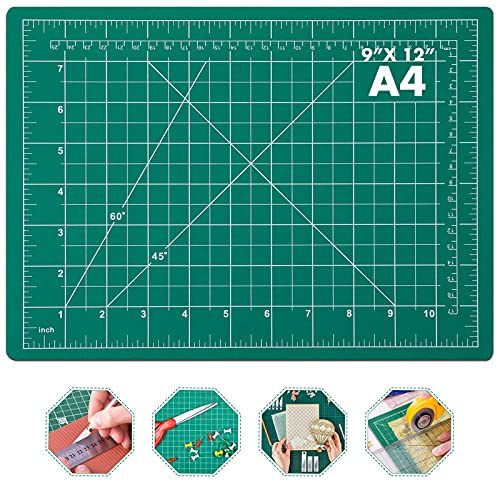
When your jewelry work involves heavy metal wire or repeated cutting, a standard fabric mat will fail within hours. The Eurotool self-healing mat is engineered with a dense, layered polymer that absorbs the pressure of your blade or wire cutters.
This material acts like a high-quality cutting board, preventing your tools from dulling against a hard surface. Much like selecting a sturdy bamboo needle to prevent yarn splitting, choosing this mat protects your equipment investment and ensures clean, precise cuts.
Use this when you are sizing silver or copper wire for intricate wrapping. It provides a firm, reliable surface that resists gouging even under significant hand pressure.
Aain Rubber Bench Block: For Stamping & Forming

A rubber bench block is essential for those who move beyond stringing into metal forming, stamping, or hardening wire. Unlike a soft mat, this block absorbs the shock of your mallet, protecting your workbench and quieting the noise of the work.
This is the equivalent of using a soft-grip needle to reduce hand fatigue during a massive sweater project. The rubber base provides enough grip to keep your metal from skating away under the hammer, which is critical when you need to maintain alignment during a stamp impression.
Always place this on a solid, heavy table to ensure the shock absorption is effective. It is not suitable for delicate bead sorting, as the textured surface will trap small parts in the pores.
The Beadsmith Sticky Mat: Stops Rolling Parts

Small, round components like jump rings and beads have a tendency to migrate to the edge of the table as if they have a life of their own. The Beadsmith sticky mat uses a specialized silicone-like surface that grips parts securely without leaving a residue.
Consider the physics of different needle materials: just as a slick nickel needle is perfect for fast knitting but terrible for slippery silk yarn, a smooth mat is useless for round metal parts. This mat holds components in place even if you accidentally bump the table.
It is particularly effective for multi-step projects where you need to hold several findings ready for assembly. Keep a small piece of tape handy to clean the surface regularly, as dust will eventually make the mat lose its grip.
Vigor Jeweler’s Rubber Mat: Best Overall Value
For a versatile, all-purpose surface that handles both assembly and light bench work, the Vigor rubber mat is an excellent balance of cost and utility. It offers enough grip to keep parts stable but is firm enough to allow for precise alignment of wire and cord.
It functions as the “circular needle” of the jewelry world: it works for almost everything reasonably well. Whether you are using pliers for a delicate loop or laying out a design, the surface provides a professional, clean look that reduces glare.
It is durable enough to withstand years of use without degrading or becoming brittle. If you are starting your first jewelry kit and can only buy one surface, prioritize this type of heavy-duty rubber mat.
Bench Pin and Mat Combo: The Integrated Solution
A bench pin provides the necessary leverage for filing, sawing, and drilling, acting as a mechanical aid similar to using a yarn guide for stranded colorwork. Combining this with a dedicated mat creates an ergonomic workstation that prevents repetitive strain.
Proper posture during jewelry work is just as vital as ergonomic support during a knitting marathon. Having the pin integrated with a mat ensures that when you file metal, the dust and small shavings are caught before they reach your floor.
Select a model that clamps securely to your table edge. A wobbly bench pin is a hazard that can lead to bent wire and ruined projects, just like a loose circular needle cable can lead to dropped stitches.
Choosing a Mat: Material, Size, and Purpose
Your choice of mat must reflect the intensity of your work. If your focus is primarily delicate stringing, prioritize fabric mats that protect soft crystals and beads. If you are a wire-worker, gravitate toward dense rubber or self-healing polymers.
Consider the footprint of your workspace. A large mat is wonderful for spreading out a massive project, but it can be overwhelming in a cramped corner. Ensure the mat material matches the task: * Fabric/Velvet: Best for pearls, seed beads, and soft gemstones. * Rubber/Silicone: Essential for wire work, metal parts, and non-slip needs. * Self-healing Plastic: Mandatory for cutting, sawing, and sharp-tool precision.
Ultimately, your mat should be a tool that fades into the background, allowing you to focus entirely on the jewelry at hand.
Rubber vs. Fabric Mats: Which Surface Is Best?
Fabric mats are inherently better at preventing damage to sensitive components like pearls or polished stones. They offer a soft “cushion” that prevents these materials from scratching, mirroring how one might use a soft cotton towel to block a delicate mohair item.
Rubber mats excel at organization and friction. They hold metal tools and findings in place, preventing the “bouncing” effect that happens when a jump ring hits a hard surface.
The tradeoff is primarily about surface maintenance. Fabric mats attract hair and dust, requiring regular lint rolling, while rubber mats simply need a damp cloth wipe-down.
Keeping Your Workspace Tidy: Mat Maintenance Tips
A clean mat is the difference between a project finished in an evening and one lost to frustration. Just as you keep your knitting needles clean to prevent fiber snagging, keep your mat free of oils and debris.
For rubber mats, use mild dish soap and warm water to restore tackiness. For fabric mats, use a dedicated adhesive lint roller—avoid using heavy-duty vacuum cleaners that might pull the fibers loose.
Store your mats flat whenever possible. Folding or rolling them can create permanent creases that will create uneven surfaces, making it nearly impossible to keep your beads in a straight, manageable line.
Self-Healing vs. Non-Slip: Which Mat You Need
Self-healing mats are designed to withstand the “trauma” of cutting, whereas non-slip mats are designed to facilitate “stillness.” Understand that no mat does both perfectly.
If you find yourself frequently switching between cutting wire and assembling components, it is more efficient to layer your workspace. Use a non-slip pad as the base and place a smaller cutting mat on top only when the blade is out.
Identify your primary pain point: if components are constantly sliding away, choose a high-tack silicone mat. If your cutting is inaccurate because the material shifts, upgrade to a professional self-healing surface.
Selecting the right workbench surface is a foundational step in refining your jewelry craft. By matching your mat to the specific demands of your materials and techniques, you eliminate unnecessary friction and allow your creative process to flow more smoothly. Take the time to evaluate your most frequent tasks, and your workstation will become a dependable partner in your next project.
