6 Best Lighting Clips For Portable Craft Lamps To Use
Upgrade your workspace with our top 6 lighting clips for portable craft lamps. Discover the perfect attachments to improve your focus and precision—read now.
Failing to see your stitches clearly can turn a relaxing evening of lace knitting into a frustrating exercise in eye strain. Proper illumination is just as essential as choosing the right needle size or fiber type for your pattern. A high-quality portable light bridges the gap between dim living room lighting and the precision required for complex cables or dark-colored yarns. These six lighting solutions ensure that every stitch remains visible, regardless of the time of day or the environment.
Glocusent LED Neck Light: Best Hands-Free Pick


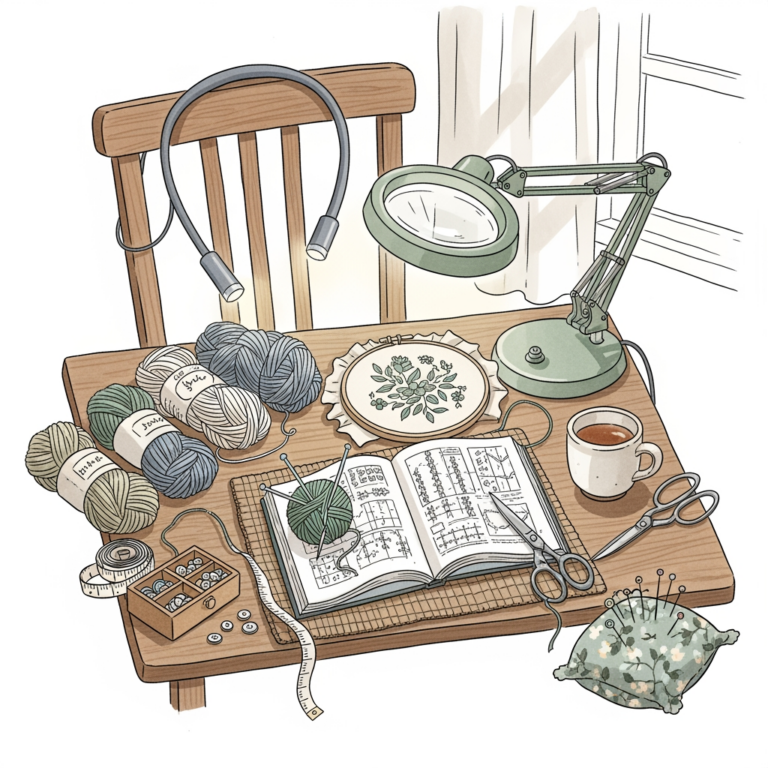
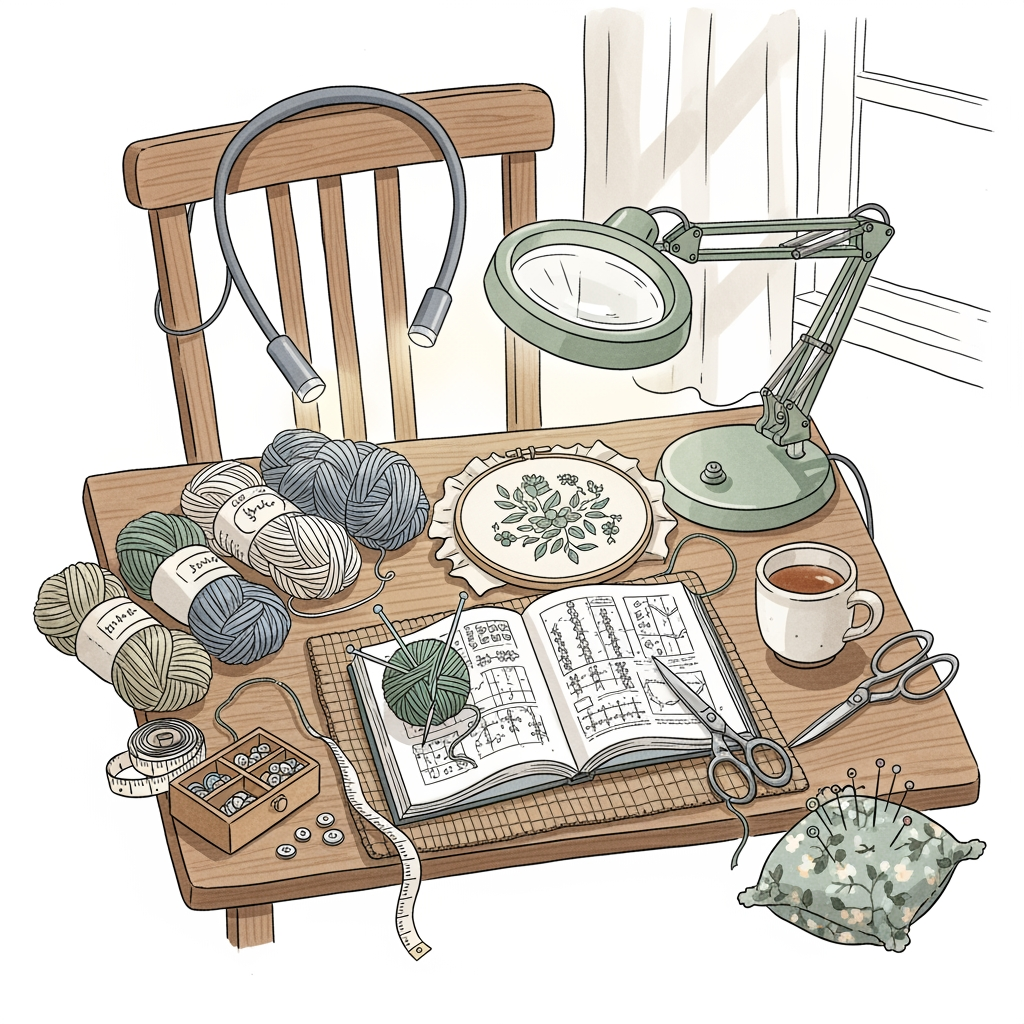
The neck light design offers an ergonomic solution that moves with the body, ensuring the light source remains centered on the needles. This is particularly beneficial when knitting in a recliner or moving between different seating areas.
Because the arms are flexible, you can angle the beams to hit the needles from two different directions. This effectively minimizes the shadows that often obscure stitches when using a single overhead floor lamp.
The Bottom Line: If you prefer to change positions while knitting, this light provides the most consistent, shadow-free illumination without needing to clip onto a fragile project or a small table.
Vekkia Rechargeable Clip-On: Most Versatile

Versatility in crafting often comes down to the strength of the clamping mechanism and the flexibility of the neck. This clip-on model handles various surfaces, from thick wooden coffee tables to the edges of yarn bowls or project bags.
The rechargeable feature eliminates the need for constant battery replacements, which is a significant advantage for long-term projects like heirloom blankets. It provides steady, reliable light that does not flicker or dim prematurely during a marathon knitting session.
The Bottom Line: For crafters who rotate between different workstations, this unit provides the necessary stability to stay exactly where it is placed for hours at a time.
OttLite LED Clip Light: Best for True Color
Color accuracy is non-negotiable when working with hand-dyed yarns or complex stranded colorwork. Standard LED lights can sometimes cast a blue or yellow tint, making it difficult to differentiate between similar shades in a palette.
The OttLite technology is specifically engineered to mimic natural daylight. This allows for precise color matching, which is vital when verifying that your contrast colors are distinct enough to show the pattern design clearly.
The Bottom Line: If color fidelity is the highest priority for your current project, this is the definitive choice for preventing mistakes caused by poor color perception.
Daylight Company UNO Lamp: Premium Clip-On
A premium clip-on lamp offers a level of build quality and brightness that entry-level models often lack. The housing is designed to remain cool to the touch, which is a major safety factor when working with delicate fibers like alpaca or mohair.
The optics are designed to focus the beam directly onto the hands, reducing glare and peripheral light scatter. This keeps the eyes focused on the work, which significantly delays the onset of fatigue during intricate stitch work.
The Bottom Line: Investing in a premium model ensures a longer lifespan and better light distribution, making it a wise choice for the dedicated, everyday crafter.
LuminoLite Rechargeable Light: Top Budget Pick

Budget-friendly options do not have to compromise on the essential requirement of brightness. This model provides an impressive output for its price point, making it accessible for knitters who are just starting their tool collection.
While the build may be lighter weight, the functionality is straightforward and effective. It offers enough battery life for a few long sessions of evening knitting, which is sufficient for most hobbyists.
The Bottom Line: For those starting out or looking for a reliable backup light, this delivers high performance without an unnecessary premium price tag.
CeSunlight Book Light: Best for Small Projects

Small, lightweight lights are ideal for intricate, delicate work where bulky equipment might get in the way. If you are knitting socks on 2.25mm needles, you need a light that won’t overwhelm your workspace.
The design is compact enough to clip onto a small accessory bag or even a stiff pattern board. It provides a concentrated beam that illuminates just the needles and the yarn in the immediate vicinity.
The Bottom Line: This is the perfect companion for commuters or travel knitters who need a compact solution that fits easily into a project bag.
Choosing Your Best Craft Light: Key Features
When selecting a light, consider how the clamp interacts with your furniture. A wide, rubberized grip is safer for delicate furniture finishes and provides a more secure hold on thin edges.
Brightness levels should be adjustable, as knitting dark navy or black yarn requires significantly more light than working with a light-colored, bulky wool. Look for a light that offers multiple color temperature settings—cool white for detail work and warmer light for general comfort.
- Adjustability: Does the neck bend far enough to reach your hands comfortably?
- Battery Life: Will it last through a long evening of knitting without needing a charge?
- Portability: Is the base heavy, or is it lightweight enough for travel?
Kelvin & Lumens: What Knitters Need to Know
Lumens measure the brightness of the light, while Kelvin measures the color temperature. For knitting, a lumen count between 300 and 500 is generally ideal for close-up needlework.
Color temperature is equally important for avoiding eye strain. A setting around 4000K to 5000K provides a crisp, daylight-like illumination that highlights stitch definition without being harsh or blue.
Pro-Tip: If your eyes feel tired after 30 minutes, try lowering the Kelvin setting to a warmer yellow tone, as high-intensity blue light can be fatiguing over extended periods.
Where to Clip Your Light for Best Visibility
For the most effective illumination, clip your light to the side of your workspace rather than directly in front of your face. This placement creates a cross-lighting effect that highlights the texture of the yarn and the depth of the stitches.
If you are working with a dark, low-twist yarn, clipping the light closer to the needles will help you see the individual plies and catch any potential dropped stitches. Always aim the light to shine across the needles, not directly into your eyes or reflecting off the metal surface of the needles.
Caring For Your Rechargeable Crafting Light
Rechargeable batteries perform best when they are not left to drain completely before being plugged in. Make it a habit to charge your lamp at the end of every week, ensuring it is ready for the next project session.
Avoid cleaning the lamp housing with harsh chemicals, as these can degrade the rubberized grips on the clip. A simple, slightly damp microfiber cloth is usually sufficient to remove yarn dust or lint that accumulates during heavy usage.
Maintenance Note: Keep the light away from direct heat sources to preserve the battery lifespan and ensure the housing remains stable and secure during use.
Lighting is the unsung hero of a productive and enjoyable knitting practice. Whether choosing a hands-free neck light or a precision clip-on lamp, prioritizing quality illumination will directly improve your stitch consistency and protect your eyes during your most ambitious projects. Proper lighting turns every challenging project into a smooth, successful creative experience.