6 Best Precision Craft Knives For Cutting Craft Sticks
Need the perfect cut? Discover the 6 best precision craft knives for cutting craft sticks and elevate your next DIY project. Read our expert guide to buy yours.
Precision cutting is often required when creating custom structures for yarn storage, rigid tapestry looms, or structural supports for complex fiber displays. While knitting needles are the primary tool, a reliable precision knife acts as the essential assistant for modifying wooden craft sticks to fit specific gauge swatches or loom frames. Choosing the right blade ensures clean edges that won’t snag delicate silk or high-twist wool yarns. The following list identifies tools that offer the control and durability necessary for precision crafting.
X-ACTO #1 Precision Knife: The Classic Choice


The X-ACTO #1 is the industry standard for a reason, offering a lightweight aluminum body that mimics the feel of a slim crochet hook. Its familiar balance makes it a natural transition for those accustomed to handling fine-gauge needles during intricate lacework.
The slim profile allows for high-visibility cutting, ensuring that lines remain perfectly straight when sizing wooden supports for circular looms. Because the blade locking mechanism is robust, it prevents the wiggling often associated with cheaper, molded plastic handles.
For crafters who spend hours on detailed preparation work, the tactile feedback of the metal handle is superior to rubberized grips. It provides a direct connection between hand and material, much like the difference between wooden and metal knitting needles.
Fiskars Fingertip Knife: The Ultimate Control

The Fiskars Fingertip Knife features a unique design that places the blade directly under the fingertip, effectively turning the index finger into the cutting point. This ergonomic approach reduces wrist fatigue significantly during long sessions of cutting multiple sticks for frame construction.
The control offered by this design is unparalleled for intricate notches or shallow decorative carvings on wooden yarn guides. It encourages a natural, fluid movement that mimics the steady, rhythmic motion of knitting, keeping the hand relaxed and stable.
However, the specialized grip can take time to master, particularly for those used to holding traditional tools. It is an excellent choice for crafters who prioritize comfort and precision over the ability to apply heavy, downward pressure.
OLFA AK-4 Art Knife: The Pro-Grade Option

The OLFA AK-4 is designed for heavy-duty precision, featuring a cushioned grip that helps prevent hand cramping. Its rubberized surface offers a level of stability similar to the matte finish on certain high-end interchangeable needle sets, ensuring no slippage during high-tension cuts.
What sets this knife apart is the counterweight built into the handle, which stabilizes the tool during delicate maneuvers. This is particularly useful when trimming down dense, seasoned craft sticks that require a bit more force to sever cleanly.
The blade change system is quick and secure, allowing for a seamless transition between different blade shapes. For crafters who value professional-grade equipment that lasts for years, this is a top-tier investment.
Excel Blades K1 Knife: A Durable Workhorse
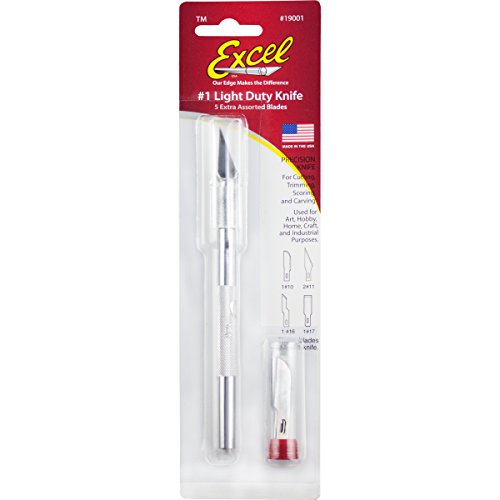
The Excel Blades K1 is a rugged alternative that emphasizes durability and a firm, non-slip grip. Constructed with a heavy-duty aluminum handle, it remains steady even when under pressure, preventing the lateral wobbling that can ruin a precision cut.
This tool is ideal for larger projects where repetitive cutting of materials is required, such as building a batch of custom loom tools or spindle racks. It handles tough, dense woods easily, maintaining its structural integrity without bending or snapping.
The compatibility with a wide array of aftermarket blades makes it a versatile addition to any craft room. If your project involves working with both craft sticks and heavier cardboard or mat board, this knife is a dependable workhorse.
Cricut TrueControl Knife: Unbeatable Safety
The Cricut TrueControl Knife addresses the primary concern of every crafter: accidental injury. Featuring a locking blade system and an intuitive release mechanism, it ensures that blades are only exposed when actively needed.
The grip is designed to fit naturally in the hand, providing comfort for those who struggle with fine motor fatigue. The design prevents the blade from rolling off the table when set down, which is a frequent cause of stray nicks.
While the design is focused on safety, it does not sacrifice performance. The blade sharpness is maintained through a high-quality steel construction that glides through wood with minimal resistance.
WORKPRO Knife Set: Best Value for Versatility
The WORKPRO set provides an entire suite of blades and handles at an accessible price point, making it the best value for those just starting to build their toolkit. Having multiple handle shapes allows the crafter to select the grip best suited to the task at hand.
Different angles and blade thicknesses come included, which is invaluable when switching between rough trimming and fine-detail notches. It functions much like having a full range of needle sizes and shapes on hand, ensuring the right tool for every fiber project requirement.
While not as specialized as professional-grade individual knives, this set offers sufficient quality for most general craft needs. It is the perfect entry point for those needing versatility without breaking the budget.
Choosing Your Knife: Handle, Grip, and Blade
Selecting a knife requires considering the physical demands of your crafting habits. If you have any history of repetitive strain or arthritis, prioritize ergonomic, cushioned grips that distribute pressure across the palm rather than just the fingers.
- Handle Material: Metal provides durability and balance; rubberized grips provide comfort.
- Weight: A heavier handle adds stability but can cause fatigue; light handles offer better agility.
- Blade Attachment: Always opt for a screw-tightened or high-tension lock for maximum safety.
Look for handles that match your natural grip strength. If you hold your needles with a “pencil” grip, a slim knife handle will feel more intuitive and natural in your hand.
Safety First: Cutting Sticks Without an Accident
Never treat a craft knife as a casual tool; respect its edge as you would a pair of sharp, high-carbon steel shears. Always cut away from the body, keeping fingers well behind the blade path.
When trimming wooden sticks, use a non-slip cutting mat to stabilize the material. If the wood slips, the blade will follow; a secured surface is the best insurance against slips.
- Clear the workspace: Remove loose yarn, fibers, and patterns before starting.
- Use a straight edge: A metal ruler provides a guard between the blade and your fingers.
- Patience is safety: If the wood is too hard, don’t force the cut. Make multiple shallow passes to reduce resistance.
Technique: How to Get a Perfectly Clean Cut
Achieving a clean cut on a craft stick requires multiple light, controlled passes rather than one heavy, aggressive stroke. Think of this like knitting a complex pattern: focus on accuracy and consistency rather than speed.
Begin by scoring the surface of the wood deeply with the tip of the blade. Continue tracing that score line with successive passes until the wood separates cleanly.
Applying too much pressure at once often leads to crushed fibers or splintered edges, which can catch on your yarn. A clean, smooth cut requires only the edge of the blade to do the work; let the sharpness of the steel dictate the progress.
Know Your Blades: Types and When to Change Them
Blades are consumables, much like the point of a needle can become blunted over time. A dull blade is dangerous because it requires more force to cut, increasing the likelihood of slipping and injury.
- Standard pointed blades: Best for general cutting and initial scoring.
- Chisel blades: Ideal for carving out notches or cleaning up corners.
- Curved blades: Useful for shaping wood for rounded edges or ergonomic yarn guides.
If the blade begins to drag, tear, or leave jagged edges on the wood, it is time for a change. Replacing a blade is a small price to pay for the safety and precision of your craft.
Equipping your workspace with the right precision knife transforms the way you approach structural crafting tasks. By selecting a tool that balances your physical needs with the requirements of the materials, you ensure that every support, loom, or tool you build is as refined as the stitches you create.