6 Best Reference Stands For Hands-Free Rulebook Sewing
Struggling with bulky patterns? Discover the 6 best reference stands for hands-free rulebook sewing to streamline your project. Shop our top picks and sew easier.
Struggling to hold a pattern book open while juggling circular needles and a tangled yarn cake often leads to dropped stitches and lost focus. A dedicated reference stand transforms the workspace, keeping instructions at eye level to reduce neck strain during marathon knitting sessions. Finding the right stand is just as critical as choosing the correct needle material for a specific fiber. The following guide explores the best tools to keep charts and patterns perfectly positioned for an effortless knitting flow.
Reodoeer Reading Stand: The Sturdy Workhorse


The Reodoeer stand earns its reputation as a workhorse by handling heavy, hardbound technique encyclopedias with total stability. Its all-metal construction provides the necessary heft to keep thick books from tipping over when turned to a heavy page.
For those tackling complex stranded colorwork or large-scale aran sweaters, stability is non-negotiable. The adjustable arms hold pages flat, ensuring the chart remains visible even when the book is weighed down by its own binding.
The bottom line is simple: if the knitting reference library consists of heavy, coffee-table style books, this stand provides the necessary backbone. It is built to survive years of use in a busy studio environment.
Sun-E Bamboo Book Stand: For the Stylish Studio
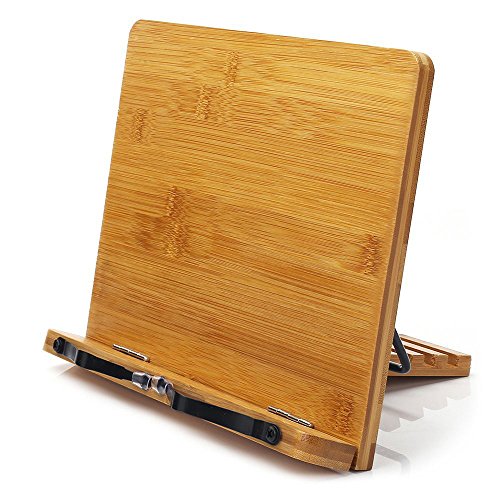
Bamboo stands offer a natural aesthetic that complements the tactile, organic nature of wool and alpaca fibers. The Sun-E stand features a smooth, polished finish that prevents delicate pattern pages from catching or tearing.
Beyond the visual appeal, bamboo is remarkably lightweight yet durable. It functions perfectly for knitters who rotate their projects between a dedicated studio and a cozy living room chair, as it moves easily without scratching tabletops.
Choose this option if the knitting space prioritizes a calm, cohesive environment. While it may not handle the heaviest hardcovers with the same grip as steel, it is more than sufficient for standard-sized pattern booklets and knitting magazines.
BestBookStand Actto: The Portable Pattern Pal
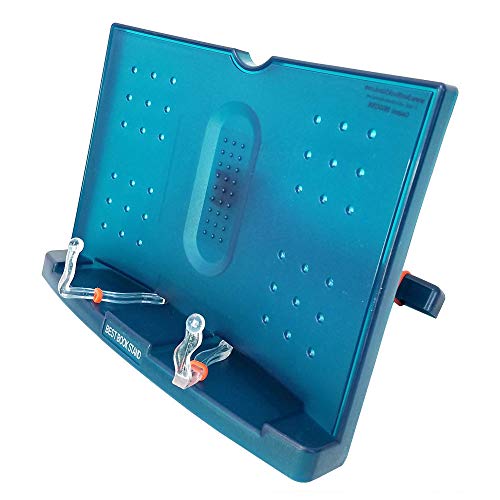
The Actto stand is a favorite for knitters who travel to workshops or knitting retreats. Its folding design makes it slim enough to slide into a project bag alongside a set of interchangeable needles and a small notions kit.
The unique feature here is the independent page-holding clips. These allow for precise adjustment, ensuring that a single sheet of paper or a laminated chart remains perfectly flat without obstructing the view of the row currently in progress.
If portability is the primary goal, this stand is the definitive choice. It sacrifices a small amount of overall weight for immense versatility and ease of transport.
A+ Book Stand BS2500: For Oversized Atlases
Sometimes, technical knitting manuals come in non-standard, oversized formats that smaller stands simply cannot support. The A+ Book Stand BS2500 features extended support arms and a deeper ledge designed to accommodate large, wide-format reference books.
This stand is particularly useful when working from a master collection of lace patterns. The wide base ensures that even when a book is splayed open to its center, the binding remains supported and the pages stay stationary.
Invest in this model if large-format resources are a staple of the craft. It provides the surface area necessary to avoid constant page flipping and resetting.
Clear Acrylic Book Stand: The Modern Minimalist
Clear acrylic stands offer an unobstructed view of the workspace, blending seamlessly into any decor. This design choice is ideal for those who prefer their focus to remain entirely on the yarn, needles, and stitches.
The transparent material is easy to wipe clean, which is a significant advantage when working with messy fibers or near tea and coffee. It provides a sleek, professional look that minimizes visual clutter on a crowded desk.
Consider this stand for its low-profile aesthetic and ease of maintenance. It is a reliable, unobtrusive assistant that keeps the focus exactly where it belongs: on the pattern.
AmazonBasics Metal Book Stand: Best Budget Pick
The AmazonBasics metal stand is a classic for a reason—it is functional, inexpensive, and incredibly effective at keeping pattern sheets upright. It handles everything from thin pamphlets to medium-weight softcover books with ease.
While it lacks the heavy-duty springs of more expensive models, its simple wire frame is sufficient for most standard knitting patterns. The tension is easily adjustable by slightly bending the frame, allowing for a custom fit for different thicknesses.
For the knitter who prefers to spend the budget on high-quality wool rather than accessories, this is the most practical choice. It performs the essential task without unnecessary complexity or cost.
How to Choose the Right Stand for Your Craft
When selecting a stand, consider the weight and format of the books most frequently used. A knitter working exclusively from single-sheet digital printouts requires a different level of grip than one consulting a 500-page knitting dictionary.
Take note of the desk surface as well. Stands with rubber feet prevent sliding on polished wood, which is vital when navigating delicate lace charts where a sudden slip can cause a missed yarn-over.
- Sheet count: Does it need to hold a single page or a thick volume?
- Space: Is the footprint small enough for a cluttered knitting corner?
- Adjustability: Can the angle be changed to avoid overhead light reflection?
Metal vs. Wood vs. Plastic: Which is Best?
Material selection influences both longevity and interaction with the workspace. Metal stands are generally the most stable and durable, making them the superior choice for heavy reference books.
Wood stands offer a warm aesthetic and are often sturdier than plastic, though they can be bulkier to store. Plastic or acrylic options are best for those who prioritize portability and a lightweight design.
The choice often comes down to the environment. If the knitting area is prone to spills, stick with metal or acrylic, as wood can warp or stain over time.
Taming Spiral-Bound vs. Thick Hardcover Books
Spiral-bound books are notoriously difficult to keep open, as the rings often fight against the page-holding clips. Look for stands with widely spaced, adjustable clips that can grip the paper without getting caught in the spiral binding.
Thick hardcovers require a deep bottom ledge to prevent the book from sliding forward under its own weight. A stand with a wide, angled base will provide the necessary support to keep the pages from “springing” closed mid-row.
Always ensure the stand is set at an angle that aligns with the natural line of sight when seated. This reduces the urge to lean forward, preventing the back and shoulder tension that often accompanies long knitting hours.
Preventing Glare on Laminated Pattern Pages
Laminated charts are excellent for tracking progress with dry-erase markers, but they are prone to distracting glare under direct lighting. To mitigate this, choose a stand that allows for precise vertical and horizontal tilting.
Adjusting the angle by even a few degrees can redirect light away from the eyes. If glare persists, position the stand slightly to the left or right of the primary light source rather than directly beneath it.
Alternatively, consider using a matte-finish spray or protective sleeve if the glare remains problematic. Proper positioning is the first line of defense in maintaining eye comfort during long, intricate knitting projects.
Finding the right support tool turns a frustrating struggle into a seamless craft, ensuring that every stitch remains precise and every row count stays accurate. With the perfect stand as a companion, the focus remains exactly where it should be—on the rhythm of the needles and the beauty of the growing fabric. Happy knitting.