6 Best Acid Free Pens For Labeling Projects
Keep your scrapbooks and journals archival-safe with our top picks. Discover the 6 best acid free pens for labeling projects and shop your favorite style today.
Labeling fiber arts projects is often an afterthought, yet it remains the most critical step in preserving the legacy of handmade work. Whether tagging a hand-spun skein or marking a care instruction ribbon for a delicate lace shawl, the wrong pen can migrate through fibers and ruin months of effort. Archival-quality, acid-free pens prevent these chemical disasters, ensuring ink stays put without degrading the yarn. Selecting the right tool requires matching ink chemistry to the specific fiber content of the finished object.
Sakura Pigma Micron: The Overall Best Choice
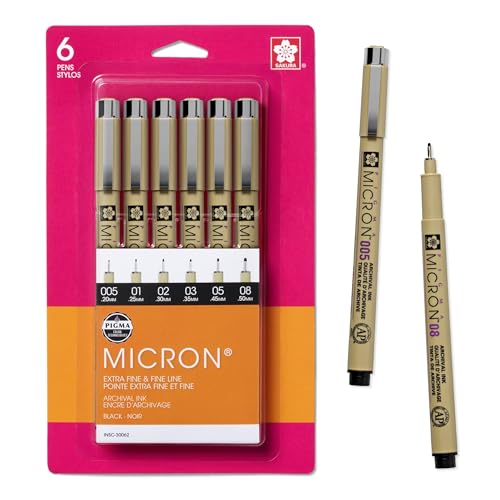

The Sakura Pigma Micron stands as the gold standard for fiber artists due to its consistent, archival-quality pigment ink. This pen delivers a skip-free line that resists fading and, crucially, does not bleed into natural fibers like wool or cotton.
Because it comes in various tip sizes, it works equally well for signing a small fabric quilt label or writing detailed care instructions on a narrow ribbon. The ink settles quickly into the weave, providing a crisp, legible mark that remains clear even after the item undergoes repeated blocking or washing.
The primary tradeoff involves the delicate nature of the felt tip. If pressed too hard against a textured or fuzzy surface, the nib can fray, resulting in a blurred line. Always use a gentle touch, allowing the pigment to flow naturally into the fiber structure.
Sharpie Archival Marker: Best for Bold Labels

When the goal is high-contrast, permanent labeling on heavy-duty projects, the Sharpie Archival Marker delivers unparalleled boldness. This marker provides a deeper saturation than fine-liner options, making it the preferred choice for thicker fabric labels or canvas project bags.
The ink is specifically formulated to be non-toxic and acid-free, which keeps the fibers of the item safe from chemical breakdown over time. It creates a robust mark that holds up against the friction of frequent handling or storage.
However, note that the broader tip is less suited for intricate script on small labels. If the writing surface is small, like a tiny loop of silk ribbon, the ink may pool or spread slightly compared to a finer tip. Reserve this marker for labels where legibility from a distance is the priority.
Identi-Pen by Sakura: Most Versatile Marker
The Identi-Pen is a dual-purpose tool featuring a fine plastic tip on one end and a sturdy fiber tip on the other. This versatility allows for both precise notation and bold signatures within the same labeling project.
Because it is designed to write on surfaces ranging from glass and metal to fabric, the ink formulation is exceptionally durable. It adheres well to synthetic ribbons and cotton labels, resisting the moisture that often occurs during the wet-blocking process.
The tradeoff for this durability is a slightly higher risk of bleed-through on very thin or porous fabrics. Always place a scrap piece of cardboard or plastic underneath the label while writing to ensure the ink does not transfer to the work underneath.
Zig Photo Signature Pen: Best Dual-Tip Option
The Zig Photo Signature Pen is a staple for those who prioritize safety when marking items stored alongside delicate heirlooms. The dual-tip configuration offers a bullet point on one side and a finer tip on the other, providing excellent flexibility.
The ink is pigment-based, meaning it sits on top of the fibers rather than soaking deep into them like a dye. This characteristic is vital for knitters worried about ink migration or staining surrounding stitches.
It is particularly effective on smooth, non-porous ribbon surfaces often used for project identification. Keep in mind that the ink requires a few seconds to set completely, so avoid touching the label immediately after writing to prevent smudging.
Faber-Castell Pitt Artist Pen: Top Premium Pick
For those who treat their fiber arts as fine art, the Faber-Castell Pitt Artist Pen offers superior color saturation and a sophisticated, brush-like flow. These pens are highly pigmented and use high-quality lightfast inks that do not fade over years of storage.
The brush tip variant allows for elegant, calligraphy-style labels, which can add a professional and personal touch to gifted knitwear. The ink is waterproof and permanent once dry, meaning it will not run even if the labeled item is exposed to humidity.
These pens represent a higher investment, so they are best reserved for special heirloom pieces. Handle the brush tips with care; they are prone to deformation if stored improperly or pressed against rough, unspun fiber.
Uni-ball Signo 207: Best Budget-Friendly Pick
The Uni-ball Signo 207 is a reliable gel pen that utilizes acid-free, fade-resistant ink. It offers an incredibly smooth writing experience, making it perfect for quick notes on fabric labels attached to daily-wear items like socks or hats.
Because it is a gel pen, the ink is opaque and stands out well against lighter-colored fabric tags. It is widely accessible and cost-effective, making it an excellent choice for knitters who produce high volumes of items and need a consistent labeling routine.
The main drawback is that gel ink takes longer to dry on non-porous surfaces. Ensure the ink is fully dry before folding or stacking the items to prevent accidental transfer or smearing of the text.
Why “Acid-Free” Matters For Your Knit Projects
Acidic components in low-quality pens will eventually cause the fibers they touch to turn yellow or become brittle. For long-term storage—such as keeping a handmade sweater in a cedar chest for a decade—an acid-free pen is the only way to ensure the label does not damage the yarn.
This is especially critical for natural fibers like wool, mohair, and silk, which are highly sensitive to pH levels. A standard office pen might seem fine today, but the chemical reaction between the ink and the fiber can create a permanent “burn” mark over time.
By sticking exclusively to acid-free pens, the structural integrity of both the label and the garment remains intact. It is a simple, proactive measure that preserves the value of the time and money invested in the project.
Pigment vs. Dye Ink: What Knitters Need to Know
Understanding the difference between pigment and dye ink is essential for preventing ruined projects. Pigment inks consist of fine, solid particles suspended in a liquid, which sit on the surface of the fiber rather than absorbing into the strands.
Dye-based inks are liquid-based and soak into the fibers, which is why they are prone to bleeding, feathering, and fading. When labeling yarn or fabric, always choose pigment-based pens to ensure the mark remains stable and resistant to environmental changes.
If the label is going to touch the yarn directly, pigment ink is the only safe option to avoid permanent staining. Dye ink can migrate if the item gets damp during storage, effectively destroying the yarn’s color and texture at the point of contact.
How to Test a Pen on Your Yarn or Fabric Swatch
Never label a finished project without performing a test on a spare piece of the same material. Use a swatch that has already been through the blocking process, as the way ink interacts with wet-blocked fiber can differ from raw, unwashed fiber.
Apply a small amount of ink to the swatch and allow it to dry completely for at least one hour. After it is dry, dab the area with a slightly damp cloth to see if the pigment lifts, runs, or smudges.
If the ink does not bleed or fade during this stress test, it is safe to use on the final project. This simple step prevents the heartache of discovering a smudged label on a finished heirloom hours after completion.
Caring for Your Labeled and Finished Objects
Even with the best archival pens, how you store your finished objects impacts the longevity of your labels. Keep labeled items in a cool, dry place away from direct sunlight, which can break down ink pigments over time even if they are lightfast.
Avoid wrapping finished pieces tightly in plastic, which can trap moisture and cause the ink to lift or the fibers to mildew. Instead, use breathable cotton or muslin bags to store your work while ensuring the label remains accessible for future identification.
Periodically inspect your stored items, especially those kept for years, to ensure the labels remain legible and the ink has not reacted with the fibers. Treating the label as a functional, long-term part of the garment’s construction ensures that the identity and care instructions of your work survive as long as the knitting itself.
Proper labeling is the final step of a well-executed project, bridging the gap between a simple craft and a lasting heirloom. By choosing the right acid-free pen and testing it thoroughly, you ensure your signature remains as enduring as your stitches. Always prioritize pigment-based inks to keep your fiber work safe, vibrant, and perfectly identified for years to come.