6 Best Sketchbook Holders For Reference Material
Keep your art references organized and accessible with our top 6 picks for the best sketchbook holders. Shop our recommended artist stands and simplify your work.
Keeping your lace charts or stranded colorwork patterns organized is as critical as choosing the right needle material for your yarn. A misplaced row or a lost spot in a complex cable repeat can turn a relaxing evening of knitting into a frantic exercise in reverse-engineering. Selecting the right reference holder transforms a chaotic workspace into a streamlined environment where the focus remains on stitch tension and rhythm. This guide examines the essential tools for keeping patterns visible, secure, and ready for the next repeat.
CocoKnits Knitter’s Block: Best Magnetic System


The CocoKnits Knitter’s Block serves as an industrial-grade solution for knitters working on large-scale modular projects or expansive intarsia charts. Because it utilizes a modular foam board system with heavy-duty magnets, patterns remain perfectly flat and immovable even in drafty spaces.
This system shines when dealing with oversized printouts that would otherwise curl or fall from a flimsy stand. The ability to snap magnets across the entire surface allows for precise alignment, which is vital when mapping complex charts where one off-set stitch ruins the entire motif.
While it requires a flat table surface to function optimally, the structural integrity of this system is unmatched. It is the gold standard for those who treat their knitting area like a professional workspace rather than a portable hobby station.
Knit Picks Chart Keeper: Best Budget-Friendly Pick

The Knit Picks Chart Keeper offers a straightforward, folding design that protects patterns from accidental yarn snags and coffee spills. Its primary advantage lies in the internal magnetic board, which allows for effortless tracking of row-by-row instructions without bulky equipment.
This tool is ideal for knitters who often work on commuting or in cramped seating arrangements. Because it closes like a notebook, it keeps your place perfectly secured during transit, meaning there is no need to re-read the entire chart to find your last stitch after a long break.
The tradeoff is the limited surface area; it is not suited for massive, multi-page schematic spreads. However, for standard sock or sweater charts, its portability and ease of use make it a staple for the essential knitting bag.
The Book Seat: Most Versatile for Any Surface

The Book Seat is a beanbag-style holder that conforms to uneven surfaces, such as deep sofa cushions or bedspreads. It eliminates the need for a desk, making it the premier choice for knitters who prefer working from a comfortable chair or lounging position.
The adjustable design accommodates books of various thicknesses, which is helpful if you are working from a heavy pattern compendium or an inspiration-heavy stitch dictionary. By elevating the book at an adjustable angle, it reduces the neck strain associated with looking down at a flat surface for hours at a time.
Be aware that the soft base requires a bit of balancing on extremely plush surfaces. Nonetheless, it provides a stable viewing platform in environments where traditional stands fail to find purchase.
Lamicall Tablet Stand: Best for Digital Patterns
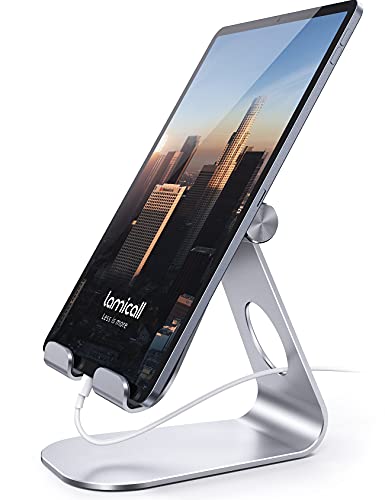
Digital patterns have become the industry standard for their searchability and zoom capabilities. The Lamicall Tablet Stand provides a sturdy, adjustable metal base that securely holds tablets at eye level, ensuring the screen stays upright without slippage.
When working with intricate lace or delicate cabling, the ability to zoom into a screen while it rests on this stand is invaluable. It avoids the awkward glare often found on tablets lying flat on a lap, preserving both visual clarity and posture.
While it lacks a magnetic surface for paper patterns, its weight and rubberized grip make it a reliable partner for tech-forward knitters. Ensure your device has a protective case, as metal-on-metal contact can lead to unwanted surface scratches over time.
Readaeer Bamboo Book Stand: Best for Printed Books

The Readaeer Bamboo Book Stand is a classic tool that brings a sense of permanence and organization to a dedicated knitting desk. Its solid bamboo construction is durable enough to hold heavy hardcover books without wobbling, even during the frantic pace of rapid-fire knitting.
Multiple angle settings allow for precise adjustment, which is necessary when lighting shifts throughout the day. By setting your pattern at the correct tilt, you can minimize glare on the paper and keep your stitch count clearly in view.
It is arguably the most aesthetically pleasing option for those who keep their knitting supplies on display. However, it is not portable; once this stand is set up, it is best treated as a permanent fixture of the crafting area.
Knitter’s Pride Magma: Best for Travel Knitting

The Knitter’s Pride Magma is a specialized chart holder that bridges the gap between a protective case and a functional stand. Its magnetic enclosure keeps loose sheets folded securely, and the internal board acts as a magnetic anchor for your place-keeping magnets.
This is the ultimate tool for the traveling knitter who needs to switch between trains, planes, and project nights with ease. The slim profile fits easily into most project bags, offering peace of mind that your pattern will not be bent or torn during travel.
While the magnetic surface is smaller than a full-size drafting board, it is perfectly sized for the typical A4 or letter-sized chart found in most modern patterns. It is a focused tool designed for the specific realities of life on the move.
How to Choose the Right Holder for Your Patterns
Selecting the ideal holder depends on your primary knitting environment and the scale of your patterns. If you are a devotee of lace shawls that require large, multi-page charts, prioritize a magnetic system with ample board space.
If you are a mobile knitter who prefers projects that can fit in a purse, opt for a foldable, protective portfolio-style keeper. Think about your physical posture; if you often knit on the couch, choose a stand that offers height and angle versatility to keep your pattern in your natural line of sight.
Always consider the type of patterns you own. A digital-heavy library requires a tablet stand, while a collection of vintage pattern books demands a stand with deep, sturdy ledges to prevent slipping.
Using Magnets to Keep Your Place on a Chart
Magnets are the silent hero of the charting process, acting as a visual anchor that prevents skipped rows. To use them effectively, place a long magnetic strip directly below the row currently in progress to block out future instructions while highlighting the active section.
For complex patterns involving multiple repeats, use a secondary magnet to mark the start of the current repeat section. This provides an immediate visual cue if a mistake occurs, allowing you to backtrack only a few stitches rather than the entire row.
Avoid using excessively weak magnets, as they can slide when the holder is bumped. Always test the magnetic strength before committing to a pattern that requires high focus and absolute precision.
Digital vs. Print Patterns: Which Is Right for You?
Digital patterns offer the significant advantage of portability and infinite zoom, allowing you to isolate specific chart symbols that might be cramped on a small printed page. They are easily updated by designers and take up zero physical space in your home.
Print patterns, however, provide a tactile experience that many knitters find more conducive to deep focus. A printed page allows for quick manual notes, such as counting rows with a pencil or circling specific decreases, without the latency of a digital device.
Choose the format that integrates best with your existing equipment. If you already own a high-quality tablet stand, digital is the logical choice; if you have a dedicated desk and a love for physical archives, stick to printed patterns on a bamboo stand.
DIY Pattern Holder Ideas for Budget-Savvy Knitters
If you are just starting out and prefer to invest in luxury yarn rather than accessories, simple household items often suffice. A repurposed magnetic whiteboard from an office supply store works exceptionally well as a low-cost, high-performance chart board.
For those who need a stand, a sturdy music stand can be adjusted to various heights and angles to hold even the heaviest books. Large binder clips can also serve as temporary anchors for your charts, clipping them to any available hard surface to keep them upright and visible.
With a little creativity, you can secure your pattern using common items like clothes pins, tension rods, or even simple folding cardboard stands. The ultimate goal is always the same: keep the instructions in sight so you can focus on the stitches.
By investing in a pattern holder that suits your specific knitting style, you remove the common hurdles that lead to dropped stitches and lost progress. Whether you prefer the sleek convenience of a tablet stand or the tactile reliability of a magnetic board, the right tool will allow your skills to truly shine. Take the time to evaluate your workspace, your project types, and your preferred knitting posture to make an informed choice that will serve your craft for years to come.