
6 Best Mesh Sweater Dryers For Flat Drying Knits
Keep your favorite knitwear in perfect shape with our top picks. Discover the 6 best mesh sweater dryers for flat drying and shop your favorite model today.
Blocking is the final, most critical step in transforming a pile of hand-knitted stitches into a polished, professional garment. When a sweater comes off the needles, it often looks uneven, but the proper use of a mesh dryer ensures that the fabric relaxes into its intended shape without distortion. Choosing the right surface for this process prevents sagging, preserves fiber integrity, and cuts down on total drying time. This guide explores the best mesh drying options to keep your knits looking their best for years to come.
OXO Good Grips Folding Sweater Dryer: Best Overall


The OXO Good Grips dryer succeeds by balancing a sturdy frame with a user-friendly folding mechanism. Its mesh tension is consistently tight, which prevents the “sagging hammock” effect that can warp the hem of a heavy wool sweater.
This rack features locking legs that keep the unit elevated, allowing for essential airflow underneath the garment. Superior airflow is the difference between a sweater that dries in 24 hours and one that develops a musty, damp-wool smell.
The folding design is a major benefit for those with limited storage. While some racks are cumbersome to break down, this unit collapses flat in seconds, tucking neatly between a washer and dryer.
Homz Durabilt Large Sweater Drying Rack: Best Large Format

Sweaters knit with bulky weight yarns or expansive, oversized silhouettes require a larger footprint to avoid folding or bunching. The Homz Durabilt rack provides an expansive surface area that accommodates even the widest drop-shoulder designs.
The frame is reinforced, providing the structural integrity needed to support heavy, water-logged cotton or alpaca blends. When a garment is soaking wet, the weight of the water can cause lesser racks to buckle or tip.
Because it offers so much space, it is an excellent choice for blocking large rectangular wraps or shawls alongside a sweater. Just ensure there is enough floor space in a well-ventilated room to support the rack’s dimensions.
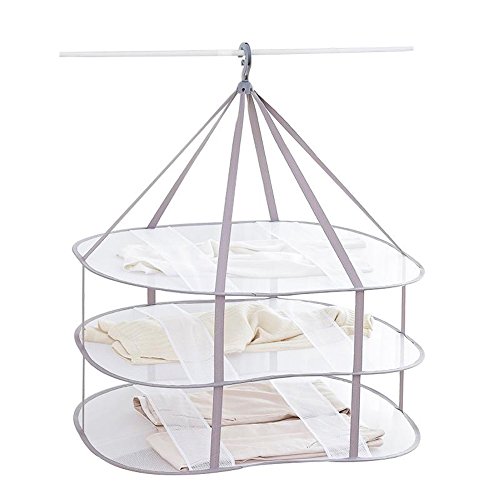
Kookot 3-Tier Hanging Sweater Dryer: Best for Small Spaces
Vertical drying is the only solution for knitters living in apartments or homes without ample floor space. The Kookot 3-Tier rack utilizes a ceiling or shower rod hook to dry three sweaters in the same horizontal footprint as one.
Each tier provides a separate mesh surface, ensuring that your garments never touch. Keeping layers separated is crucial, as overlapping wet fabric significantly slows down the evaporation process and can lead to uneven drying.
However, consider the height of your hanging point carefully. Accessing the bottom tier requires bending, which might be difficult if the rack hangs too low or is heavily loaded with dense, wet wool.
Whitmor Stackable Sweater Drying Racks: Best for Big Batches

For the prolific knitter who finishes multiple garments at once, the modularity of stackable racks is unmatched. These units lock into one another, turning a single corner of the laundry room into a high-capacity drying station.
The stackable design utilizes vertical space while maintaining the horizontal, flat surface that heavy knits demand. This configuration is ideal for managing an entire collection of seasonal sweaters after a final end-of-season wash.
Always distribute the weight evenly when stacking. While these racks are stable, placing an exceptionally heavy cabled sweater on the top tier while leaving the bottom empty can make the entire tower prone to wobbling.
Honey-Can-Do Mesh Sweater Dryer: Best Budget Pick

Functionality does not always require a high price tag, and the Honey-Can-Do rack delivers basic, reliable performance. Its lightweight construction makes it incredibly portable, perfect for moving the drying station to chase a patch of sunlight.
This rack is ideal for lighter-weight projects like fingering-weight cardigans or delicate silk-blend camisoles. The mesh is fine enough to support delicate lace stitches without snagging or pulling at the fibers.
Be aware that the frame is more flexible than premium models. If you frequently knit heavy, dense wool garments, you may find the structure lacks the rigidity required for extreme shaping, but for general use, it is a practical value.
Dritz Pop-Up Sweater Dryer: Best for Travel
Travel knitters often find themselves needing to wash and block a garment while on the road, especially when working with high-maintenance fibers. The Dritz Pop-Up dryer collapses into a small, portable disc that fits easily into a suitcase.
The internal spring mechanism allows it to snap into place instantly. This is the ultimate tool for destination workshops or long-term travel where keeping a handmade sweater fresh is a priority.
Because of its lightweight design, it is best suited for lighter weights and smaller projects. Do not overload this rack with heavy, water-heavy cotton, as the flexible frame may bow under excessive weight.
How to Pick the Right Sweater Dryer for You
Begin your selection by evaluating the weight of your usual projects. If you predominantly knit heavy, worsted-weight wools or chunky sweaters, you require a rigid, reinforced frame that will not bow under the weight of wet wool.
Consider your available floor space versus your vertical space. If your home has high ceilings or a sturdy shower rod, hanging dryers are efficient; if you have extra floor space, wide, flat racks provide the best stability for delicate lace.
Finally, think about storage frequency. If you only block occasionally, a collapsible or folding model is necessary to prevent your utility room from feeling cluttered.
Stackable vs. Hanging Dryers: Key Differences
Stackable racks are the gold standard for stability and garment shape preservation. By locking together, they create a rigid tower that supports the weight of multiple heavy sweaters without risking collapse or distortion.
Hanging dryers excel at maximizing space but rely on the integrity of the suspension points. They are generally better for lighter-weight knits, as they can sometimes sway or become unbalanced if the tiers are not loaded with similar weights.
- Stackable Racks: Best for heavy wool, large batches, and permanent laundry room setups.
- Hanging Dryers: Best for small apartments, lighter fibers, and temporary drying setups.
The Right Way to Prep and Block Your Knits
Proper preparation before the sweater hits the rack is just as important as the dryer itself. Always ensure the garment is squeezed—never wrung or twisted—to remove excess water before laying it out.
Rolling the sweater in a thick, dry towel is the most effective way to extract moisture without stressing the fibers. Once the towel has absorbed the bulk of the water, gently transfer the sweater to the mesh dryer.
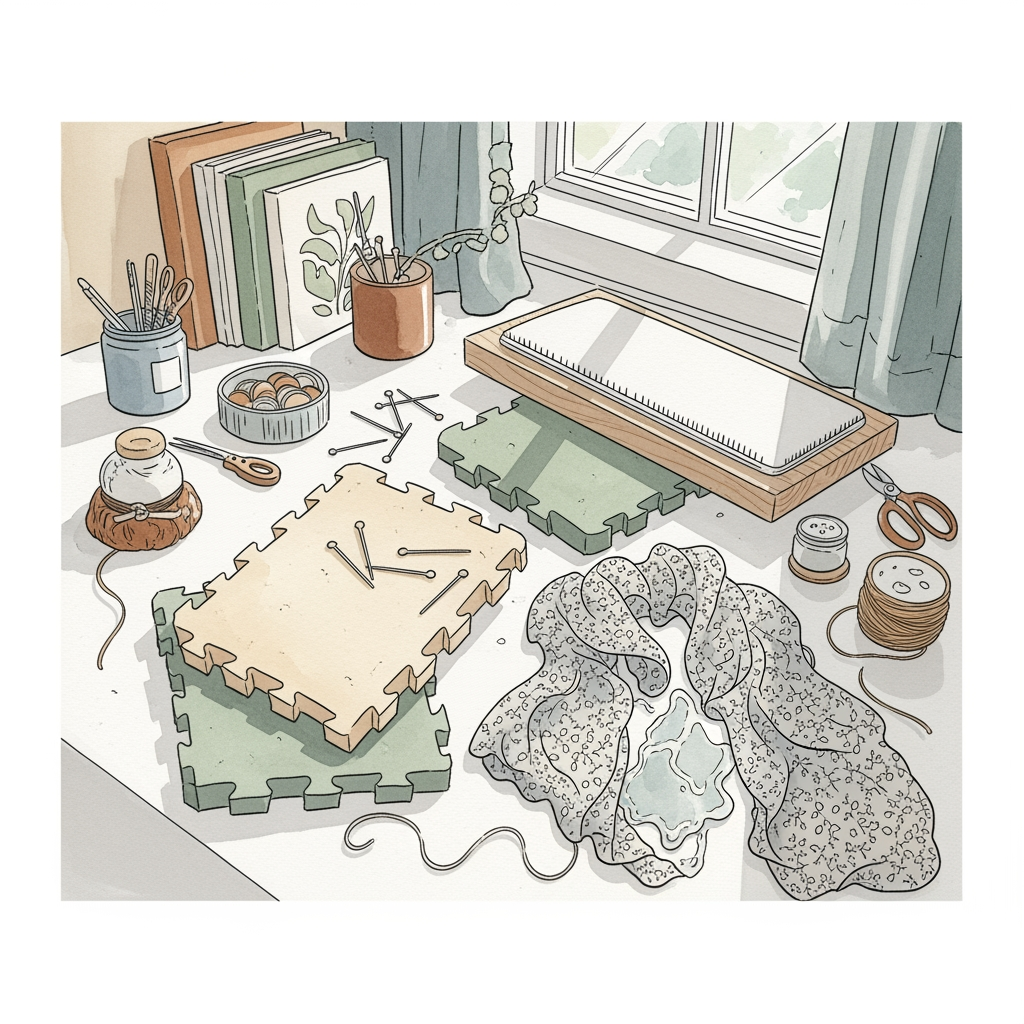
Shape the garment by hand, smoothing the seams and aligning the cuffs. If you are working with lace, use stainless steel T-pins to gently stretch the fabric into its intended geometry, ensuring all points are pinned symmetrically.
Why You Should Never Hang a Wet Sweater
Hanging a wet sweater on a conventional hanger is the fastest way to ruin your hard work. Wet wool is heavy, and gravity will stretch the shoulders and sleeves until the garment loses its fit and drape permanently.
Even if a sweater feels relatively dry, the fibers remain malleable for hours. Suspending a damp garment causes the stitches to elongate, turning a perfectly fitted garment into an oversized, misshapen mess.
Always use a flat mesh surface to allow air to circulate evenly through the fabric from both top and bottom. This prevents the weight of the water from pulling against the structure of the knit, keeping your tension and gauge exactly as you intended.
Choosing the right mesh dryer is an investment in the longevity and aesthetic quality of your finished hand-knit garments. By selecting a tool that matches your typical project weight and available space, you ensure that every hour spent at the needles results in a professional-grade garment. Happy knitting, and may your blocking process always be as rewarding as the final stitch.
