
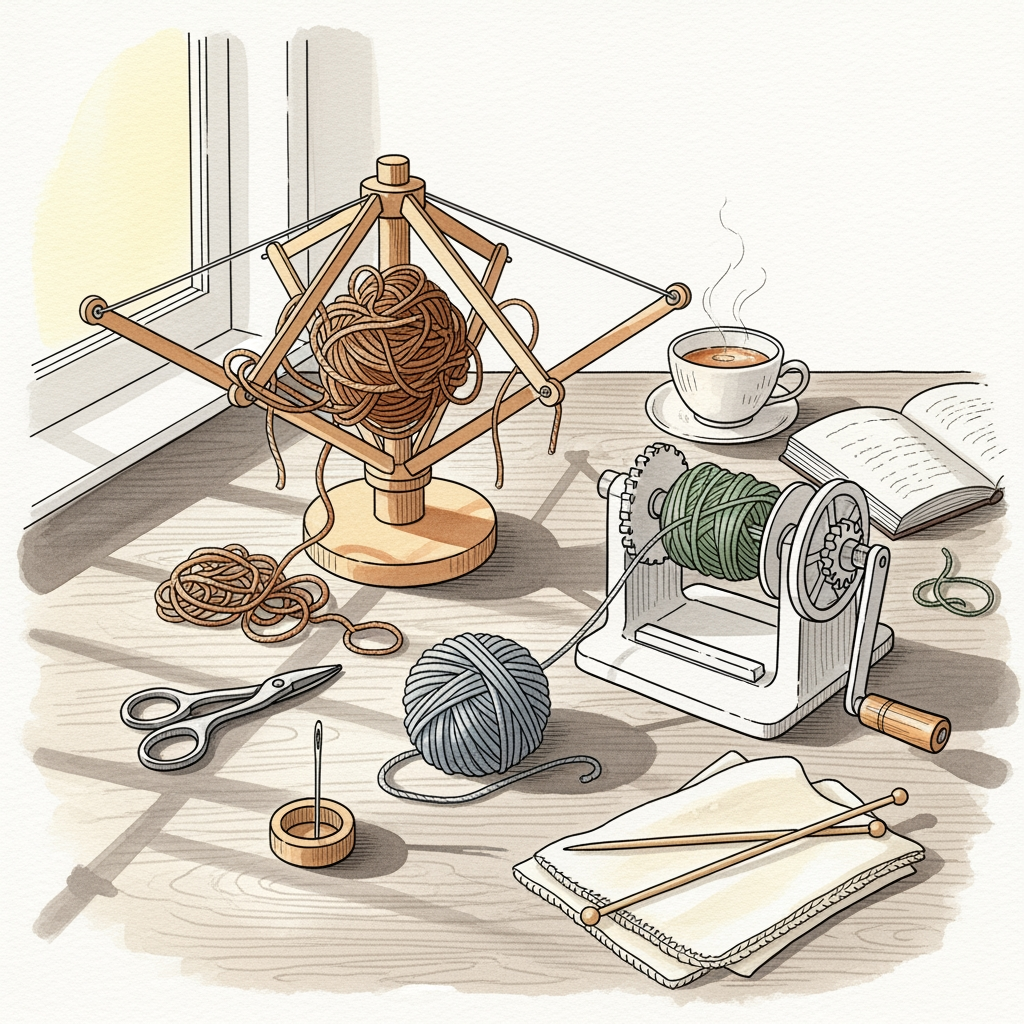
6 Best Swift Tools For Managing Yarn Hanks To Own
Master your yarn collection with these 6 essential tools. From swift winders to storage solutions, learn how to keep hanks organized, tangle-free, and ready.
There is no heartbreak quite like watching a beautiful, hand-dyed hank of lace-weight silk collapse into a chaotic, tangled bird’s nest. A reliable yarn swift is the essential bridge between a loose, floppy hank and a neat, project-ready center-pull cake. Investing in the right tool saves you hours of frustration and prevents the dreaded "yarn barf" that ruins your knitting flow. Here are the tools that will keep your fiber stash organized and ready for your needles.
Stanwood Needlecraft Tabletop Wood Yarn Swift


This tabletop model is a favorite for those who value craftsmanship and stability. Its heavy-duty construction ensures it doesn’t "walk" across your table when you’re winding a particularly dense hank of worsted wool.
The smooth, polished wood finish is critical here. If the wood is rough or splintered, it will catch on delicate fibers like mohair or single-ply yarns, potentially causing fraying or snagging before you even cast on.
The umbrella-style mechanism opens effortlessly, allowing you to set the perfect tension. The bottom line: This is an investment piece for the serious knitter who wants a tool that looks as beautiful as it performs.
Amish Style Wooden Yarn Swift by Frank A. Edmunds

The Amish-style swift is a completely different animal, operating on a horizontal, rotating cross-arm design. Unlike umbrella swifts, this style doesn’t require clamping to a table, making it incredibly portable.
Because it sits on your floor or a low surface, it is exceptionally stable and unlikely to tip over. It is also remarkably simple to assemble and disassemble, which is a huge plus if you live in a small space and need to tuck your tools away between projects.
However, keep in mind that it lacks the adjustable tension of an umbrella swift. You must ensure your hank is properly centered to prevent it from slipping off the arms during high-speed winding.
Lacis Wooden Umbrella Swift for Skein Winding

Lacis has a long-standing reputation for precision, and their wooden umbrella swift is a testament to that legacy. It’s designed for those who wind large volumes of yarn and need a tool that won’t fatigue under heavy use.
The hardware is robust, and the rotation is incredibly fluid. When you’re winding a large 100-gram hank of sport-weight yarn, you want a swift that spins with minimal resistance to keep the tension even.
If the rotation is jerky, you’ll end up with a cake that has inconsistent tension—too tight in some spots and loose in others. The bottom line: This is a professional-grade tool built for longevity and consistent output.
KnitPicks Yarn Swift: Best Value for Beginners
If you are just starting to buy hand-dyed hanks and aren’t ready to drop a fortune on equipment, the KnitPicks swift is the logical entry point. It is lightweight, functional, and gets the job done without unnecessary bells and whistles.
It utilizes an umbrella design that clamps securely to most table edges. While it is made of lighter materials than the high-end wooden models, it handles standard fingering and DK weight yarns perfectly well.
Don’t expect it to handle massive, heavy-weight skeins with the same grace as a heavy-duty model. The bottom line: It is the perfect "starter" tool that will serve you well until you decide to upgrade to a permanent studio fixture.
ChiaoGoo Heavy Duty Metal Umbrella Yarn Swift

Metal swifts offer a distinct advantage over wood: they are virtually indestructible and incredibly slick. If you often work with high-twist yarns that have a tendency to "jump" or snag on wooden grain, the smooth metal surface is a godsend.
The weight of the metal also provides a low center of gravity, which helps keep the swift steady during rapid winding. It is a workhorse that doesn’t care if you’re winding a delicate lace-weight silk or a chunky, heavy wool blend.
Be aware that metal can be louder than wood when spinning at high speeds. If you value a quiet, meditative winding session, you might find the metallic hum a bit distracting.
Strauch Jumbo Ball Winder and Swift Combo Kit

For the knitter who buys yarn by the sweater-quantity, a combo kit is the ultimate productivity booster. Strauch is legendary for its industrial-strength winding capabilities, allowing you to create massive, professional-looking cakes.
The advantage here is the synergy between the swift and the winder. They are calibrated to work together, which minimizes the risk of the yarn tangling between the two stations.
It’s a significant financial commitment, but it pays for itself in saved time and reduced frustration. The bottom line: If you are a prolific knitter or a designer, this is the gold standard for your workspace.
Understanding Why Your Yarn Needs a Proper Swift
Yarn is sold in hanks because it allows the fiber to breathe and prevents the yarn from losing its "loft" or springiness while in storage. If you try to wind a hank by hand, you are almost guaranteed to create a tangled mess.
A swift holds the hank in a large circle, allowing the yarn to pay out smoothly as you wind it into a ball. Without this, the yarn will twist, knot, and stretch unevenly, which can negatively impact your gauge once you start knitting.
Always remember: a swift is not a storage device. Once you are done winding, take the hank off the swift to prevent the wooden arms from stretching the yarn over long periods.
How to Properly Mount a Hank Onto Your Swift
Before you even touch the swift, untwist your hank and shake it out gently. Locate the two ties—usually contrasting bits of yarn—and make sure they are secure before you cut them.
Place the hank over the arms of the swift, ensuring the yarn is evenly distributed. If the hank is lopsided, the swift will wobble, which will cause the yarn to jump off the arms mid-wind.
- Check the tension: The yarn should be taut enough to rotate the swift, but not so tight that you are actively stretching the fibers.
- Remove the ties: Only remove the ties once the hank is securely on the swift and you have tested the rotation.
Preventing Tangles During the Winding Process
The most common cause of tangles is winding too fast. Even with the best equipment, if you crank the handle like a racecar driver, you will inevitably create a knot.
Keep your eyes on the yarn path. If you see a small snag or a "hitch" in the yarn, stop immediately and clear it before it gets pulled into the ball winder.
- Watch the twist: If you are winding a single-ply yarn, be extra careful, as these are prone to snapping if they get caught.
- Clear the space: Ensure there are no loose needles, stitch markers, or coffee mugs near the yarn path to catch the strand.
Maintenance Tips for Keeping Your Swift Smooth
Wooden swifts are susceptible to changes in humidity, which can cause the wood to warp or the mechanism to stick. Keep your swift in a climate-controlled room away from direct sunlight or damp basement air.
If the rotation becomes sluggish, a tiny drop of furniture wax or specialized wood lubricant on the joints can work wonders. Avoid using heavy oils, as these can migrate and stain your precious natural fibers.
Periodically check the screws and clamps to ensure they are tight. A loose screw can cause the entire swift to vibrate, leading to uneven tension and a frustrating winding experience.
Mastering the art of the swift is a rite of passage for every knitter who moves beyond the convenience of pre-wound balls. By choosing a tool that fits your space and your stash size, you turn a tedious chore into a satisfying part of your creative process. Treat your fiber with care, keep your tension consistent, and your yarn will reward you with a seamless knitting experience. Happy winding, and may your cakes always pull from the center without a hitch.
