6 Best Row Tracking Charts for Intricate Cables
Master intricate cables with our top 6 row tracking charts. Discover tools that simplify pattern management and ensure flawless, professional-grade results.
Cables are the ultimate test of a knitter’s focus, requiring precise row counts to ensure that intricate twists align perfectly across a garment. Even a single missed row can throw off the entire structural integrity of a complex Aran sweater or a cabled scarf. Finding the right tracking system is the difference between an enjoyable project and a frustrating exercise in frogging. These six tools offer distinct ways to keep your place when the pattern gets complicated.
KnitCompanion App: The Digital Gold Standard


When you are working on a multi-page pattern with complex charts, the KnitCompanion app is virtually unmatched. It allows you to import PDFs and use a digital highlighter to track your progress across rows and stitches simultaneously.
The real power lies in the "setup" feature, which lets you isolate specific chart sections. If you are knitting a sweater with a central cable panel flanked by moss stitch, you can track the cable row repeats independently of the rest of the work.
However, the learning curve is steeper than a physical tool. It requires a tablet or smartphone, which might be a distraction for those who prefer an analog knitting experience.
Chart Keeper Magnetic Board: Best for Cables

A magnetic board is the classic solution for keeping your eyes locked on the current row. By using a long magnetic strip to underline the active row on your printed chart, you eliminate the risk of your eyes drifting to the line above or below.

For cables, this is vital because you often need to see the "previous" row’s anatomy to know if you are working a knit or purl stitch into a cross. The physical weight of the magnets prevents the chart from sliding around while you work on heavy wool projects.
The only downside is the physical footprint. If you are knitting on the go, a large board can feel cumbersome compared to a simple pen and paper.
Cocoknits Maker’s Keep: Essential Accessory
The Cocoknits Maker’s Keep is a clever, magnetic slap-bracelet that stores your stitch markers and needles right on your wrist. While not a "row tracker" in the traditional sense, it is indispensable for cable work where you are constantly moving markers to denote cable repeats.
When you are juggling a cable needle, a tapestry needle for weaving ends, and stitch markers, having them magnetized to your wrist prevents them from falling into the couch cushions. It keeps your workspace clean and your focus on the pattern.
It is a specialized tool, certainly, but for those who lose their cable needles every five minutes, it is a game-changer. It turns your workspace into a wearable station.
Loome Row Counter Ring: Best Wearable Tool

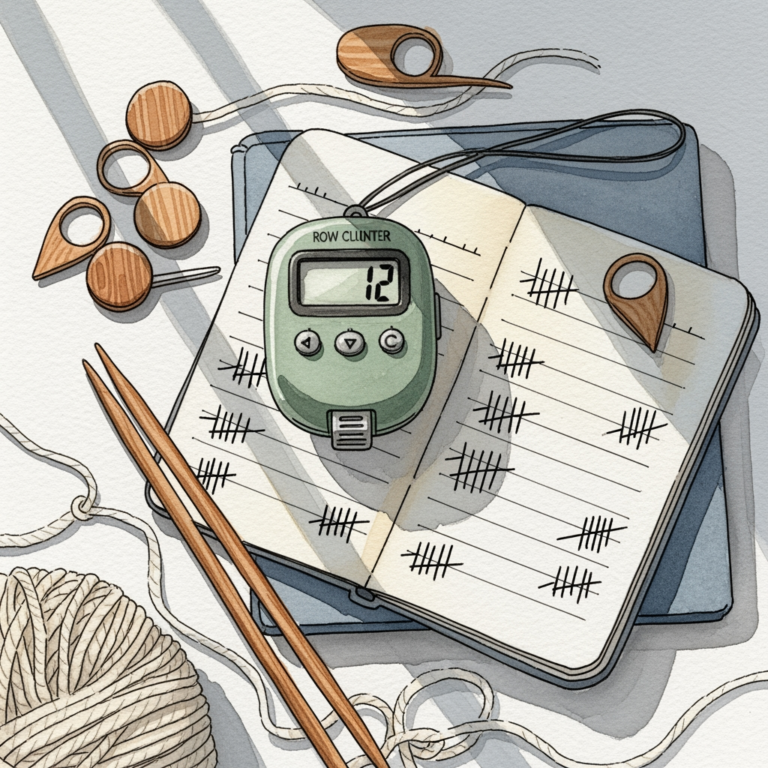
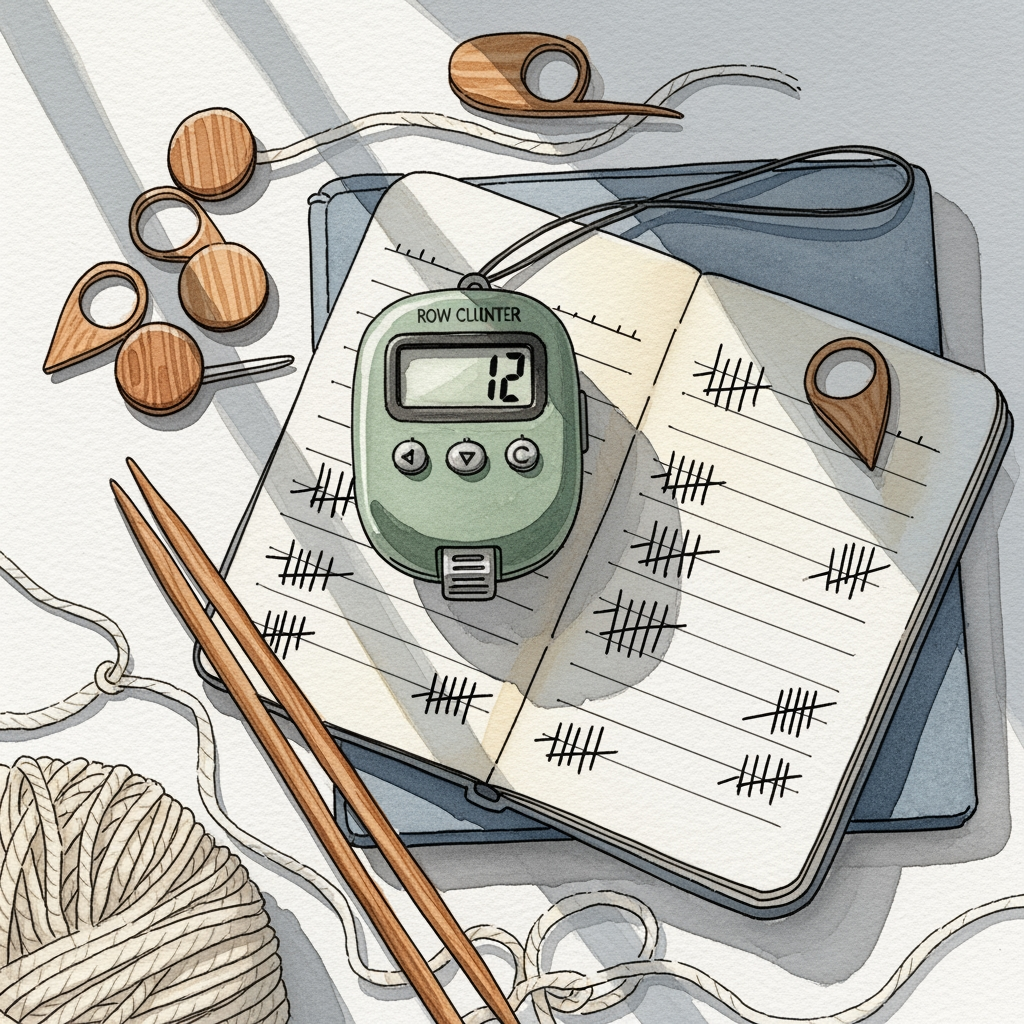
The Loome ring is a minimalist, tactile way to track your progress without ever putting down your needles. You simply tap the dial after completing a row, and the number increments with a satisfying click.
This is ideal for cable patterns where you have a "set" number of rows between cable crosses. You don’t have to look at a chart or a screen to know you’ve hit your increment; you just tap and keep knitting.
The trade-off is that it only tracks one number at a time. If your pattern requires tracking multiple cable repeats of different lengths, you might need two rings or a secondary system.
Knitter’s Pride Row Counter: Simple Reliable
The Knitter’s Pride row counter is the quintessential "set it and forget it" tool. These small, plastic clickers often attach directly to your needle, allowing you to advance the count with a quick thumb press.
They are perfect for basic cable repeats where you just need to ensure you don’t lose track of the count between crosses. They are inexpensive, lightweight, and don’t require batteries or a software update.
They can be a bit bulky if you are working with very fine yarn and small needles. If you are knitting lace-weight socks, the weight of the counter on the needle might feel slightly unbalanced.
Susan Bates Knit Chek: The Classic Toolset
The Susan Bates Knit Chek is a multi-purpose tool that includes a needle gauge, a ruler, and a built-in row counter. It is the "Swiss Army Knife" for the knitter who values simplicity and tradition.
For cable knitters, the ruler feature is particularly helpful. You can quickly measure the length of your cable crosses to ensure your tension is consistent across the entire piece, which is crucial for preventing puckering in the finished fabric.
It lacks the high-tech tracking features of an app, but it is virtually indestructible. It is a reliable backup to have in your project bag, even if you prefer digital tools for the heavy lifting.
Why Digital Trackers Beat Paper for Cables
Digital trackers allow for "zoom" functionality, which is a massive advantage when working with dense, multi-stitch cable charts. You can enlarge a single section of the chart to see exactly how the stitches interact, reducing the likelihood of a mis-cross.
Furthermore, apps often allow you to "dim" the parts of the chart you have already completed. This visual feedback makes it much easier to identify where you are in a complex sequence of twists.
Paper charts are prone to wear and tear, especially if you are working on a long-term project like an Aran sweater. A digital file remains pristine, no matter how many times you reference it.
How to Customize Charts for Complex Patterns
When you encounter a pattern that doesn’t quite fit your brain, don’t be afraid to annotate your charts. Use a highlighter to mark where your cable crosses occur, so they stand out from the background stitch pattern.
If you are a visual learner, you can use colored pencils to map out the different types of cables. For example, color all right-leaning twists in blue and left-leaning twists in red to help your eyes scan the chart faster.
The goal is to reduce the "cognitive load" of the pattern. The easier the chart is to read, the less likely you are to make a mistake during a complex row.
Managing Multiple Cable Repeats Effectively
Many intricate patterns require you to track a main cable repeat alongside a secondary, different-length repeat. The best way to manage this is to use a primary tracker for the main cable and a secondary, manual counter (like the Loome ring) for the secondary repeat.
Always write down the start of a new repeat on a sticky note attached to your chart. This provides a physical anchor point that helps you re-orient yourself if you have to set the project down for a few days.
Consistency is key here. Pick one method for the main repeat and stick to it throughout the entire project to avoid confusion.
Tips for Staying Focused During Long Cables
Cable knitting is rhythmic, but it requires sustained attention. If you find your mind wandering, try "reading" your knitting—look at the stitches on your needle and identify the crosses you made in the previous row.
If you are working with a slippery fiber like silk or a high-twist superwash wool, ensure your needles have a bit of grip. Bamboo or matte-finished metal needles can prevent stitches from sliding off while you are focused on the cable cross.
Finally, break your work into manageable chunks. Aim to complete one full cable repeat per session; it creates a sense of accomplishment and keeps your progress moving steadily forward.
Choosing a row tracking method is a deeply personal decision that depends on your project’s complexity and your own visual preferences. Whether you opt for the high-tech precision of an app or the tactile reliability of a clicker, the best tool is the one that keeps you consistent. By mastering these tracking systems, you transform the challenge of intricate cables into a meditative and rewarding process. May your crosses always be crisp and your tension perfectly even.