7 Best Dust Covers For Machine Protection That Last
Protect your equipment with our top 7 dust covers. Discover durable, custom-fit options designed to prevent debris buildup and extend your machine’s lifespan.
Your sewing machine is the unsung hero of your fiber arts studio, handling everything from quick repairs to heavy-duty garment construction. Without proper protection, fine dust and lint can settle into the delicate tension discs and internal gears, eventually compromising your stitch consistency. Investing in a high-quality dust cover is the simplest way to ensure your machine stays ready for your next project. Here are the seven best options to keep your equipment running smoothly for years to come.
Brother Universal Dust Cover: Best Overall Choice


When you’re working with delicate lace or heavy wool, the last thing you want is a machine that skips stitches because of internal grit. The Brother Universal cover is a reliable workhorse that fits a wide range of standard machines perfectly.
Its lightweight yet durable fabric provides a solid barrier against the floating fibers that accumulate while you’re winding bobbins or trimming yarn ends. It’s simple, effective, and doesn’t clutter your workspace.
If you value consistency and want a "set it and forget it" solution for your primary machine, this is the gold standard. It won’t win awards for high fashion, but it excels at the core mission of keeping your machine clean.
Singer Heavy-Duty Fitted Cover: Best for Durability

If your sewing station is located in a high-traffic area, you need something that can withstand more than just a light dusting. This heavy-duty cover is built with thicker materials that resist tears and abrasions.
Think of it like choosing a sturdy, long-wear wool for a winter coat; you need a textile that isn’t going to snag or fray under pressure. The fitted design ensures it stays put, even if you’re constantly pulling other projects on and off your table.
It’s an excellent choice for makers who have a permanent sewing corner and want to ensure their machine is shielded from bumps and accidental spills. The construction is robust enough that it won’t lose its shape over time.
Janome Semi-Rigid Dust Cover: Best for Stability

There is something incredibly satisfying about a cover that holds its own shape, much like a well-blocked sweater that maintains its silhouette. The Janome semi-rigid cover offers that structural integrity, keeping the fabric away from sensitive knobs and dials.
This is particularly helpful if you have a computerized machine with a complex touchscreen or delicate external buttons. You don’t want a flimsy cover pressing down on your controls and accidentally changing your settings.
Because it is semi-rigid, it creates an air gap that prevents condensation buildup, which is vital if you live in a humid climate. It’s a premium feel that matches the precision of high-end sewing equipment.
SINGER Universal Quilted Cover: Best Value Pick

Quilted covers aren’t just for aesthetics; that extra layer of batting provides a subtle cushion against minor impacts. The Singer Universal Quilted cover offers a surprising amount of protection for a very budget-friendly price point.
If you’ve spent your budget on high-quality yarn or a new set of interchangeable needles, this is a smart way to protect your machine without breaking the bank. It’s soft to the touch and easy to fold away when you’re actually using the machine.
Don’t let the "basic" label fool you; it does the job of blocking dust just as well as the pricier options. It’s a practical, no-nonsense choice for the pragmatic maker.
Luxja Dust Cover with Pockets: Best for Storage
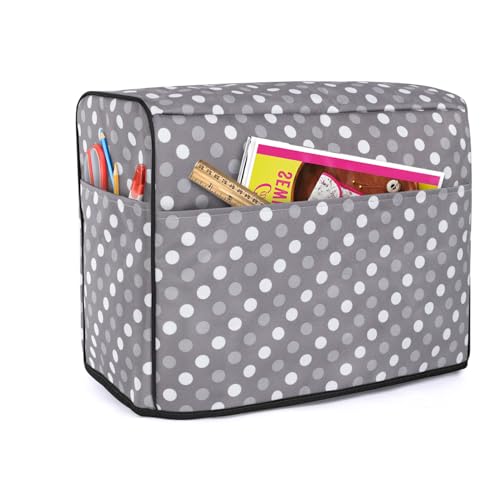
Organization is the secret to a productive studio, and the Luxja cover turns your machine into a storage hub. With integrated pockets, you can finally find a home for your seam rippers, measuring tapes, and spare needles.
When you’re in the middle of a complex project, having these small tools within arm’s reach prevents the "where did I put that?" panic. It’s like having a project bag attached directly to your machine.
Just be sure not to overstuff the pockets, as heavy items can pull the cover off-center. Use it for your lightweight essentials, and your sewing area will remain blissfully clutter-free.
Everything Mary Deluxe Cover: Best Stylish Option

Your sewing space should be a place of inspiration, and the Everything Mary cover brings a touch of design flair to your studio. It’s available in patterns that look more like home decor than industrial equipment covers.
If your sewing machine lives in a common living area, you might appreciate a cover that blends in with your furniture rather than looking like a piece of factory equipment. It’s a great way to keep your space feeling cohesive.
Despite the focus on style, it doesn’t sacrifice functionality. It’s well-constructed and provides full coverage, proving that you don’t have to choose between beauty and utility.
Kenmore Universal Fabric Cover: Best Basic Fit
Sometimes, the simplest solution is the best one. The Kenmore universal cover is designed to drape easily over almost any machine, making it a great "just in case" purchase for backup machines or sergers.
It’s lightweight and breathable, which is perfect for machines that aren’t used daily but need to stay dust-free in storage. It’s the equivalent of a simple cotton project bag—uncomplicated and reliable.
If you have multiple machines, buying a few of these is an affordable way to standardize your protection. It’s a clean, tidy look that keeps the lint off without any fuss.
Key Features to Consider Before You Buy a Cover
When shopping for a cover, prioritize the material density and the fit. You want a fabric that is tight-weave enough to stop dust particles but breathable enough to prevent moisture buildup.
- Pockets: Useful for small tools, but ensure they don’t weigh down the cover.
- Structure: Semi-rigid covers protect buttons and screens from pressure.
- Size: Always measure your machine’s width, height, and depth before purchasing.
- Ease of Cleaning: Can you toss it in the wash? You’ll want to eventually.
Remember that a cover is an investment in your machine’s longevity. Don’t just pick the cheapest one; pick the one that fits your machine’s unique profile and your studio’s workflow.
Why Proper Machine Storage Extends Service Life
Think of your sewing machine like a high-end knitting machine or a set of precision shears; it requires care to maintain its performance. Dust is abrasive, and when it mixes with the internal lubricants of your machine, it creates a sludge that can cause gear friction.
By keeping your machine covered, you are effectively reducing the frequency of professional cleanings. This keeps your stitch length consistent and prevents the tension issues that often lead to "machine frustration."
A covered machine is a protected machine. When you sit down to start a new project, you won’t have to spend twenty minutes dusting off your workspace before you can even thread your needle.
Essential Tips for Maintaining Sewing Equipment
Beyond using a dust cover, establish a routine for your machine maintenance. Much like blocking your finished knits, a little bit of effort goes a long way in the final result.
- Clean the bobbin case: Lint accumulates here faster than anywhere else.
- Oil sparingly: Follow your manual’s instructions; too much oil is as bad as too little.
- Change your needle: A dull needle will damage your fabric, just as a blunt knitting needle can split your yarn.
- Unplug when not in use: This protects the electronics from power surges.
Consistency is key. If you treat your machine with the same respect you give your hand-dyed wool, it will reward you with years of beautiful, trouble-free stitching.
Protecting your sewing machine is a small habit that yields massive dividends in terms of equipment longevity and stitch quality. Whether you choose a stylish quilted option or a sturdy, semi-rigid cover, the goal is to keep your tools clean and ready for your next creative spark. Take the time to select the right fit for your specific machine, and you’ll find that your sewing sessions are much more enjoyable. Happy stitching, and may your tension always be perfect.